Growing and Using Medicinal Herbs: St. John’s Wort

St. John's Wort Plant

St. John’s Wort is a sun-loving, hardy perennial, which prefers a more dry soil.  However, it isn’t too picky and will adapt in most places.  It grows best in zones 3-9 and prefers a Ph of 6 to 7, making it an ideal medicinal plant to grow in Utah.  There are many hybrid forms of St. John’s Wort that look pretty and provide pollen for honey bees, however, they do not hold the medicinal properties like the species H. perforatum.  When gathering the fresh flowers for use, make sure it is on a sunny day when the buds have just opened.  I usually go out every morning and the new ones that have just opened over night.  You can tell they are ready because they will leave a reddish purple stain on your fingers.   The optimum window for harvesting is usually mid June to the first of July.   Some say that the peak of harvest is on June 24th!  I have found that I can get a little more as I continue to pick the blossoms on a regular basis.  This is another great one to attract honey bees and other pollinators.

Medicinal Uses

  • St. John’s Wort can be very effective for treating mild depression, anxiety, stress, tension and nerve damage.  Like many herbs it needs to be used over a long period of time to feel the full effects, usually  2-3 weeks at a time.  It is known that the hyperforin found in the plant is an important constituent contributing to emotional stability by slowing the uptake of the “feel good” neurotransmitters like dopamine, serotonin and noradrenaline, allowing them to circulate longer in the body.  A word of caution to some who may become sensitive to the sun.  If this is the case discontinue using St. John’s Wort and soak in the vitamin D instead!
  • St. John’s Wort is also know to be an anti-inflammatory, anti-bacterial, and anti-viral, which makes it useful for treating bacterial and viral infections like shingles and herpes.
  • St. John’s Wort red rich oil is made from the fresh flowers and is a very good remedy for trauma to the skin.  It can be applied topically to soothe and heal bruises, sprains, burns, and injuries of all kinds.  It also relieves pain and promotes healthy tissue repair.  I add garlic to my St, John’s Wort oil for earaches too!


St. John’s Wort Recipes

St. John's Wort and Garlic Oil

As I have gathered St. John’s Wort fresh flowers and buds every morning I have simply kept adding them to the oil.  Eventually it will turn a beautiful deep red.  This particular oil has garlic added to it.  Making it a great oil for earaches.  You can certainly make it just with St. John’s Wort too.  The best ratio between buds, flowers and leaves for the oil is to use 70% buds and 30% flowers and leaves.  Cover the flowers and buds with an inch or two of oil.  I like to use olive oil.  Set in a sunny window for 2-4 weeks.  The deeper the red color, the more powerful the medicinal properties will be.  When it’s ready strain and bottle.

To Use:

To use simply spread the oil over a burn, bruise, cut or other skin injury.  It can also be used with garlic for an ear oil helping with pain and infection. Use 2-3 drops 3-4x daily.

Another great oil can be made for a skin salve.  Use 1 part calendula flowers, 1 part comfrey leaves, 1 part St. John’s Wort leaf and flower.  Cover with olive oil by 1-2 inches and let steep for 2-4 weeks.  Strain and bottle.

For each cup of medicinal oil, use 1/4 cup beeswax to make a salve.  Heat the oil and beeswax together, until the wax is melted.  Be careful it is extremely hot!  Test to make sure it is the consistency you want, by taking a small spoon, dipping it into the mixture and then putting it into the freezer for a few minutes to see how it sets up.  If you want it softer, add more oil.  If you want a more firm salv,e add more beeswax.  It’s very simple.  Once it is the consistency you desire add it immediately to jars and keep in the refrigerator for storage.


St. John's Wort Tincture

St. John’s Wort tincture  can be made with either vegetable glycerin or an 80 or 100 proof alcohol like vodka.  I like to use vegetable glycerin for my family and the vodka for long term storage.  The glycerin tinctures last only 2-3 years.  Tinctures made with alcohol can last a very long time.   This picture shows the beautiful red medicinal properties being pulled out of the flowers within just a few hours from the alcohol.


St. John's Wort prep for tincture

Place freshly picked flowers and buds into a glass jar.  Fill with a 1:1 ratio of water and vegetable glycerin or straight vodka.  Cover with 1-2 inches of liquid and let steep on the counter for 2-4 weeks.  Strain and bottle.

To Use:

Use 1/2 to 1 teaspoon tincture twice daily for 3 weeks. Or alternately for 5 days on and 2 days off.  This is especially good for those who struggle with mild depression from the darker days in the winter that comes with the changes of the seasons.  Be sure to stay active and get as much sunshine as possible.  It can also be used for pain in the same way.

Growing and Using Herbs: Chamomile

Chamomile plant

Chamomile is one of my favorite herbs!  It’s fragrance has a light hint of apple with earthy undertones!  Chamomile is an annual grown easily from seed or starts form your local nursery.  It has very calming effects on the nervous system and is a great digestive aid!  Whenever I feel as though my day has all but done me in, I make myself a cup of tea, sit back and read a good book!  Most of my chamomile grew from reseeding itself last year and popped up perfectly around the small brick wall surrounding my peach tree.  It’s very easy to grow and likes well draining, poor soil if you can believe it, hence it growing practically in the compact sand I have around my garden boxes! …well it’s better than weeds! 🙂
Chamomile has many benefits!
  • It relaxes the muscles in the uterine wall relieving menstrual cramps.
  • Is an excellent sleep aid.
  • Chamomile soothes stomachache muscles to help alleviate bowel problems and aids in digestion.
  •  Because of the antibacterial properties found in chamomile, a cup of hot tea can help fight common colds.
  • Apply a paste of chamomile flowers on wounds to make them heal faster, improving the quality of skin from the oil of the flower.
  • Chamomile tea is good for preventing the escalation of diabetic ailments.


 How to harvest and make chamomile tea:
  • Here is a link to a perfect video on how to harvest your chamomile!
  • Essentially you are going to want to harvest the flowers just as they open up and create a nice flat disc.  Once the petals begin to curve down, they are bit past their prime.  At this point you can either still harvest or allow them to go to seed.  Here is a great video on how to save the seeds.  Keep harvesting the flowers and you will keep getting more and more!

Harvested Chamomile Flowers

  Once you have plucked the chamomile flowers from the plant spread across a paper towel and allow to dry completely, about 5-7 days.

Dry Chamomile Flowers

Once completely dried, place inside a glass container to stay fresh for1 year.

Mesh Tea Infuser

When I make tea from my own herbs I like to use a 2-1/2 mesh ball.  This keeps the herbs contained and allows them to steep appropriately. To make tea with your chamomile flowers, boil a few cups of purified water.  Fill your mesh tea infuser with your herb of choice and place in either a tea cup or in the tea kettle once off the heat.  Never boil herbs.

Chamomile Tea

Allow the herbs to steep in the hot water for 15 minutes.  Enjoy!

Growing and Using Medicinal Herbs: Raspberry Leaves

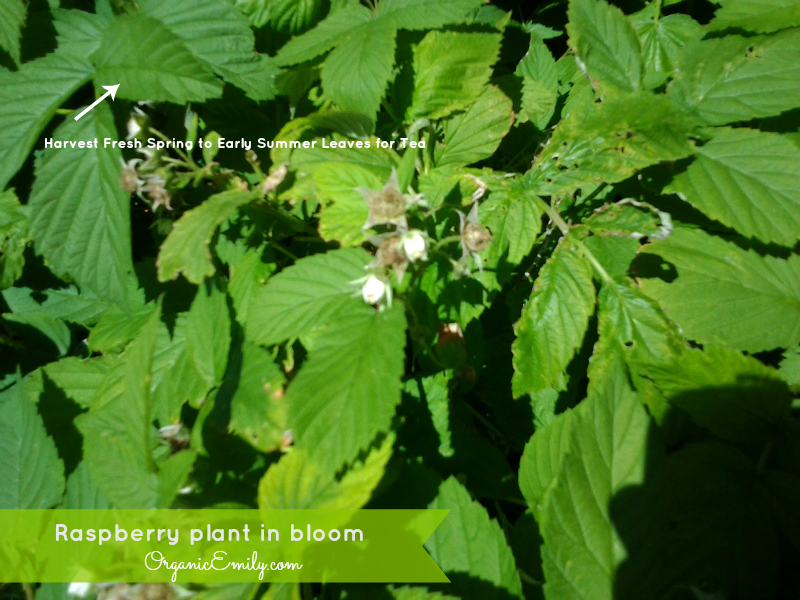
Raspberry Bush

Growing Raspberries

Every garden cannot be complete without a raspberry patch!  Those delicious sweet juicy red berries are one of God’s greatest gifts to man in my opinion!  I grow mine where they can’t take over to quickly, inside a garden box with the house on one side and the driveway on the other.  They really love to spread!  Raspberries are native to Utah and grow well up in the mountains!  They prefer to have morning sun so they will do best on the east side of a garage, shed or house.   Make sure they get at least 8 hours of sunlight to produce fruit.  They are big water feeders and really prefer to be mulched with compost to keep the moisture in and regulated.  Raspberries are very easy to grow, however they can be prone to iron chlorosis.  I will give mine a dose of chelated iron (slow release) every 4-5 weeks to keep the leaves green and health.

Drying Raspberry Leaves

Using Raspberry Leaves

  • Raspberry leaves have been known as a female herb for centuries.
  • Many people including myself have used it to strengthen the uterine wall while relaxing the smooth muscle inside the uterus to help alleviate cramps.  Some even claim that it improves the chances of implantation and decrease the risk of having a miscarriage.   The leaves are also full of vitamins, minerals, and plant compounds that help the body to detoxify excess hormones that may impede conception.
  • During pregnancy, one cup of tea can help with morning sickness, strengthen the baby in utero with all the nutritional benefits it provides and has been reported to reduce leg cramps and swelling in late pregnancy.   The tea benefits the labor process as well, strengthening and shortening the durations of contractions. The benefits raspberry leaf tea provides for mother and baby after birth are rich breast milk due to the high levels of minerals as well as helping to regulate postpartum hormones bringing mom back to a healthy state of mind.  Some women need to be cautious while using raspberry tea during pregnancy if they have experienced C-section (past or planned), premature labor, bleeding during pregnancy, expecting twins or any other complications.  Always talk to your health care provider first before taking any supplements during pregnancy.
  • Even if you are not interested in getting pregnant raspberry leaf tea can help reduce cramping and regulate hormones, decreasing PMS.
  • The nice thing about raspberry leaf tea is that it is a balanced food so it’s safe for virtually everyone at every stage of life.  My 8 year old daughter loves to drink it!


Harvesting Raspberry Leaves

The best time to harvest raspberry leaves is in the late spring through early summer.  I cut enough every year to fill a gallon glass jar with dried leaves.  It’s easiest to dry the leaves in a dehydrator, but you can do it outside in the shade of a tree on a screen too.

Once the leaves are dry, place them in a cool dark place.  They should keep for a few years.


Emily’s Favorite Tea Blend

1 tablespoon dried raspberry leaves

1 tablespoon dried chamomile flowers

1 tablespoon dried peppermint leaves

4 cups purified boiling water removed from the heat.  Place the herbs in a tea infuser and let steep in hot water for 15-20 minutes.  Enjoy!


Growing and Using Medicinal Herbs: Comfrey

Comfrey Plant

Comfrey is a wonderful herb with  multiple benefits!  The plant is very easy to grow and can be harvested multiple times a season.  It grows well in full sun and well draining soil.  One of my favorite comfrey products I use is a salve called Dr. Christopher’s Complete Bone and Tissue for all my physical aliments!  It contains comfrey and other herbs.  It is simply magical!  As a fitness instructor for over 10 years who teaches multiple classes a week my body has begun to… well let’s say get a little older and over used so to speak.  I have a bulging lower disc in my spine, knee pain and a weak rotator cuff.  Whenever anything starts to flare up I put the salve on a few times a day and within a couple days I am back to normal again!  I cannot say enough about comfrey!

Medical Benefits of Comfrey

  • Comfrey is good for fracture healing and bone lesions.
  • Comfrey is beneficial for treatment of muscle tears, sprains, strains, and dislocations.
  • Comfrey helps in arthritic conditions of bursitis, tendinitis, and torticollis.
  • Comfrey treats arthritis such as rheumatoid arthritis and osteoarthritis.
  • Comfrey is good for treating bunions and deformities of extremities.
  • Comfrey helps in treating intervertebral disc lesions and herniated discs.
  • Comfrey is good for circulatory system and improves poor circulation and varices.
  • Comfrey treats skin deformities like minor wounds, minor burns, fistulas, and psoriasis.
  • There are millions of comfrey natural products available in the market, the most prominent of which is comfrey gel which helps in treatment of some types of eczema, cracks in breasts, and varicose ulcers
  • For more info go here

Harvesting Comfrey

  • Here is an excellent video on how to harvest comfrey!

There is controversy over whether comfrey should be ingested or not.  Studies have shown that comfrey taken internally can be dangerous due to it’s high levels of alkaloids, potentially harming the liver.  However, the studies are a bit misleading in my opinion.  They do show that the alkaloids could be dangerous, but that is because very large amounts were taken internally.  More so than what the average person would normally ingest, however it is important to use caution.  I know many people who have taken it internally and are just fine.

Dried Comfrey

You can make a basic salve recipe with the dried comfrey leaves and roots.  Anytime you use a root over the leaf or flower of the plant it will always have stronger constituents.

Comfrey Oil

 The first step in making your own medicinal salve is to make a solar infused herb oil.  This can even be done with herbs for cooking.  Fill a clean and dry wide mouth jar with dried herb leaves or roots.  Cover with 2 inches of good olive oil.  Cover tightly and allow to sit in a warm sunny spot for 2-4 weeks.  The longer you allow it to sit the stronger it will become.  You might expect the oils to go rancid, however as long as the herbs are infusing the oils they won’t due to the antioxidant properties found naturally in plants.

Straining Herbs 1

 Strain the herbs through a sieve after the oil has been infused.

Straining Herbs 2

Strain further into a cheese cloth or piece of muslin.  Be sure to squeeze the last bits of oil from the drained herbs into the bowl.

Homemade Salve

Now the salve is ready to be made!


Basic Salve Recipe


For each cup of infused herb oil, add 1/4 cup (finely chopped or shredded) beeswax.  Heat the oil and beeswax together over very low heat, stirring occasionally, until the beeswax has melted.


To ensure the salve is the thickness you desire, place 1 tablespoon of the mixture onto a spoon and put in the freezer for a minute or two.  Then check for firmness of the salve.  Add more beeswax if you desire a more firm ointment.  For a softer salve add more oil.


Once the mixture is the consistency you want pour immediately into small glass jars or tins.  Be careful the oil is extremely hot!  I get me supplies from here.


Store salve in a cool, dark place, where it will keep for several months.  Add essential oils to enhance aroma and medicinal purposes.


Growing and Using Herbs: Peppermint and Lemon Balm

Peppmint and Lemon Balm

I grow my peppermint, spearmint and lemon Balm in pots because they are very invasive perennials!  These are all apart of the same family and have many benefits!  Let’s talk about just a few.

Peppermint

  • Mint is an excellent pest control when grown around the garden and home.  It deters mice, ants,  flies, roaches and moths.  It also attracts beneficial insects like honey bees and other pollinators when allowed to flower.
  • Peppermint has many medicinal properties as well.  It stimulates the digestive system relieving cramps, gas, bloating, nausea, diarrhea and other stomach problems.  It is also known to have astringent, antiseptic, antibiotic, antimicrobial components and is great for using on cuts, burns and other wounds.  I use it religiously for headaches!  Whenever I feel the tension coming on I will apply both peppermint and lavender essential oils to my neck and shoulders and it goes away in just a matter of a few minutes!  If you don’t have the essential oils, but grow it in your yard or home try mashing up a few leaves to release their oils, add it to a little bit of olive oil and massage it into  the area needed.  The next time you have a cold try drinking some peppermint tea to help relive congestion.


Lemon Balm (Melissa)

  • Lemon Balm, a pollinator attractor, has been known to be a calming herb, both for the nervous system and digestive system.  It was used as far back as the Middle Ages to relieve stress, promote sleep, improve appetite, ease discomfort associated with indigestion and treat cold sores.   I like to make a calming tea using lemon balm with other herbs like chamomile, calendula and peppermint.


Drying Herbs

Harvesting and Drying Herbs

Before my peppermint and lemon balm get to big and their leaves become smaller just before flowering, I harvest big bunches for drying and using later.  Cut the herbs back towards the ground leaving a few inches of the plant.  Don’t worry they will come back with a vengeance and you can do it all over again in another few weeks!   From there you can rinse any dirt or bugs off the plants and dry them one of 3ways.  First, you can do it the way I did here in the picture.  Tie a rubber band around a bunch and then thread a piece of twine through hooking it to a hanger.  Allow to dry out of direct sunlight, hanging upside down for a week or two.  Second, you can take the leaves off the stems and dry in a dehydrator.  It’s certainly the fastest way to dry anything!  Third, get a screened frame and allow the herbs to dry on top under the shade of a tree, again out of direct sunlight.  Once the herbs are completely dry store in a cool dark place, preferably in a glass jar.


Fruit Salad

For a heavenly addition to any fruit salad try adding chopped fresh mint, lemon balm, basil or even lemon verbena!  You can do what I do and make a simple raw syrup to put over a big bowl of freshly chopped fruit.

2 limes zested and juiced

2 tablespoons raw honey

1/4 cup chopped peppermint or 2 tablespoons chopped lemon balm, basil or lemon verbena