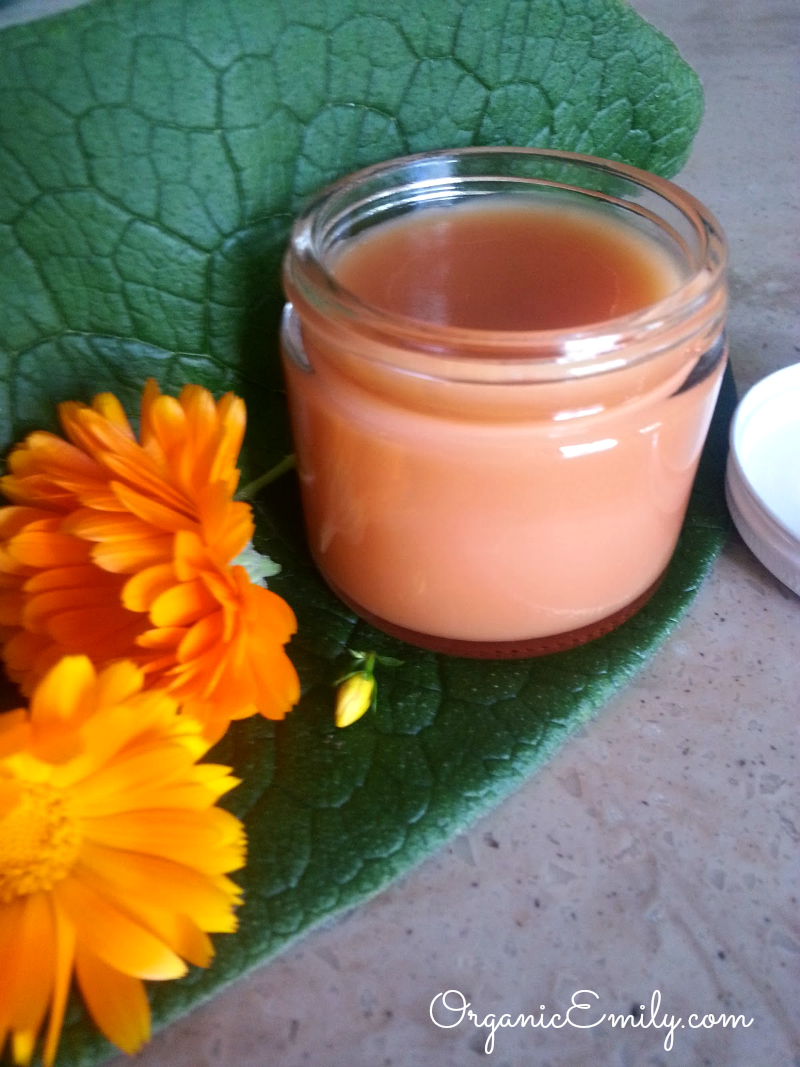
Herbal Burn and Wound Salve

Homemade Wound and Burn SalveThis is one of those homemade medicinal concoctions that work really well and is very helpful to know in case you can’t get immediate medical attention.  It’s perfect for cuts, scrapes, burns and more.  There are a few steps you have to take before applying the burn/wound salve itself if you are dealing with deep cuts.

First thing you need to do is to stop the bleeding with cayenne pepper.  Cayenne is an amazing herb and should be in everyone’s first aid kits!  It increases circulation inside the body, but stops bleeding outside of it!  Depending on how deep the cut is, the sting of applying cayenne pepper to the injury may or may not hurt.  My little 3 year old has received some pretty deep cuts the last 2 years from playing rough with her siblings.  We applied the cayenne (powder) to stop the bleeding first (which by the way also disinfects) and then reapplied the salve 3x a day.  She healed very well with no scars!

Recipe

The wound salve has equal parts of 3 ingredients;

Fresh leaves (if available) or dried root of the comfrey plant.   Comfrey  is also known as “knit bone”, it has been used to close wounds and heal broken bones for many years.  If you don’t grow comfrey you can use powdered comfrey root from any health food store.

Wheat germ oil helps to promote new cell growth aiding in the healing process to prevent scarring.

Honey has been used to aid with burns for many years.  It is a natural antibiotic and reduces inflammation.

You can make any adjustsments with the recipe to make a thick salve.

Blend all ingredients together if using fresh comfrey leaves or just a fork if using the powdered root of comfrey.  Keep in an airtight container and refridgerate.  It will stay good for one month.

Medicinal Skin Salve

Herbal Skin SalveThis salve is made from oil that has been infused with St. John’s Wort, Comfrey and Calendula herbs.  Each of these herbs has many wonderful skin healing properties including cuts, scrapes, stings, bruises, burns, sore muscles, diaper rash, cradle cap and more!  It is so simple to make and can be given as fabulous gifts too!  You can read about the specific medicinal properties of these herbs below.  If you like other herbs and want to use them instead, by all means do what works for you!  That is the beauty of this recipe!

comfrey

calendula

St. John’s Wort

Solar Infusing Oils for Homemade Skin Salve

From left to right: Calendula, Comfrey, St. John’s Wort

The first step is to infuse the oils!

Place fresh or dried herbs into pint or quart jars (depending on how much you want to make) and cover the herbs by an inch.

Cover the jars with lids and set out on a warm sunny porch or sunny window seal in the winter.

Allow to infuse in the sunlight for 2-4 weeks.

Dry herbs are best to use so that moisture doesn’t get into the oil.  Although, there are some herbs that need to be used fresh like the flowers and buds of St. John’s Wort.  If you do use fresh and see moisture develop at the top of the inside of the bottle just open it up and wipe it away with a clean paper towel.

Try making a double strength salve by straining  the first batch, placing the infused oil back into the jar and then adding more of the same herb starting the process all over again.

Salve Recipe

Once the oils are infused, measure the amount you have.

For every cup of oil you will add 1/4 cup shredded beeswax.

Melt the beeswax with the oil in a saucepan until melted.

Test the salve to make sure it is the consistency you want by spooning a little bit and placing into the freezer for a minute so it sets up fast.  If you want it more solid add more beeswax.  If you want it softer, add more oil.

Pour the liquid salve into a jar ( I get mine at Industrial Container and Supply).

Before it sets up ( and it will do it quickly) add 1 drop of vitamin E oil for every ounce.

Also add 2 drops essential oil for every ounce.  I like to use lavender and tea tree oil for their medicinal properties.  They compliment the salve very well!

The vitamin E oil will help preserve the salve longer as well as keeping it in the fridge too!

Growing and Using Rosemary

Rosemary Plant

Rosemary is one of my most favorite herbs!  I love the smell and flavor in many sweet and savory dishes!  I throw it into loaves of bread, Sunday roast and even into stone fruit rustic pies!  Not only does rosemary have many culinary purposes, but it also has medicinal properties too!

Growing Rosemary

Rosemary doesn’t like really dry soil or really wet soil.  However it does do well with moist soil as it grows naturally in places close to the coast with a constant mist of water.  If you can keep the soil in between the extremes you will have success.  I like growing the variety of rosemary called “Arp”.  It is supposed to get through our cold Utah winters in the northern region.  I have had some plants die on me though so be sure to plant it next to a fence or house or boulder for added protection.  In dry winters it may need to be watered once a month.   Rosemary loves fertile soil and full sunlight, although it can tolerate some shade.  Rosemary will do well in a pot brought indoors during the winter if placed in a sunny window and misted with a spray bottle and an oscillating fan blown occasionally to prevent fungus growth.  If you already have a plant outside, try taking a root and stem cutting and planting in a pot to bring indoors.


Medicinal Uses

Rosemary has been used for centuries to help improve concentration and memory.

Eases headaches, including migraines.

Rosemary is a moderate stimulant because it enhances red blood cell uptake of oxygen increasing a persons energy.

It has anti-inflammatory properties that allow relief for joint arthritis pain and muscle pain.

It can be used fresh or dried as a good digestive aid to assimilate digestive fats and carbohydrates.

Try making a tea with rosemary and lemon thyme instead of coffee or soda to boost energy!


Infused Rosemary Oil

Solar Infused Rosemary Oil

Go to any grocery store that sells infused oils with all kinds of gourmet flavors and you may spend a pretty penny for a small bottle.  Try making your own!  It is so easy and inexpensive!  Rosemary among many other herbs like garlic, basil, sage, thyme and even lemon or orange peel infuse into olive oil very well.

Place herb in bottle and make sure the olive oil covers it completely.  Set in a sunny window seal for 2-4 weeks and then use it as dipping oil for a rustic loaf of bread.  You can also do this over the stove top if you need the oil sooner.  Just warm the oil on low heat for 30 minutes with your herb of choice.

Growing and Using Herbs: Sage

Sage Plant

Sage is one of those safe and simple herbs to use and grow!  For years I only used it with Thanksgiving Turkey and stuffing and although the herb is the essence of fall to me I recently learned there a lot more purposes to this wonderful herb!  Sage tea has been known to help “dry” up mother’s milk for weening babies.  It has been used for many years to calm and soothe a sore throat and even help with hot flashes!

Growing Sage

Sage is very easy to grow in zones 4-8.  It loves full sun, well draining soil and hot conditions, so it does well here in Utah.  It’s best to get starts from your local nursery or propagate from root division.  Older plants can get woody and leggy, just cut back the old growth in the spring before the new growth comes out.

Using Sage

Outside of using sage on poultry, we can also use it for medicinal purposes too.  Here are a few of my favorite recipes to aid your family during the cold and flu season.

Sage Throat Spray or Gargle

Ingredients to make Sore Throat Spray or Gargle

This throat spray is very simple to make.  Harvest about 1 cup fresh sage leaves.  Place in bowl and pour 1 cup boiling hot water over the top of the leaves.  Cover with a plate to keep the essential oils inside.   Let steep for 30 minutes.


Strained Fresh Sage Tea

Strain the sage tea into another bowl and add the following:

1-2 tablespoons raw honey

1-2 tablespoons echinacea tincture (optional, but does extend the shelf life)

1-2 drops peppermint essential oil


Sage Throat Spray or Gargle 2

Pour into a clean glass jar through a funnel.


Sage Throat Spray or Gargle

Label the spray/gargle and use as needed.  Store in refrigerator.


Homemade Cough Syrup

Fresh Herbs for Sore Throat Spray or Gargle

In a large pot place 4 ounces each fresh sage, thyme and horehound (optional, but strongly recommended).  If using dried herbs, use half the amount.  Pour 12 cups water over the herbs and simmer low for a few hours until the water has decreased to 6 cups and you have made a very strong tea.  (this recipe can be made in smaller batches too.)


Horehound, Sage and Thyme Tea

The herbs have been cooked down to half and a strong tea remains.   Strain through cheese cloth or muslin and add 3 cups raw honey.


Sage, thyme and Horehound Cough Syrup

This recipe made about 8 (12 ounce) bottles of cough syrup.  To make the syrup stronger I also added 1 T. echinacea tincture and 1 drop OnGuard essential oil to each bottle.  This will keep the syrup for a longer period of time and increase its effectiveness.  Keep in fridge and take 1 teaspoon every few hours until cough or cold subsides.


Growing and Using Medicinal Plants: Elderberry

Elderberry Bush

Elderberries (Sambucus nigra) have not only been a favorite to people for centuries as a remedy for colds and flu, but many animals love it too!  I planted my elderberries from starts last year and I kid you not one of them is 12 feet tall!  They are fast growers!  I have lots of birds that like to feast on them and I am thankful for my little Yorky who likes to chase them away!  If you don’t have a dog to chase away the birds from your berries try using a type of netting to cover the shrubs so the birds can’t get in but the sunlight and water can.

Growing Elderberry

Elderberry can grow up to 30 feet tall given the right conditions.  It grows natively here up in our Utah mountains.  As kids our parents would take us up to the family cabin near Park City and we would pick the berries to make syrup.  Elderberry prefers rich moist soil and can grow anywhere from partial shade to full sun!  Cuttings are used as propagation rather than starting from seeds.  Although they can start from seed, it is much more difficult.  Just make sure you have a good space to put the shrub so it can grow and be happy!

Medicinal Uses for Elderberry

Elderberries are not typically eaten raw, they don’t taste very good for starters and if eaten in large amounts they can cause nausea and upset stomach.  They are best used when cooked.  Be sure not to use the red berries because they are poisonous!

Harvested Elder Flowers

Both the flowers and berries are used medicinally.  The flowers make a good tea for inducing sweating therefore helping to reduce fevers.

Elderberries on Plant

The berries are rich in immune-strengthening, anti-viral properties and are often combined with echinacea.  However, you don’t need to have a cold to use elderberry syrup!  It can be drizzled on pancakes and made into jams and pies!  With my newly harvested honey and the berries coming on it’s been fun to make a little syrup for the family!  Here’s my favorite recipe!

Elderberry Syrup

8 cups fresh elderberries (don’t use any green ones) or 4 cups dried berries

1 cup purified water if using fresh berries or 8 cups purified water if using dried berries.

1 cinnamon stick

4-6 cloves

4 1-inch pieces of fresh ginger

Honey (preferably raw and local)

Fresh Elderberries

Pick all berries off stems and fish out the green ones.  Place in a medium size sauce pan and add water, cinnamon, cloves and ginger.

Simmering Elderberry Syrup

Bring to a low simmer for 30 minutes or until the liquid has decreased by half in volume, be careful not to boil it!  (Your house is going to smell amazing at this point!)  Next strain the mixture and measure the liquid.

Finished Elderberry Syrup

Match the same amount of honey to liquid and stir in until melted.   Keep the syrup refrigerated for up to 3 months!  If using medicinally to fight off a cold/flu, take 1-2 tablespoons several times throughout the day.

Growing and Using Medicinal Herbs: Catnip

Catnip

Growing Catnip

This easy to grow perennial is very aromatic and can grow up to 4 feet tall.  It likes well draining soil but will grow in most soils.  It is a family member to the mint family.  Some people like the smell and some not so much.  Although, we do know that cats love it so much that they seem to go into a trance over it!  It likes regular watering and partial sun, but can take full sun too.  It grows natively in abundance in the mountains.  I gather the native leaves up by the family cabin every year.  Cut back the plant when it reaches 8 inches or more to harvest the leaves.  It will continue to grow and produce all season long like mints do.  It is also a natural pesticide and herbicide.

Using Catnip

Catnip is best used in a tea form.  Many people drink catnip tea to help relieve digestive problems like flatulence/bloating.  It is very safe for babies with colic/teething and is found in many tinctures along with fennel.  I have had great success with my colicky babies using Dr. Christopher’s Kid-e-Col.   Catnip is also very good for relieving tension (including headaches), stress, nervousness and restlessness.   Many sources say to not use catnip during pregnancy or during periods because it can cause heavier bleeding.

Growing and Using Medicinal Herbs: Nettle

Stinging Nettle 1

Growing Nettle

Nettle grows wild throughout the US and Canada in rich moist soil and dappled sunlight.  It loves to live near the mountainous streams and rivers.  I personally don’t grow it because of it’s stinging needle like protrusions found on the undersides of the leaves and stems, containing formic acid, the same acid found in bee and ant stings.  I have little children that I know would get into it and besides it’s so easy to get it up at the family cabin.  If you do decide to grow nettle, be sure to contain it because it is a rapid grower, sending runners everywhere, similar to raspberries.  Notice the narrow jagged leaves in the picture above.  When harvesting be sure to wear gloves and do it at the beginning of summer before the plant sends out blossoms that look like small string like strands.  Dry the leaves in a brown paper bag out of direct sunlight or on the lowest setting of a food dehydrator.

Using Nettle

Nettle has a great history of multiple uses including remedies for anemia, rheumatism, menstrual issues, allergies, skin problems and gout just to name a few.  It can be used as a tea, cooked and eaten or infused in a tincture.  The ancients Romans cultivated Nettle more than any other crop and used it in abundance for food, medicine and clothing.  Many claimed that nettle material was finer than cotton or linen.  They also used the raw leaves to flog arthritic/swollen joints.  The welts and rash left by the fresh nettle leaves was reported to improve circulation and relieve aches and pains.  Although this treatment sounds barbaric, it is still used and can be as effective as drug treatments practiced today.  Personally I have brushed up against some nettle in the mountains and one little touch can be very painful, I can only imagine the relief that must come after the sting is gone…

On a more positive note, nettle has some of the broadest array of vitamins and minerals.  Nettle tea is often used to help alleviate “growing pains” in children.  It has also been known to build energy when used as a tonic/tea on a regular basis.  This herb makes an excellent and nourishing drink/tea used throughout pregnancy.

Creamy Nettle-Potato Soup

Try this nourishing soup the next time you harvest fresh nettle.  It’s especially good for those recovering from an illness.

1 T. olive oil

1 large onion, chopped

3-4 Yukon gold potatoes, chopped into small cubes

2 quarts organic vegetable or chicken broth

several large handfuls of fresh nettle

Grated Parmesan cheese

Sea salt and freshly ground black pepper

Warm the oil in a large dutch oven.  Add the onions and potatoes and saute for about 10 minutes.  Add the broth and bring to a boil.  Lower the heat and simmer until the potatoes are soft.  Add the fresh nettle leaves.  Blend in a blender or food processor until almost smooth.  Add cheese, salt and pepper to taste and enjoy!

Growing and Using Medicianl Herbs: Feverfew

Feverfew Plant

This plant looks very similar to chamomile.  However it smells very different and it’s leaves are more broad and not feathery like chamomile is.  It’s a very pretty tender perennial in the garden and grows well in sunny areas.  It reseeds itself very well and is drought tolerant, making it a great plant to grow here in Utah.   It’s flowers and leaves are harvested just as they open up and dried for use.   Feverfew should be avoided by those who are allergic to the daisy family.

Medicinal Benefits

Feverfew has many known benefits.  It has been used from the beginning of the century to help alleviate migraine headaches.  It is also good for fatigue, arthritis, inflammation, menstrual discomfort and fever.  Feverfew is not to be used during pregnancy.

Using Feverfew

  • Feverfew is best used as a tea.  Steep the dried flowers and leaves in hot water for 10 minutes.  It’s flavor is not pleasant, however there are many who will drink it regardless to relieve pain.  Drink 2x a day for acute migraines.  You should be able to feel a difference within a week of using.  The tea can also be used for mild anxiety and depression.
  • A tincture can also be made with feverfew.  Place dried flowers and leaves in a glass jar with a lid.  Fill the jar with 80 to 100 proof vodka and cover plant material by 1-inch.  Cover with lid and place on counter.  Shake everyday for 4 weeks.  Strain and place back in a clean jar or amber dropper.  Take 4-6 drops every half hour to relieve pain.
  • Feverfew cream can also be used for topical use.  This would be good for inflammation, arthritis and joint pain.


Growing and Using Medicinal Herbs: Lavender

Lavender Plant

I love lavender!  It serves so many purposes both in the garden and home!  Lavender is easy to grow, beautiful, aromatic and attracts honey bees and other beneficial insects into the garden.  It is a sun loving, drought tolerant perennial and grows best in well draining soil.   Look for babies that come up every year and replant them in areas they can fill in.   You can also divide the root ball once the bush is large enough at about 3 years old.  Most types of lavender are medicinal.  Highly regarded varieties are L. officinalis and L. angustifolia.

In the home I use it with chamomile and lemon balm to make a relaxing tea or infuse a cup of lavender tea into fresh lemonade!  Lavender icing on sweet sugar cookies is quite a gourmet treat too!  It’s easy to make an infused calming lavender massage oil and headache tincture.  I’ll show you how later in the post.

Harvesting Lavender
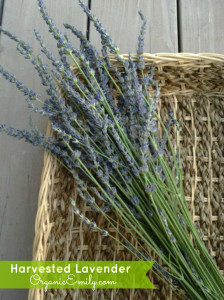
Harvested Lavender

This week I have been harvesting my lavender buds just before they bloom into full flower.  If you harvest the flowers when they are in full bloom the medicinal properties won’t be as strong or last as long.  Dry your flower buds in a basket under the shade of a tree, or hung upside down in a cool dry room in the house or in a dehydrator on the lowest setting at around 95 degrees or lower.
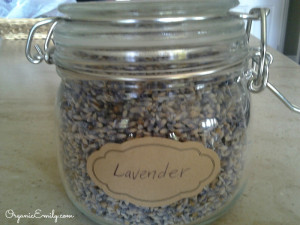
Laveder Jar

Once the buds are completely dry, remove them from their stems and place in a glass jar with a lid.  Lavender has profound calming and uplifting effects.  It has been used as a mild anti-depressant for many years.  It’s also great for tension headaches and insomnia.  I always have a bottle of lavender essential oil around to use as an antiseptic.  It’s antibacterial and antifungal properties helps to keep scrapes and burns clean and free from infection.  Essential oil from the lavender plant has been known as the “First Aid in a Bottle” because it is so versatile!  It’s ability to take the sting out of a bee sting or other insect bites is unbeatable!  It even helps take the pain out of burns and cuts.  Try a few of these fabulous recipes from my favorite book by Rosemary Gladstar, “Medicinal Herbs, A Beginners Guide”.

Calming and Antiseptic Lavender Spray

This recipe is simple, extremely versatile and safe for everyone!

7 tablespoons purified water

1 tablespoon witch hazel extract

10 drops lavender essential oil

1 (4 ounce) spritzer bottle

Place all ingredients into the bottle and shake well before using.  You can use it to mist bedsheets, a car or other rooms in the house.  I like to spray it on cuts and scrapes as an antiseptic.  It’s also great for spraying on public door nobs or on hands as a cleaner.

Lavender-Feverfew  Migraine and Headache Tincture

1 part lavender buds

1 part feverfew leaf and flower

80-proof alcohol, unpasteurized apple cider vinegar or glycerin

Place the herbs in a quart jar and cover with alcohol by an inch.  Place on counter for 3-4 weeks in a visible place and shake every day.  Strain with cheese cloth and keep in a dark blue or amber bottle out direct sunlight.

To Use:

For long term use for migraine headaches, take 1/2 teaspoon 2x a day for up to 3 months.  Discontinue use for 3 to 4 weeks and them repeat the cycle.  For severe acute situations take 1/4 teaspoon every 20-30 minutes for up to 2 hours.  Do not use during menstruation because it can stimulate bleeding.


Calming Lavender Massage Oil

1 1/2 ounces dried lavender buds

4 ounces nut or seed oil (apricot, grapeseed or almond)

10 drops lavender essential oil

1 glass quart jar

Pour oil over lavender buds.  Cover with lid and let sit in a sunny warm spot for 2-3 weeks.  Strain the buds out of the oil and place in jar.  Add the essential oil and keep in a cool dry spot for up to 6 months.  Use in a bath or for massage.

Growing and Using Medicinal Herbs: Calendula

Calendula Plant

Growing Calendula

This bright and cheery flower is a hardy long standing bloomer and very easy to grow!  My calendula has even continued to bloom after the first few snow falls!  It grows best in rich fertile soil, but will grow in poor soil too.  The more you pick the red, orange or golden flowers the more the plant will produce!  I usually let a few go to seed so I can save them and replant them again in the spring.  However,theyt will self sow very easily.  When the blossoms are ready to pick they have a sticky resin on the petals which contain anti-fungal properties.  Pick the flowers when the leaves are still slightly upright.  Calendula flowers make a good companion plant for broccoli and squash families keeping the pests away and attracting beneficial insects.

Medicinal Uses

Calendula promotes cell repair and growth, healing wounds when made into ointments or salves.  The flower is noted as antiseptic and anti-inflammatory.  It can be used topically or internally as a tea to keep infections at bay.  It’s a wonderful herb for babies as it is soothing and gentle and used for diaper rash, cradle cap and many other skin irritations including sores, burns and bruises.  The tea can also be used for treating gastrointestinal problems such as ulcers, cramps, indigestion and diarrhea.  It is also known to be one of the best herbs for nourishing and cleansing the lymphatic system.  It works to assist with moving congestion out of the body along with regular exercise.  Calendula has a perfect safety record with no toxicity reported.


Picked Calendula Flowers

Calendula is best harvested and dried to use in teas and salves.  Pick the flowers just as they open on a dry sunny day, the resin will be stronger and will leave a sticky film on your fingers.  Allow the flower to dry in a basket under the shade of a tree, on your counter top over a paper towel or on the lowest setting of your dehydrator.   Once dried you can make your own solar infused calendula oil.  Also be sure to let some go to seed so you can grow them again next year.  Simply allow the flower head to completely dry before harvesting seeds.  Keep them in a cool dry place inside a velum or paper envelope.

Calendula Oil

Calendula Oil

To make calendula oil fill a glass jar 3/4 full of dried flowers.  Fill the jar with olive oil to cover the buds by an inch and cover with a lid.  Place in a sunny, warm spot and let the herbs infuse from the sun for 3-4 weeks.  For double strength strain the oil and fill the jar again with more buds and put the oil back in the jar.  Start the process over again for another 3-4 weeks.  Once finished strain a last time and keep in a cool, dark place.  It will keep for a year in the refrigerator.   It can be massaged topically to the skin or can be made into a salve.


Calendula Salve

1 cup calendula salve

1/4 cup beeswax, grated

4-6 drops lavender essential oil

Warm the oil and beeswax over a very low heat until melted.  Check for consistency by dipping a spoon in the salve and placing in the freezer for a few minutes to see how it sets up.  If you want a firmer salve add more beeswax.  If you want it softer, add more oil.  Add the lavender essential oil which adds an antibacterial, antifungal and antimicrobial properties to the salve.  Mix quickly and pour into small jars or tins.  Let cool, put the lids on and storein a dark cool place.

To Use

Apply salve generously to treat skin rashes, wounds, cuts, diaper rashes or cradle cap.