Fresh Herb Fruit Salad

Fresh Herb Fruit BowlThe Farmer’s Markets are booming with all kinds of amazing fresh ripe fruit and veggies this time of year!  September has got to be one of my most favorite months!  The weather is perfect, the crops are in full production and I only wish it would last a little longer!  This salad will win any crowd over!  It’s packed full of flavor and brightness!  It’s definitely a happy salad! 🙂 You can add any of your favorite types of fruit.  Just make sure you have a variety of colors and you simply can’t go wrong!

1 pineapple chopped

1 cantaloupe chopped

3-4 fresh peaches sliced

2-4 cups strawberries hulled and quartered

1-2 cups fresh blueberries

1-2 cups fresh raspberries

2 cups green grapes or 4 chopped kiwi fruit

Dressing

Zest and juice of 2 limes

2 tablespoons raw honey (add more if needed)

1/2 cup fresh chopped mint or 1/4 cup lemon verbena

Gently mix all fruit and dressing together.  Place in a pretty bowl and enjoy!

Zucchini Bread 3 Ways!

Zuchinni BreadIt’s that time of year when the zucchini is coming out of our ears in the garden!  There’s so much and if you’re like me I’m not always willing or have the know how to deal with it all!  I came across a  fabulous basic recipe and altered it a bit to create a few more delicious varieties of zucchini bread.  The family loved them all!

Basic Perfect Zucchini Bread

(This recipe is from America’s Test Kitchen with a few alterations)

2 cups shredded zucchini

3/4 cup organic sugar

1 cup all-purpose flour

1 cup whole wheat, spelt, oat or barley flour of your choice ( or do it all with whole grain flour)

1 teaspoon baking powder

1 teaspoon baking soda

3/4 teaspoon salt

1/2 teaspoon cinnamon

1/4 teaspoon allspice

1/4 cup yogurt or milk of choice

1 tablespoon fresh squeezed lemon juice

5 tablespoons melted butter or organic canola oil

2 large eggs

Preheat the oven to 375 degrees.  Lightly spray a bread loaf pan with Pam or grease with butter.

Shred the zucchini and place in a strainer over a bowl.  Mix 2 tablespoons sugar into the zucchini and mix.  This will pull the excess water out of the zucchini so it doesn’t make the batter to wet.  Squeeze out the excess moisture and continue making the batter until ready to add.

Mix together all the dry ingredients and then gently add the rest including the zucchini.  Smooth in prepared pan and bake for 55-65 minutes.  Let the loaf cool in the pan for 10 minutes and turn out onto a wire rack.  Completely cool and serve.
 

Chocolate Chocolate Chip Zuchinni BreaadThis one is really a dessert.  You could get away with making it with all whole grains and even applesauce to replace the oil or butter.

Chocolate Chocolate Chip Zucchini Bread

2 cups shredded zucchini

2 1/2 cups flour of your choice

1 cup organic sugar

1/2 cup good cocoa powder (dutch processed is always best for baking)

1 teaspoon baking soda

1/2 teaspoon baking powder

1 teaspoon salt

3 eggs

1/2 cup melted butter or organic canola oil

2 teaspoons vanilla

1 cup chocolate chips

Preheat the oven to 350 degrees.  Lightly spray a bread loaf pan with Pam or grease with butter.

Shred the zucchini and place in a strainer over a bowl.  Mix 2 tablespoons sugar into the zucchini and mix.  This will pull the excess water out of the zucchini so it doesn’t make the batter to wet.  Squeeze out the excess moisture and continue making the batter until ready to add.

Mix together all the dry ingredients and then gently add the rest including the zucchini.  Smooth in prepared pan and bake for 50-60 minutes.  Let the loaf cool in the pan for 10 minutes and turn out onto a wire rack.  Completely cool and serve.

 

Cranberry White Chocolate Orange Zuchinni BreadThis recipe is one that reminds me of the beginning of fall!  The flavors of orange, spices and cranberries with white chocolate are just wonderful!  A fabulous  treat to bring to any gathering!

Cranberry White Chocolate Orange Zucchini Bread

2 cups shredded zucchini

3/4 cup organic sugar

1 cup all-purpose flour

1 cup whole wheat, spelt, oat or barley flour of your choice ( or do it all with whole grain flour)

1 teaspoon baking powder

1 teaspoon baking soda

3/4 teaspoon salt

1 teaspoon cinnamon

1/4 teaspoon allspice

1/4 cup yogurt or milk of choice

Zest of one orange plus 1 tablespoon juice

5 tablespoons melted butter or organic canola oil

2 large eggs

1/2 cup dried cranberries

1 cup white chocolate chips

Preheat the oven to 375 degrees.  Lightly spray a bread loaf pan with Pam or grease with butter.

Shred the zucchini and place in a strainer over a bowl.  Mix 2 tablespoons sugar into the zucchini and mix.  This will pull the excess water out of the zucchini so it doesn’t make the batter to wet.  Squeeze out the excess moisture and continue making the batter until ready to add.

Mix together all the dry ingredients and then gently add the rest including the zucchini, cranberries and chocolate.  Smooth in prepared pan and bake for 55-65 minutes.  Let the loaf cool in the pan for 10 minutes and turn out onto a wire rack.  Completely cool and serve.


Homemade Onion Powder

Homemade Onion Powder

When I first learned that I could make my own onion powder I was amazed at the simplicity of it.  I had to laugh a bit because I hadn’t thought of it before!  I harvested all my onions the last few weeks and kept the larger ones for cooking and the smaller ones I chopped into half moon shapes and dried.  Here is how I did it!

Harvested OnionsWash onions well and cut off stems so the onion is flat on one side (don’t cut off the root side).  Cut the onion in half directly through the root end.  Turn the onion so it’s sitting flat and cut in half moon slices.  Place on dehydrator trays and dry over night at the highest temperature setting.  This can also be done in the oven.  Set the oven to the lowest setting (about 170 degrees or lower if you can).  Onions may dry faster than overnight so keep an eye on them.

Dried Onions

Once the onions are completely dry remove from dehydrator and pulse in blender or food processor.  Store in a clean glass jar.  Use for all your favorite savory dishes!

Growing and Using Medicinal Plants: Elderberry

Elderberry Bush

Elderberries (Sambucus nigra) have not only been a favorite to people for centuries as a remedy for colds and flu, but many animals love it too!  I planted my elderberries from starts last year and I kid you not one of them is 12 feet tall!  They are fast growers!  I have lots of birds that like to feast on them and I am thankful for my little Yorky who likes to chase them away!  If you don’t have a dog to chase away the birds from your berries try using a type of netting to cover the shrubs so the birds can’t get in but the sunlight and water can.

Growing Elderberry

Elderberry can grow up to 30 feet tall given the right conditions.  It grows natively here up in our Utah mountains.  As kids our parents would take us up to the family cabin near Park City and we would pick the berries to make syrup.  Elderberry prefers rich moist soil and can grow anywhere from partial shade to full sun!  Cuttings are used as propagation rather than starting from seeds.  Although they can start from seed, it is much more difficult.  Just make sure you have a good space to put the shrub so it can grow and be happy!

Medicinal Uses for Elderberry

Elderberries are not typically eaten raw, they don’t taste very good for starters and if eaten in large amounts they can cause nausea and upset stomach.  They are best used when cooked.  Be sure not to use the red berries because they are poisonous!

Harvested Elder Flowers

Both the flowers and berries are used medicinally.  The flowers make a good tea for inducing sweating therefore helping to reduce fevers.

Elderberries on Plant

The berries are rich in immune-strengthening, anti-viral properties and are often combined with echinacea.  However, you don’t need to have a cold to use elderberry syrup!  It can be drizzled on pancakes and made into jams and pies!  With my newly harvested honey and the berries coming on it’s been fun to make a little syrup for the family!  Here’s my favorite recipe!

Elderberry Syrup

8 cups fresh elderberries (don’t use any green ones) or 4 cups dried berries

1 cup purified water if using fresh berries or 8 cups purified water if using dried berries.

1 cinnamon stick

4-6 cloves

4 1-inch pieces of fresh ginger

Honey (preferably raw and local)

Fresh Elderberries

Pick all berries off stems and fish out the green ones.  Place in a medium size sauce pan and add water, cinnamon, cloves and ginger.

Simmering Elderberry Syrup

Bring to a low simmer for 30 minutes or until the liquid has decreased by half in volume, be careful not to boil it!  (Your house is going to smell amazing at this point!)  Next strain the mixture and measure the liquid.

Finished Elderberry Syrup

Match the same amount of honey to liquid and stir in until melted.   Keep the syrup refrigerated for up to 3 months!  If using medicinally to fight off a cold/flu, take 1-2 tablespoons several times throughout the day.

Extending the Growing Season with Hoop Houses

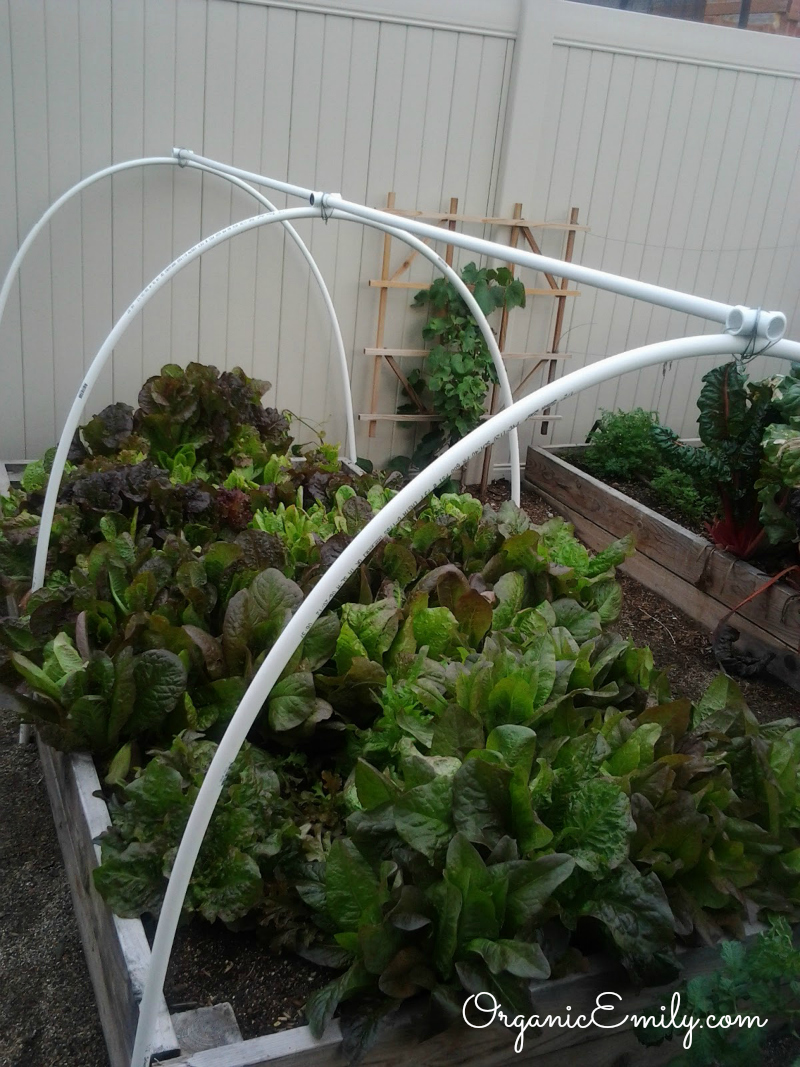
Hoop House 6

I did a post on hoop houses last year and wanted to share it again.  Making a hoop house is very simple and inexpensive!  You can extend your growing season from 3-5 months if you do it right.   Hoop houses and cold frames act as “cold storage” since the crops aren’t growing once the days get shorter and there is less sunlight.  We made our hoop frames towards the middle of October just before it froze, however I don’t suggest waiting that long.  We got lucky, it was a warm fall.   We decided to extend the growing season by making hoop houses over 2 of our grow boxes.  I had a different idea in mind when we put these together.  I thought we would be able to fit the pipes into T fittings and it would hold.  However, they ended up snapping and breaking so we ended up making some inexpensive adjustments.  A year later they are still going strong, so I know it worked!  Here’s what you’ll need:

Materials

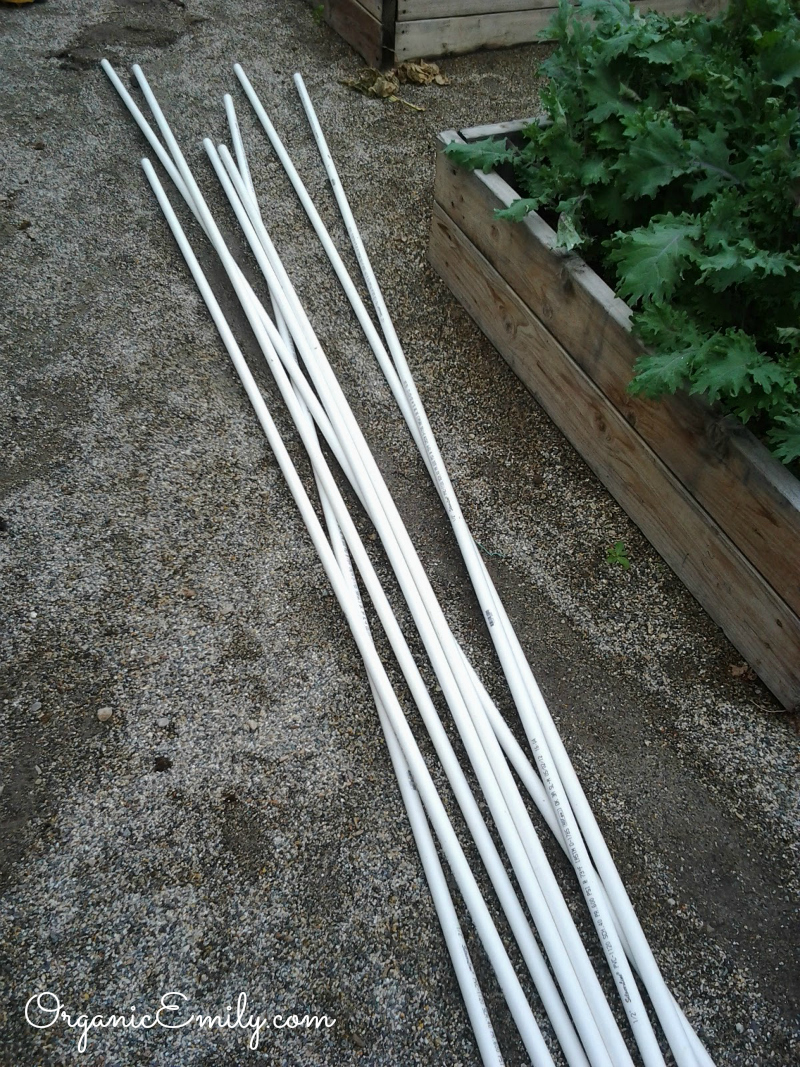
8 – 1/2 inch PVC pipes (for 2 4×8 boxes)

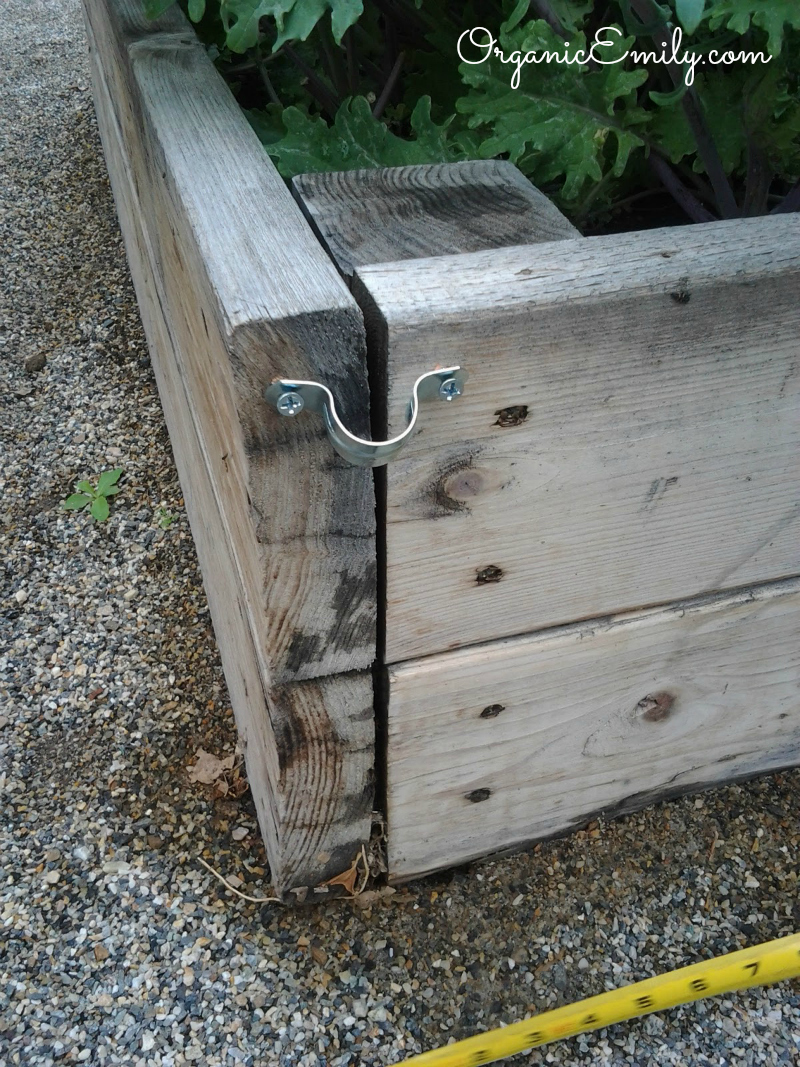
12 small metal brackets( from the electrical isle of Home Depot) with screws to anchor pipe to grow box (see picture below)

Wire to wrap the pipes together

Painters plastic as thick as you can find it (6-8ply)

Clamps for holding down the plastic

Heavy fabric row covers for additional insulation

Hoop House 1

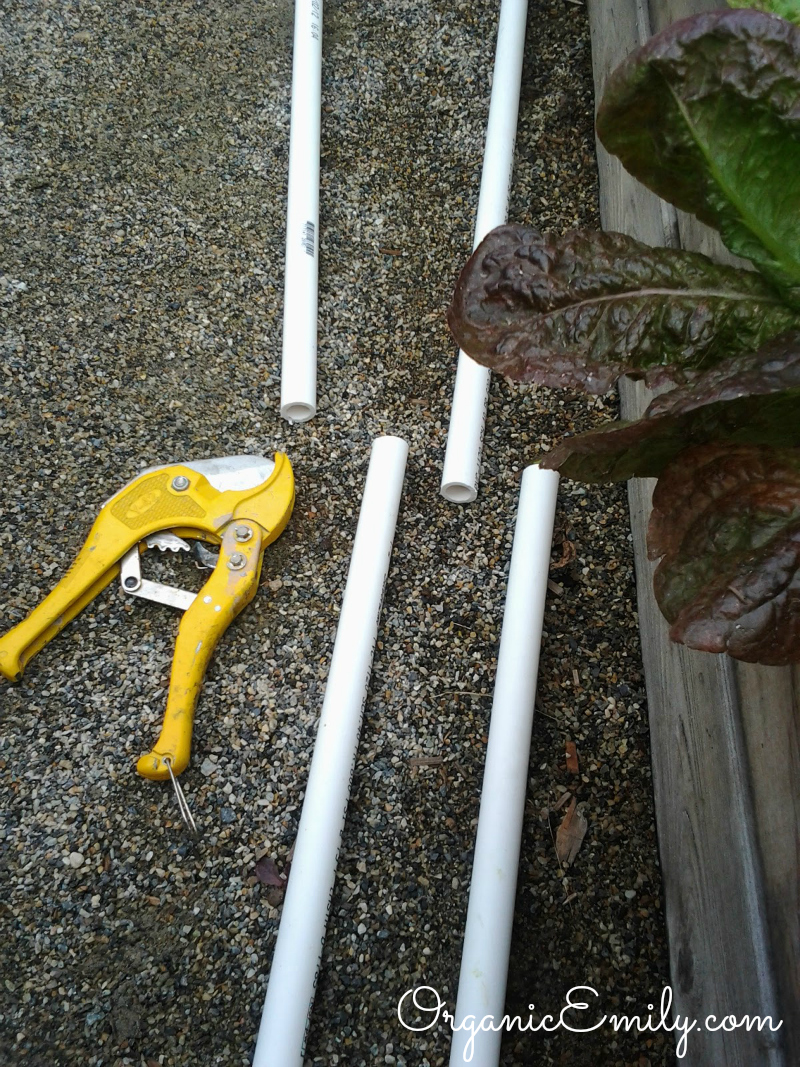
You will need 4 (10 foot) 1/2-inch pipes for 2 – 4×8 garden boxes.

Hoop House 2

Loosely secure 6 metal brackets onto the grow box.   3 on each side, measuring evenly between all 6.

Hoop House 3

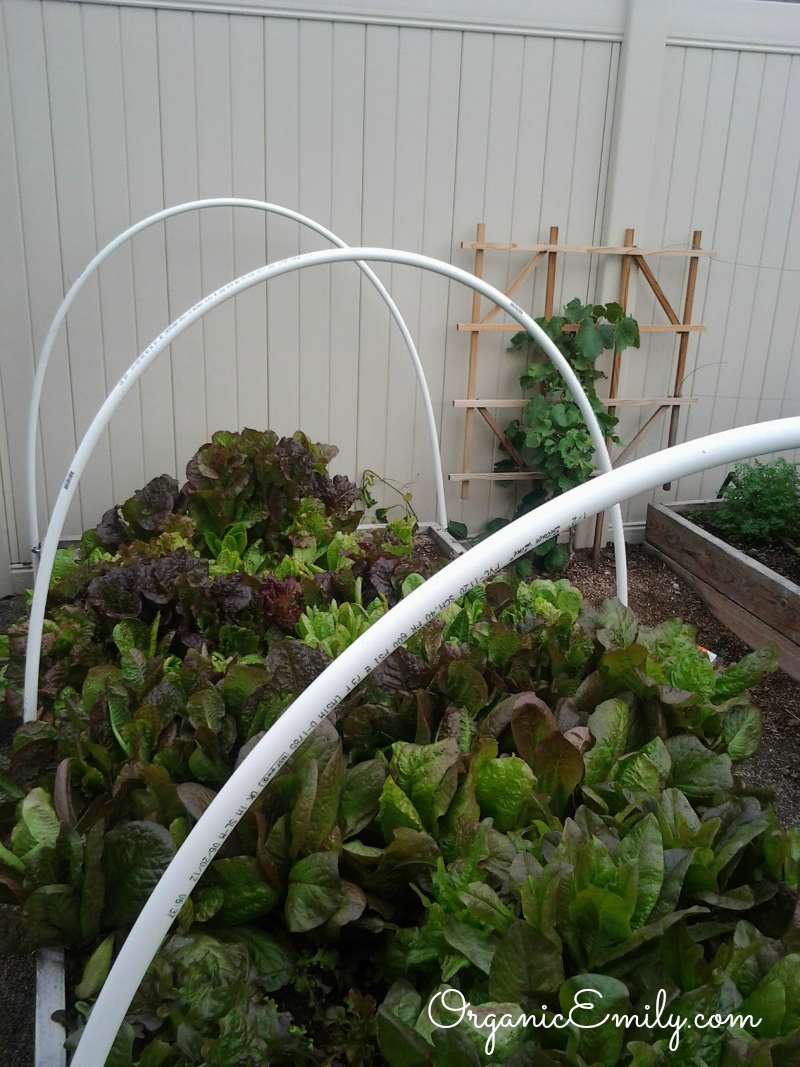
Slide the PVC pipes into place and secure the screws tightly.  If you put them together on a cooler day, try setting them out in the sun to warm them up so they are less likely to break.

Hoop House 4

Cut an additional pipe into 3 sections fitted and measured to be secured in between each hoop. Your measurements may be different from mine.

Hoop House 5

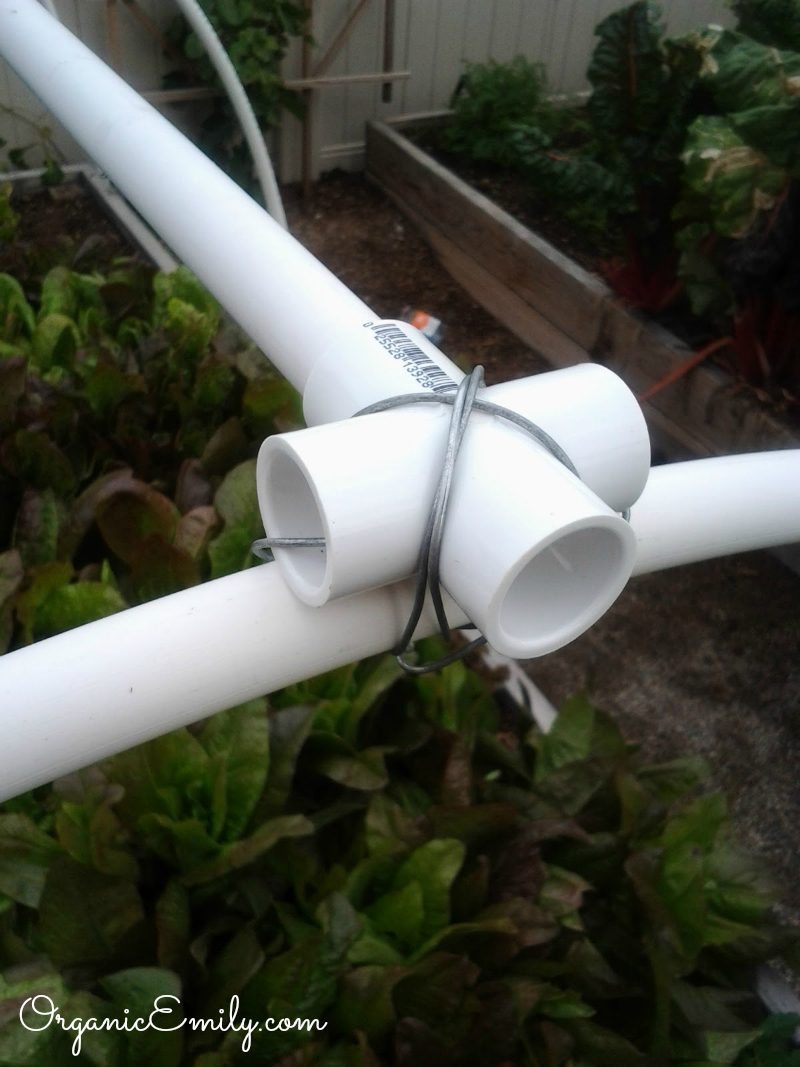
Fit the 1/2 inch pipe into a T and secure to hoop with heavy duty wire. Pipe must be cut to fit into the 3 T’s.

Hoop House 6

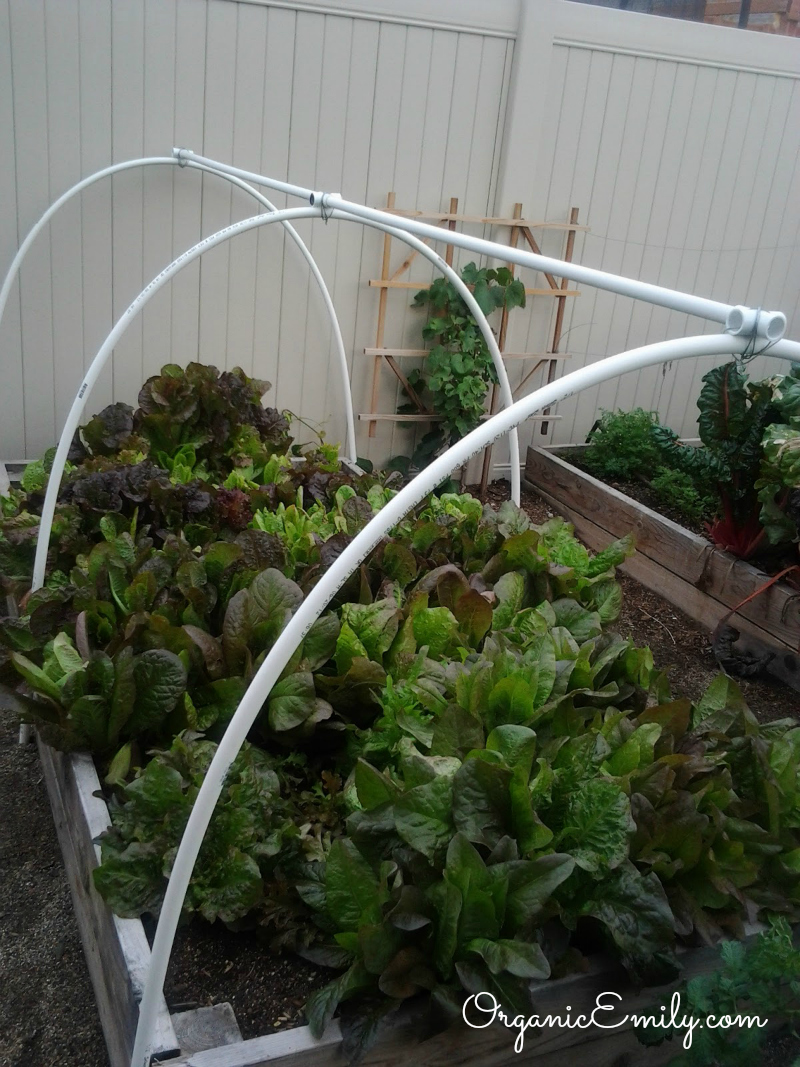
Frame is secured down and ready for use!

Hoop House 7

You will need the heaviest plastic you can find.  This is 6 ply.  If you can find 8 ply, that is even better.  Cut to fit the box so it hangs past the ground.

Hoop House 8

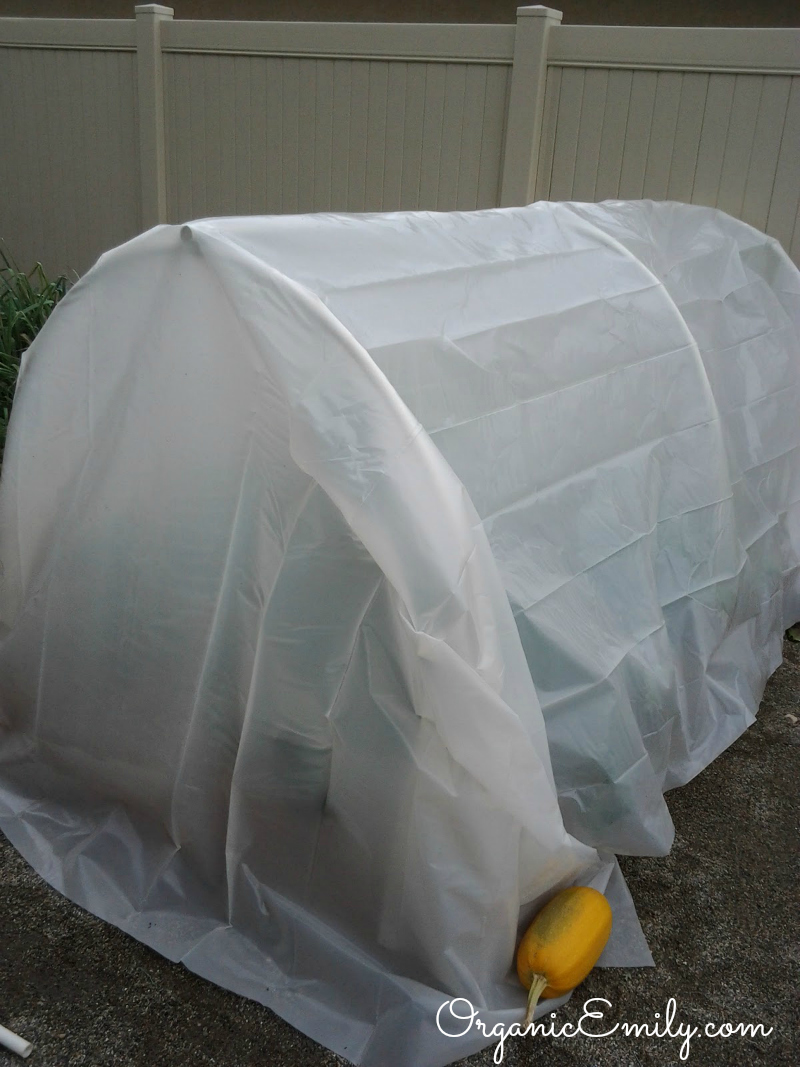
Secure with clamps or extra squash (just for demonstration :)…   Be sure to check the weather and give the plants air to breath especially if it gets over 40`, they can cook!

Hoop House 9

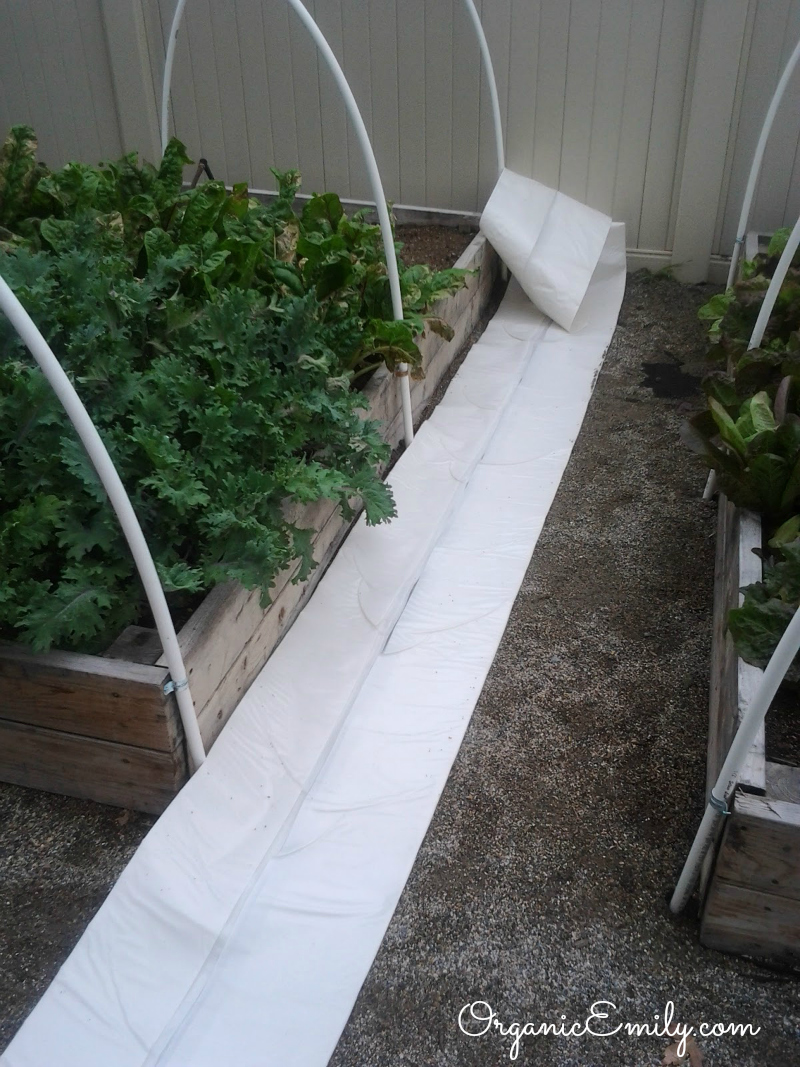
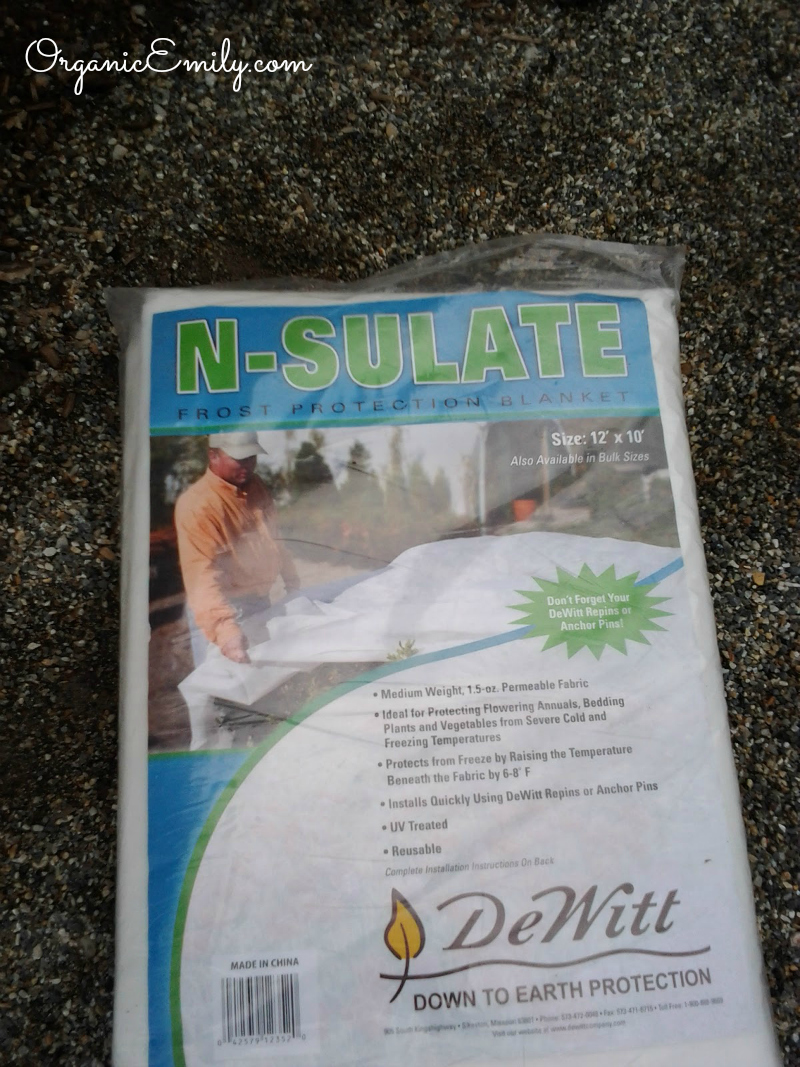
For an additional 8 degrees of protection you can use fabric row cover.  I place this over my crops and then put the plastic over the hoops.  I purchase mine at Steve Reagan (500w and about 3900s in Salt Lake City).  The last time you will water is about mid-November.  Be sure to harvest out of your “cold storage” when the temps are above 32 degrees in the winter if they are still going strong (it depends on where your garden boxes are placed in the yard).  South-facing protected area up against a fence or building is best.  For more information on year-round gardening check out one of my favorite books called “The Year-Round Gardener” by Nikki Jabbour.

Planting a Fall/Winter Crop

Seeds

If you think it’s too late to grow a garden this year, think again!  You can still plant cold crops and this month is the time to do it!  Cold crops are anything you planted in March and April like leafy greens and root vegetables.  Some of the seeds I just planted this week are from seed I have saved myself and others are from my local nursery.

Crops that can be planted August 1st-20th in Utah
Peas – plant July 20th
Chinese Cabbage
Broccoli (from starts)
Carrots
Spinach – September 1st
Kale
Lettuce (again)
Cabbage (from starts)
Swiss Chard
Turnips
Kohl Rabi
Beets
Parsley
Leeks
Green Onions
Radish – September 1st
Garlic – plant mid September
Cilantro
Dill
Any Perennial Herbs

Prepared Garden Bed

Prepred Garden Bed 2

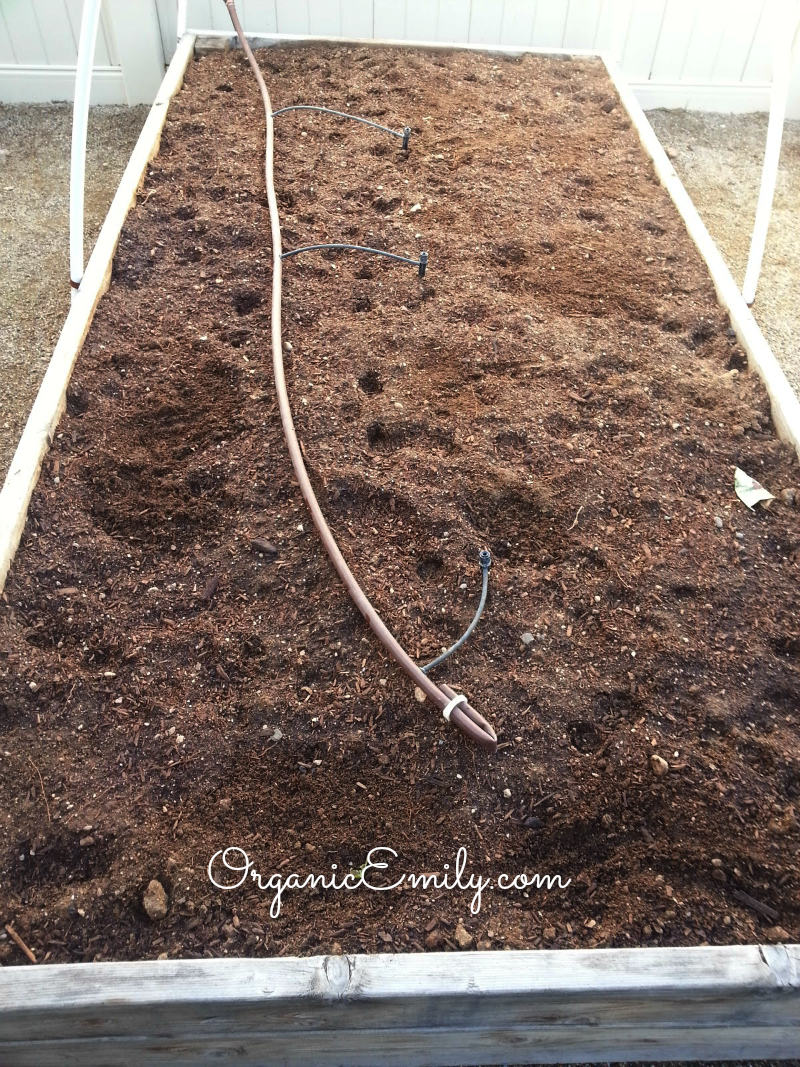
Here are a few of my beds I have prepared for fall planting.  In the first picture I had potatoes.  I harvested them all and then amended my soil with good organic compost and a granulated organic fertilizer.  I planted all my root veggies in the first box like rutabaga, turnips, carrots, beets and some Swiss chard (these are not part of the potato family so I’m good on rotating crops).

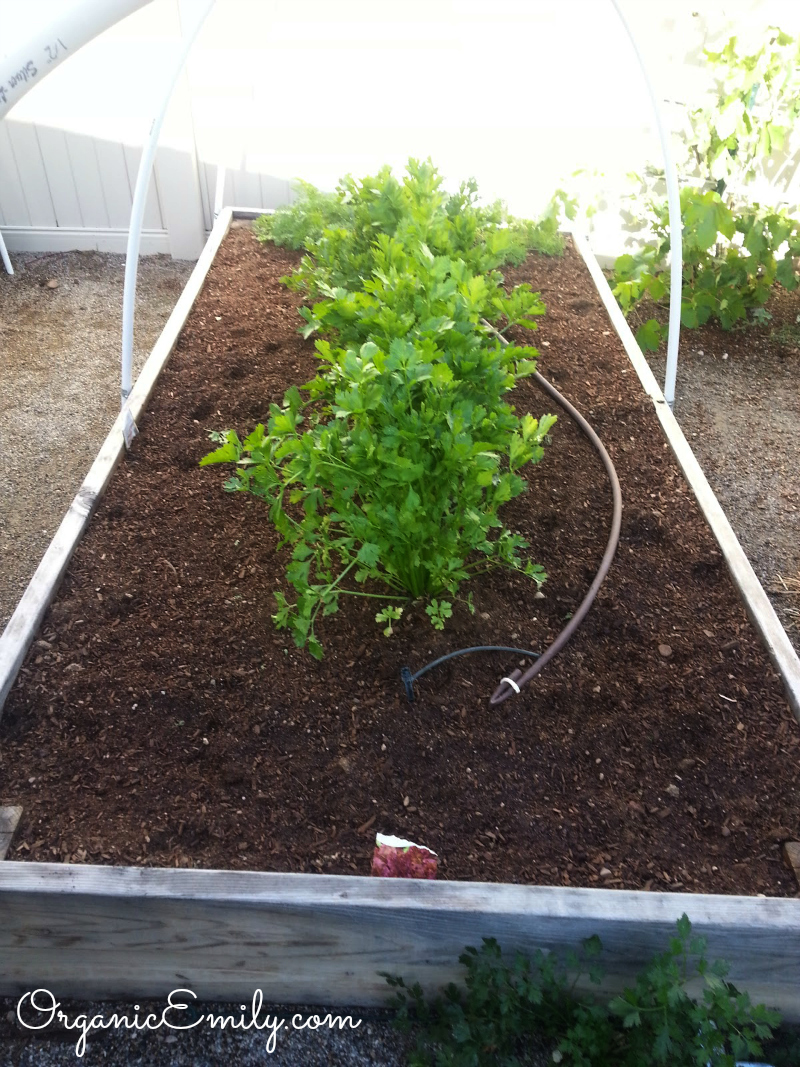
The second has celery in the center of the box I left from growing this spring.  It will last all through the fall if I protect it from frost.  I just harvested all my carrots and beets I grew around it and got it ready for planting.  Around the celery I planted 4 different kinds of lettuce, red leaf, butter head and a few loose leaf varieties.   In other boxes where my lettuce is going to seed I will plant my broccoli from starts growing in my basement.  I also have a place for spinach and kale too.  And of course I like to throw down lots of cilantro and dill seed all over as companion plants.

Be sure to look for my up coming post on how to make a Hoop Frame to keep those veggies going through the winter!

Organic Fertilizers and the Health of Our Soil

Organic Fertilizers

The soil in our garden is an entirely different world then the one we live in.  Hopefully filled with micro-organisms actively moving and alive!  Recent work and research done by Dr. Elaine Ingham, a soil microbiologist, has found that the use of toxins, including chemical ferilizers actually harm the good microbes found with in the soil that help control the bad ones, including unwanted diseases.  We can liken it to the over use of antibiotics within our own bodies.  Many of these drugs as we know have been over prescribed and over used to the point now that we have to use stronger strains to kill off the “bad” bugs that live within our own systems when we get sick.  Unfortunately, we also kill the “good” bacteria too, leaving our system vulnerable to more problems if left unattended without a proper diet and efforts to put those “good” bugs back into the system.

Dr. Ingham’s work was recently discussed in one of my favorite books on soil called, “Teaming with Microbes”, by Jeff Lowenfels and Wayne Lewis.  What they found was that the chemical fertilizers actually killed off the microbes within the soil that protected the root systems of the plants and chased away the larger animals like lady beetles and praying mantis’ who keep the pests at bay.  It is possible to create an oasis so to speak for these beneficial microbes and insects to do all the fighting for us as mother nature intended, leaving us to simply enjoy gardening!  Let’s discuss some of those methods and a few organic fertilizers that help and not hinder the world of microbes.

Compost

One of the most important things we can do every year is to put down some type of good organic compost into the garden beds.  This serves a number of purposes.  Most compost is made up of small wood chips and animal manure.  There are also composts made strictly from plant sources as well like mushrooms, seaweed and alfalfa to name just  a few.  Worm castings (poop), chicken and horse manures are good options, all are high in nitrogen.  Cow manures can be used occasionally, but not often due to it’s higher levels of salts which can be toxic to the soil if over used.

  • First, the compost acts as a barrier keeping the weeds at bay.  Be sure to not plant directly in the compost because the plants need soil to grow.  The compost can be mixed in gently into the soil or moved to the side until the plant grows up enough to bring the compost back around it.  As a side not I highly recommend a fabulous documentary called “Back to Eden”, a film that can be viewed online for free at backtoedenfim.com.  It discusses the importance of using a no-till method and how this protects the micro-organisms in the soil.
  • Second, compost is full of large organic matter particles that allow for proper drainage and aeration, keeping the root system of our plants healthy.  This is particularly important here in Utah since we are very depleted in organic matter.  Most healthy soils should have about 5% organic matter, we typically have about 1% or less.
  • Third, compost is full of dense nutrients that are available to the good microbes who help to break them down turning them into food for plants!

Fish Emulsion 

Fish emulsion is an excellent non-burning plant food that comes from manufactured fish waste not used for processing.  If you don’t mind your yard smelling like the ocean for a day this can be a great option.  It is classified as an organic fertilizer because it is made from material naturally found in nature.  Long term use of fish emulsion can help improve the health and microbe complexity of soil.  It can be used for all garden beds including flower and vegetable.  It is higher in nitrogen than a lot of other organic fertilizers, up to five percent of its nitrogen is readily available, which gives plants a boost while soil microbes break down the rest.  Fish emulsion can be used every 3-4 weeks.

Blood and Bone Meal

Both blood and bone meal come from animals.  Blood meal is very high in nitrogen and should be used as directed.  Bone meal has been known to be a very good root stimulant.  It is very high in phosphorus and should also be used as directed.  I highly recommend getting your soil tested from your local extension office.  They can test your soil for nutrient count and tell you what you need and what you don’t.  This is important to know and understand because plants need different nutrients to do different things.  For example, nitrogen helps to increase leaf growth and phosphorus helps to increase flower/fruit production.  However a word of caution before just applying any fertilizer to your soil, our Utah soils are very high in phosphorus already, so not very much is needed.

Fertilizers with Beneficial Bacteria and Mycorrhizae 

There are some great organic fertilizers out there that contain beneficial soil microbes you can add to your soil for all garden beds.  For example, mycorrhizae is a beneficial form of fungi that can actually combat powdery mildew and other fungi problems.  Mycorrhizae will continue to grow year after year strengthening the soil.  They can come in powder, liquid and granulated forms.  I like a particular brand called “Garden Bloomers”  found at any local nursery.  What ever brand or source you choose be sure it’s something that won’t kill off the microbes in your soil.  A key concern with inorganic or synthetic fertilizers is that nutrients not immediately taken up by plants can cause pollution. Excess nitrogen fertilizer is a common cause for nitrate groundwater pollution. Phosphate fertilizer runoff can pollute streams, rivers and lakes by encouraging overgrowth and algae that deplete oxygen supplies and kill fish. While organic fertilizers can also cause pollution when used to excess, they are generally much safer to use because they release nutrients gradually, at a rate closer to plants’ need for them.


Growing and Using Herbs: Cilantro

cilantro

There aren’t too many things that are better than fresh homemade salsa with cilantro form the garden!  It also has some amazing health benefits too!   This is a picture I took back in May from cilantro seeds I grew last fall.  It had only come up maybe an inch before the weather got cold and the days became shorter and stopped growing.  As the snow covered the ground during the winter it helped to insulate the little cilantro leaves just enough to protect it from the hard cold temperatures we had.


Cilantro is known for being an effective toxic metal cleanser! It is a powerful herb with natural cleansing properties. The chemical compounds in cilantro bind to toxic metals and loosen them from the tissue. Many people suffering from mercury exposure report a reduction in re-occurring feelings of disorientation after consuming large and regular amounts of cilantro over an extended period. Make sure the cilantro you use is organic, otherwise it may have already pulled those toxins into the plant!  The best way to know for sure is to grow it yourself or buy from a reliable organic source!  Cilantro also has strong antioxidant properties, has been known to aid in improving sleep and also has very strong anti-fungal and anti-bacterial properties.


I often get the question, “How can I make my cilantro last a little longer in the garden? It always seems to bolt quickly.”  It can bolt quickly, especially when the temperatures become warmer.  I plant my cilantro seeds (coriander) every two weeks so I am constantly harvesting throughout the growing season. It also reseeds itself very easily if you let it flower and allow the flowers to dry and produce seed.  The seeds you sow in the spring will produce more seed from mature plants.  As they drop to the ground you may find new little cilantro plants start to come up in the fall and even the following spring.  Cilantro grows well in rich, well draining soil and does not like to be removed once it has been planted either by direct seed or transplanting.  It prefers full sun, but will grow in some shade too.  Sow the seeds 1/2″ deep and thin every 4-6 inches.  When using cilantro for cooking, use the young leaves that are broad and shiny.  They tend to be less bitter and add incredible flavor to many dishes!  Here are a few of my favorite recipes using cilantro!


Ingredients for guacomole

Fresh Guacomole

Recipe:

This homemade guacamole is so good, you may find that after one taste, there won’t be any left to share with others!  This is one of our family favorites and it is so good for you!
4 medium or 3 large ripe avocados, smashed
1/2 red onion, finely chopped
2 serrano peppers, seeded and minced (add more seeds later to increase heat)
2 limes, juiced
1 bunch cilantro, chopped
salt and pepper to taste
Mix all ingredients together in a medium size bowl and serve with organic corn chips or on a whole grain tortilla!  Delicious!
Southwest Black Bean Salad
A delicious and refreshing salad!  A great addition to any meal!

Recipe:

8 cups shredded red leaf lettuce (1-2 heads)
2 cups cooked or canned black beans, rinsed and drained
2 cups bite-sized sweet red pepper strips
2 cups frozen or fresh corn kernals
1/4 cup cilantro (about 1 bunch)
1/4 cup orange juice
1/4 cup cider vinegar
1/4 cup organic canola oil
1 teaspoon ground cumin
1/2 teaspoon sea salt
1/8 teaspoon red pepper flakes
Combine in large bowl the lettuce, beans, peppers, corn kernels and cilantro.
For dressing combine the remaining ingredients listed in a tightly sealed jar or Tupperware bowl and shake until mixed well.  Drizzle over salad.  Eat immediately.
Southwest Quinoa Salad
Perfect for lunch or a side for dinner!  This super healthy and delicious recipe is so simple!  I got it out of one of my favorite recipe books called, “Quinoa, The Everyday Super Food”.

Recipe:

2 cups water
1 cup quinoa, uncooked
1/3 cup olive oil
1/3 cup freshly squeezed lime juice
4 tsp. apple cider vinegar
2 1/2 tsp. ground cumin1 jalapeno, seeded and minced
1 1/4 cup frozen corn kernels, thawed
1 chopped red bell pepper
1 (15oz.) can black beans, rinsed and drained
1/3 cup chopped fresh cilantro
2 avocado,s chopped
sea salt and pepper to taste
Cook quinoa with the water in a rice cooker or on the stove like you would rice.  While that is cooking. mix together the olive oil, lime juice and vinegar in a small bowl.  Once the quinoa has finished cooking and has slightly cooled, place the dressing over the quinoa in a large bowl and allow the warm quinoa to infuse the flavors.  Chop and add the rest of the ingredients to the quinoa and check to see if more salt and pepper is needed.  Can be kept in an airtight container for up to 3 days in the fridge.

Growing and Using Medicinal Herbs: Raspberry Leaves

Raspberry Bush

Growing Raspberries

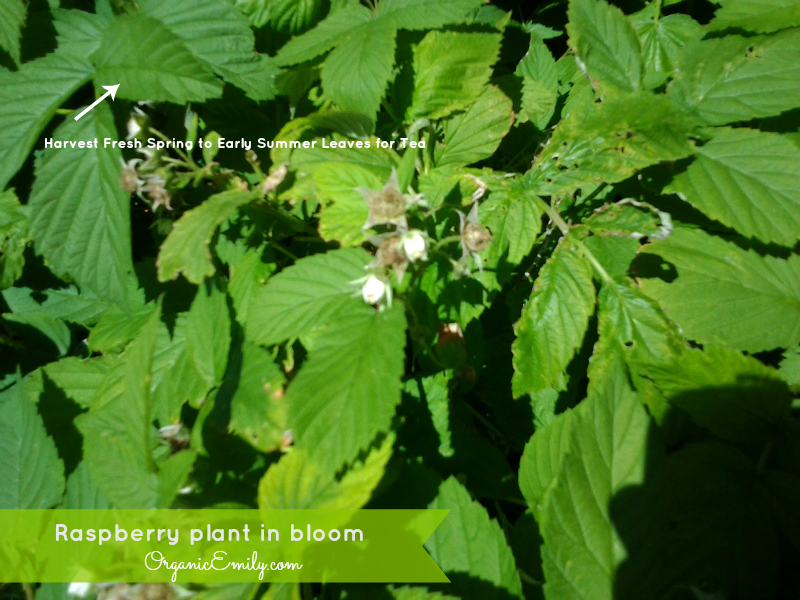
Every garden cannot be complete without a raspberry patch!  Those delicious sweet juicy red berries are one of God’s greatest gifts to man in my opinion!  I grow mine where they can’t take over to quickly, inside a garden box with the house on one side and the driveway on the other.  They really love to spread!  Raspberries are native to Utah and grow well up in the mountains!  They prefer to have morning sun so they will do best on the east side of a garage, shed or house.   Make sure they get at least 8 hours of sunlight to produce fruit.  They are big water feeders and really prefer to be mulched with compost to keep the moisture in and regulated.  Raspberries are very easy to grow, however they can be prone to iron chlorosis.  I will give mine a dose of chelated iron (slow release) every 4-5 weeks to keep the leaves green and health.

Drying Raspberry Leaves

Using Raspberry Leaves

  • Raspberry leaves have been known as a female herb for centuries.
  • Many people including myself have used it to strengthen the uterine wall while relaxing the smooth muscle inside the uterus to help alleviate cramps.  Some even claim that it improves the chances of implantation and decrease the risk of having a miscarriage.   The leaves are also full of vitamins, minerals, and plant compounds that help the body to detoxify excess hormones that may impede conception.
  • During pregnancy, one cup of tea can help with morning sickness, strengthen the baby in utero with all the nutritional benefits it provides and has been reported to reduce leg cramps and swelling in late pregnancy.   The tea benefits the labor process as well, strengthening and shortening the durations of contractions. The benefits raspberry leaf tea provides for mother and baby after birth are rich breast milk due to the high levels of minerals as well as helping to regulate postpartum hormones bringing mom back to a healthy state of mind.  Some women need to be cautious while using raspberry tea during pregnancy if they have experienced C-section (past or planned), premature labor, bleeding during pregnancy, expecting twins or any other complications.  Always talk to your health care provider first before taking any supplements during pregnancy.
  • Even if you are not interested in getting pregnant raspberry leaf tea can help reduce cramping and regulate hormones, decreasing PMS.
  • The nice thing about raspberry leaf tea is that it is a balanced food so it’s safe for virtually everyone at every stage of life.  My 8 year old daughter loves to drink it!


Harvesting Raspberry Leaves

The best time to harvest raspberry leaves is in the late spring through early summer.  I cut enough every year to fill a gallon glass jar with dried leaves.  It’s easiest to dry the leaves in a dehydrator, but you can do it outside in the shade of a tree on a screen too.

Once the leaves are dry, place them in a cool dark place.  They should keep for a few years.


Emily’s Favorite Tea Blend

1 tablespoon dried raspberry leaves

1 tablespoon dried chamomile flowers

1 tablespoon dried peppermint leaves

4 cups purified boiling water removed from the heat.  Place the herbs in a tea infuser and let steep in hot water for 15-20 minutes.  Enjoy!


Harvesting and Using Broccoli

harvesting and Using Broccoli

I love broccoli!  It’s so easy to grow and is such a healthy vegetable!  This year I started my seeds under lights in February and planted them in the ground the second week in March.  I haven’t had problems with pests thankfully.  But, if you have problems with cabbage worms or other bugs, cover the starts with a fabric row cover thin enough to allow light and water penetration in.  Make sure you bury the edges in the ground around the plants so the little white butterflies can’t lay their eggs on them!  If you don’t have fabric row covers or didn’t get around to putting them on in time, you can use a garlic spray to get rid of them.  Here’s the recipe:

Homemade Garlic Bug Spray

Blend 2-3 bulbs garlic in a bit of water
Add 2 cups water,
2 tablespoons plant based liquid dish soap,
1 teaspoon cayenne pepper and allow to sit over night.
Strain through a cheese cloth and put in sprayer and spray the plant thoroughly. This recipe also works well for wireworms, ants, aphids, slugs, cutworms, and caterpillars.
  Broccoli has so many health benefits!  I am grateful my kids will eat it by itself, lightly steamed.  However, if you or your loved ones don’t appreciate as much as we do, try slipping it into salads or soups for added nutrition.  Check out the 9 Benefits of Broccoli  I love that it is an alkaline food, helps prevent cancer, reduces cholesterol, and detoxes the body!

Harvesting broccoli is very simple. Once the head of the plant has grown to a medium – large size (before the head becomes loose and starts to flower) cut it off with a large kitchen knife. Notice in the picture there are little florets next to where I cut off the big one in the middle. You can let these get a little bigger and cut them off for use later or harvest now.

Broccoli Going to Seed

Here is a head I didn’t catch in time, so I will let it go to seed and save them for starting seeds next year or in the fall. This is Waltham broccoli (an excellent variety for Utah).

Broccoli 4

Broccoli Recipes

Vegan Creamy Broccoli Soup

Vegan Creamy Broccoli Soup

It’s hard to miss the cheese in this one!  It’s so good!

6 cups vegetable stock

1 cup cashews

1 medium onion, chopped

1 celery stalk, chopped

1 large carrot, chopped

2 garlic clove, chopped

1 red pepper, chopped

2 medium potatoes, peeled and chopped to 1 inch size cubes

1 large head of broccoli, chopped (about 4 cups)

2 teaspoons dried thyme

Salt and pepper to taste

Puree 1 cup of vegetable stock with the cashews in a blender until smooth.  Set aside.

In a large dutch oven saute the onion, celery and carrot over medium heat in 1 cup vegetable broth for about 5minutes, until tender crisp.  Add garlic, red pepper and potatoes.  Cook for a few more minutes.  Add the remaining 4 cups of broth and broccoli, thyme and salt and pepper.  Bring to a boil over high heat.  Cover and turn heat down to medium low and let simmer until the broccoli and potatoes are soft, about 10 minutes.  Add the cashew cream to soup and stir until mixed.  Remove from pot and puree half the soup in small batches.  You can leave some chunky or puree it all.  Serve with a crusty bread and salad!  Recipe from Forks over Knives Cookbook


Broccoli Pear & Feta Salad

Broccoli, Pear & Feta Salad

This delicious invention came from a last minute need to put together an extra salad for a family gathering.  I have to say I was pretty proud of myself!  This was so good!  From the garden: broccoli and mint

2 Tablespoons agave

2 cups pecans halves

Coat the pecans with agave in a medium size skillet on medium-low heat.  Constantly stir for 5-10 minutes until the pecans are caramelized and slightly darkened.  Let cool.

In a bowl mix together:

1-2 heads fresh broccoli chopped into bite size pieces

4 pears chopped

1 cup crumbled feta cheese


Mint-Pepper Dressing:

In a blender puree:

1 cup peppermint or spearmint leaves

Juice of 2 lemons

4 cloves garlic

1 teaspoon peppercorns

1 teaspoon salt

1 cup olive oil

2 tablespoons agave

Pour just enough dressing to coat the salad and serve!  Save the rest of the dressing in an airtight container for up to 2 weeks.