Early June Bloomers

Check out what’s blooming in my yard this week!

Blue Perennial Salvia

A Honey Bee favorite!  Blooms late spring early summer just before lavender!  Cut it back once it’s finished blooming to give it another chance to bloom a second time!

Daylilies

Day lilies add bright vibrant color to the garden blooming all summer long!

Jackmanni Clematis

This beautiful Clematis blooms all June long right by my back door!   Give it a big enough trellis to climb and you will see blooms everywhere!

Dianthus

A pretty vibrant pink perennial that grows low to the ground.  Great for borders and edges!

blue sage

Blue sage is another bee loving plant when in bloom!  This medium size perennial is beautiful and aromatic!

Chives

Another perennial herb that can be placed in the flower beds with it’s pretty purple blossoms!  Be sure to pluck off the flowers once they dry, unless you want to spread new chive plants all over for next year!

Corabell's

I love corabell’s!  Their long blossoms make for beautiful bursts of color in a spring bouquet!  The foliage is low growing with taller wispy blooms.  They do best in part sun/shade.

ground cover 1

My yard is filled with different kinds of water-wise perennial ground cover to keep the weeds at bay !  I love this one because the bees benefit too!  Just be sure to watch your step!

English Daisey's

These little plants create a nice border bursting with color all spring and early summer long!  They may even last a little longer in shadier spots!

Lavender

Some of my many lavender plants are getting ready to bloom and will be soon covered with honeybees!  I’ll be harvesting the blossoms for may purposes!

English Thyme

Thyme!  One of my favorite herbs!  The bees love this one too since I didn’t cut it back before it flowered!

Mock Orange

This lovely shrub can get up to 6 feet tall!  It is known for it’s lovely citrus scented blooms and sits on the east side of the workshop out in back!

Old Fashioned Rose

These old fashioned roses have a divine scent!  They also provide rose hips high in vitamin C after the blossoms produce!

Pin Cushion Flower

A dainty perennial that blooms all summer long!  Low to medium growing in height.

Pink Peony

One of many peonies in my garden!  This is the first one to bloom in my yard.  This year she had 24 blooms!

Salmon Pink Poppy

Have you seen a prettier Poppy?!  I need more of these!

Wegelia

Another bee loving shrub with blossoms I wish would last all summer long!

yarrow

Yarrow’s  bright and cheery flowers bloom all summer long!  Not only does it add color to the garden but it also has medicinal purposes too!  Look for my post on medicinal purposes for yarrow soon!

Growing and Using Herbs: Peppermint and Lemon Balm

Peppmint and Lemon Balm

I grow my peppermint, spearmint and lemon Balm in pots because they are very invasive perennials!  These are all apart of the same family and have many benefits!  Let’s talk about just a few.

Peppermint

  • Mint is an excellent pest control when grown around the garden and home.  It deters mice, ants,  flies, roaches and moths.  It also attracts beneficial insects like honey bees and other pollinators when allowed to flower.
  • Peppermint has many medicinal properties as well.  It stimulates the digestive system relieving cramps, gas, bloating, nausea, diarrhea and other stomach problems.  It is also known to have astringent, antiseptic, antibiotic, antimicrobial components and is great for using on cuts, burns and other wounds.  I use it religiously for headaches!  Whenever I feel the tension coming on I will apply both peppermint and lavender essential oils to my neck and shoulders and it goes away in just a matter of a few minutes!  If you don’t have the essential oils, but grow it in your yard or home try mashing up a few leaves to release their oils, add it to a little bit of olive oil and massage it into  the area needed.  The next time you have a cold try drinking some peppermint tea to help relive congestion.


Lemon Balm (Melissa)

  • Lemon Balm, a pollinator attractor, has been known to be a calming herb, both for the nervous system and digestive system.  It was used as far back as the Middle Ages to relieve stress, promote sleep, improve appetite, ease discomfort associated with indigestion and treat cold sores.   I like to make a calming tea using lemon balm with other herbs like chamomile, calendula and peppermint.


Drying Herbs

Harvesting and Drying Herbs

Before my peppermint and lemon balm get to big and their leaves become smaller just before flowering, I harvest big bunches for drying and using later.  Cut the herbs back towards the ground leaving a few inches of the plant.  Don’t worry they will come back with a vengeance and you can do it all over again in another few weeks!   From there you can rinse any dirt or bugs off the plants and dry them one of 3ways.  First, you can do it the way I did here in the picture.  Tie a rubber band around a bunch and then thread a piece of twine through hooking it to a hanger.  Allow to dry out of direct sunlight, hanging upside down for a week or two.  Second, you can take the leaves off the stems and dry in a dehydrator.  It’s certainly the fastest way to dry anything!  Third, get a screened frame and allow the herbs to dry on top under the shade of a tree, again out of direct sunlight.  Once the herbs are completely dry store in a cool dark place, preferably in a glass jar.


Fruit Salad

For a heavenly addition to any fruit salad try adding chopped fresh mint, lemon balm, basil or even lemon verbena!  You can do what I do and make a simple raw syrup to put over a big bowl of freshly chopped fruit.

2 limes zested and juiced

2 tablespoons raw honey

1/4 cup chopped peppermint or 2 tablespoons chopped lemon balm, basil or lemon verbena


Growing and Using Herbs: Dill

Growing and Using Herbs: Dill

Right now in my garden, dill is at it’s peak of foliage just before going  to flower and seed in the next few weeks!   These tender leaves make a delicious and refreshing addition to many dishes including eggs, salads and fish.  Once it begins to flower, it adds a charming and whimsical addition to the garden, attracting beneficial insects and deters some of the bad bugs!

Companion Planting with Dill

In any vegetable garden, dill can benefit the members of the cabbage family, onion family, lettuce, corn, and cucumbers.  Avoid planting it with carrots and tomatoes. Many of the same insects that benefit vegetables will also benefit flowers through pollination.   Dill attracts wasps, hoverflies, tomato horn worms and honeybees.  Dill also repels aphids, mites, cabbage loopers and squash bugs. It is also one of the few annuals that can be planted with fennel which should be avoided by almost everything else.  Next year I plan on planting dill around my plum tree, currants and honeysuckle to keep the aphids away!

How to Plant Dill

Dill is probably one of the easiest things to grow!  It is another water-wise plant that needs full sun and well draining soil.   Add a little organic matter like compost to your soil to help with keeping the soil lose and free from compaction.  Dill germinates well in soil that is 60`-70` and can be planted from mid spring to early summer.  It can grow in 6 hours of sun, but will do well with more.  Dill self seeds, so you can expect it to return next year provided the soil conditions are the same.  Plant dill next to flowers with a variety of color.  Its light green stem and yellowish green flowers contrast nicely with flowers that produce dark petals, making the garden jump in color. If garden aesthetics are what you do best, sprinkle dill seeds in a variety of locations throughout your flower garden. The bouquet of flowers accentuated by sprigs of green leaves allow the vibrant colors of the flowers to stand out.  Dill not only looks beautiful but also adds a lovely fragrance to the garden.

Harvesting Dill

The best time to harvest dill is when the weather is cool or in the morning just like other herbs.  Cut the flower heads after they begin to go to seed, but be sure to let some complete the life cycle to reseed the ground or save for the following year to be placed in an intentional part of your yard.  A dill harvest is another advantage of growing this herb.  If you enjoy making pickles, grow plenty of dill. For each jar of dill pickles, at least two flower heads and several sprigs are necessary.  Dill can be planted in mid spring to early summer.   I recommend planting both times so that if you do like to pickle cucumbers, you’ll have some around for when the cucumbers are ready.

I love the flavor of dill!  Here are just a few of my favorite recipes!  Next time you make a green salad, throw some dill in, you will be delighted!
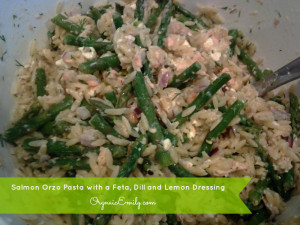
 

Salmon Pasta Salad with a Feta, Dill and Lemon Dressing

Salmon Orzo Pasta with a Feta, Dill and Lemon Dressing

6 cups water
1 pound asparagus, trimmed and cut into 3-inch pieces
1 cup uncooked orzo (rice shaped pasta)
1 (1 1/4 pound) skinless salmon fillet
olive oil
1/4 teaspoon salt
1/4 teaspoon freshly ground pepper
1/2 purple onion, chopped
1/2 cup feta cheese
1 tablespoon freshly chopped dill
3 tablespoons freshly squeezed lemon juice (about 1 lemon)
2-3 tablespoons olive oil
salt and pepper to taste
Bring 6 cups of water to a boil.  Add the asparagus and cook for 3 minutes.  Remove from the pan with a slotted spoon and place in large bowl.  Add the pasta to the water and cook according to directions on package.  In the meantime, drizzle salmon with a little bit of olive oil and sprinkle with salt and pepper.  Broil  for 5 minutes or until salmon is flaky.  Set aside once finished.  Add chopped onions, feta cheese, dill, lemon juice, olive oil, and salt and pepper to taste into the asparagus.  Add fish and drained pasta.  Mix thoroughly. Serve immediately.  Recipe from Cooking Light, Fresh Food Fast. pg. 105
Eggs, Lemon, Dill and Toast

Fresh Eggs and Greens from the Garden with Whole Grain Organic Toast and Lemon Dill Dressing

Garden Egg Sandwich
1-2 pieces of good whole grain bread (I like to make my own or use Dave’s Organic Bread from Costco)
Fresh greens
Fresh egg, cooked to your liking
Lemon dill vinaigrette (recipe below)
2 teaspoons fresh Parmesan (optional)
Lemon Dill Vinaigrette
1 lemon zested and juiced
1 tablespoon fresh chopped dill
1/3 cup olive oil
Salt and pepper to taste

Old Fashioned Potato Salad

When it comes to potato salads, I haven’t found very many worthy of putting into my mouth.  I’m just not a fan!  However, I did try this one from Barefoot Contessa and fell in love!  It not only taste fabulous but is pretty too!

3 pounds small red potatoes
kosher salt
1 cup good mayo
1/4 cup buttermilk
2 tablespoons Dijon mustard
2 tablespoons whole-grain mustard
1/2 cup chopped fresh dill
freshly ground black pepper
1/2 cup medium-diced celery
1/2 cup small-diced red onion
Place the potatoes and 2 tablespoons salt in a large pot of water.  Bring the water to a boil, then lower the heat and simmer for 10 to 15 minutes, until the potatoes are barely tender when pierced with a knife.  Drain potatoes in a colander, then place the colander with the potatoes over the empty pot off the heat and cover with a clean, dry kitchen towel.  Leave the potatoes to steam for 15 to 20 minutes, until tender but firm.
Meanwhile, in a small bowl, whisk together the mayo, buttermilk, Dijon and whole-grain mustards, dill, 1 teaspoon salt and 1 teaspoon pepper.  Set aside.   When the potatoes are cool enough to handle, cut them into quarters or halves, depending on their size.  Place the cut potatoes in a large bowl and pour the dressing over them.  Add the celery and red onion.  Refrigerate for a few hours or up to a day to allow the flavors to blend.

Healthy Chocolate Chip Pumpkin Cookies

Healthy Chocolate Chip Pumpkin Cookies

Recipe:

These sweet cookies are packed with lots of good stuff!  They didn’t even make it to a pretty plate before they were gone!

1/2 cup pumpkin puree

1 egg

1/4 cup organic canola oil

1 t. vanilla

3/4 cups whole wheat flour

1 1/2 cups rolled oats

1/4 cup organic sugar

1/4 cup organic brown sugar

1 1/2 t. cinnamon

1/2 t. baking soda

1/2 t. salt

1/4 t. baking powder

1/4 t. nutmeg

1/4 t. cloves

1/2 cup chocolate chips

1/2 cup dried cranberries

Heat the oven to 350`.  Grease a jelly roll pan and set aside.  In a large bowl mix together the first 4 ingredients.  In another medium bowl mix together the flour, oats, sugar, baking powder, soda , salt and spices.  Add the wet and dry ingredients together until just incorporated.  Fold in the chocolate chips and cranberries.  Bake for 12-14 minutes.

Growing and Using Herbs: Oregano

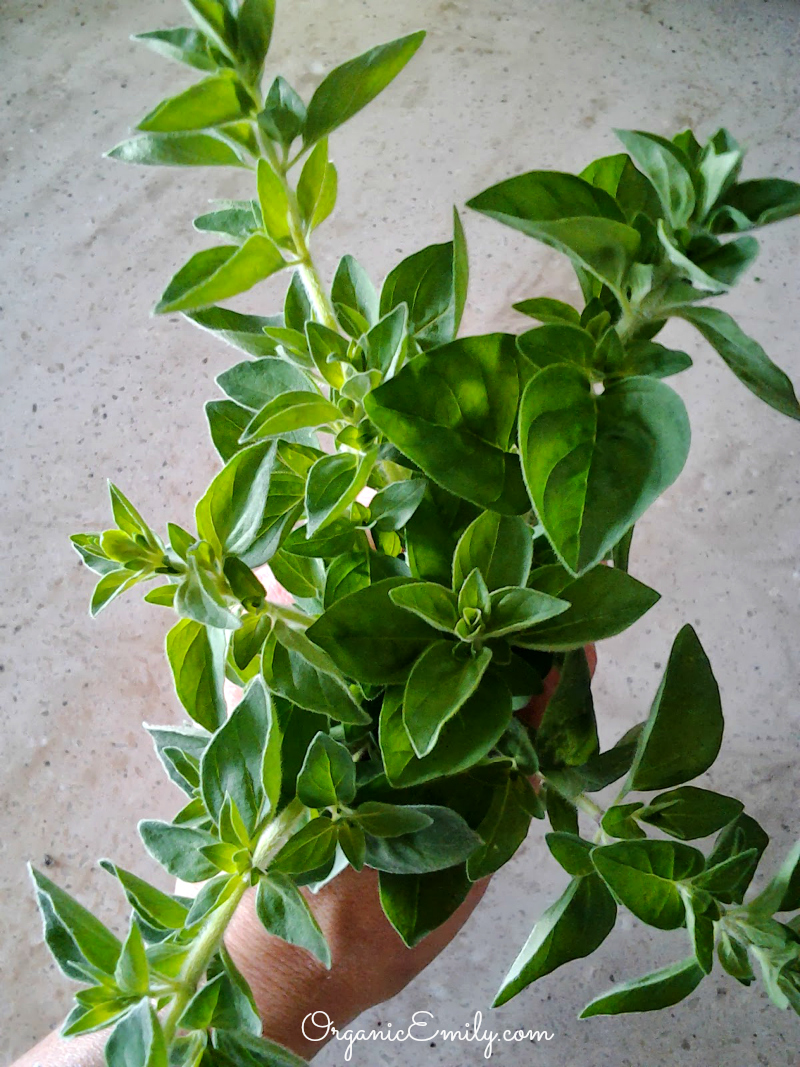
Fresh Greek Oregano

Oregano can be grown in any flower bed or vegetable garden!  It’s beautiful green leaves have a spicy fragrance and adds depth and savor to any dish!  I like Greek Oregano, it tends to have a little more heat and flavor than other varieties.  This week I harvested an entire plant before it flowered.  It will come back with a vengeance and I’ll be able to harvest again or let it flower so the bees can benefit from the plant too!  Oregano has many health benefits and is used for many purposes.  It’s  full of vitamin K, antioxidants and minerals.  It is also a natural antibiotic!

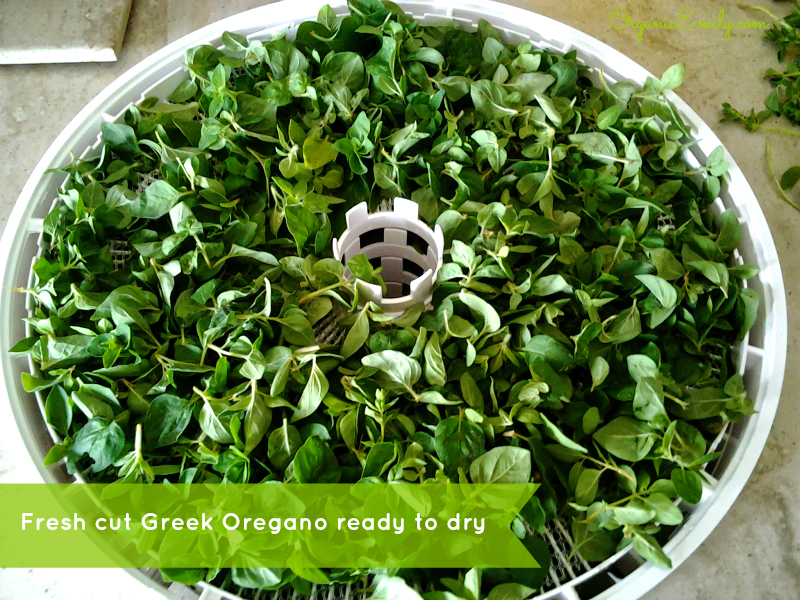
Oregano 2

With all the oregano I harvested I decided to dry it all!  There are a few ways to dry herbs.  They can be strung up and hung upside down to dry by air.  They can be dried outside on a screen under a shady tree.  Or they can be dried in a dehydrator.  First pulling off the leaves from the stems and then placing them on a dehydrator tray.  As you can see I dried them in the dehydrator.  I first pulled all the leaves from the stems and then placed them on a tray to be dried.  I had enough to fill 8 large trays.   I set my dehydrator on the lowest setting (about 95`) and dried the oregano for 24 hours.

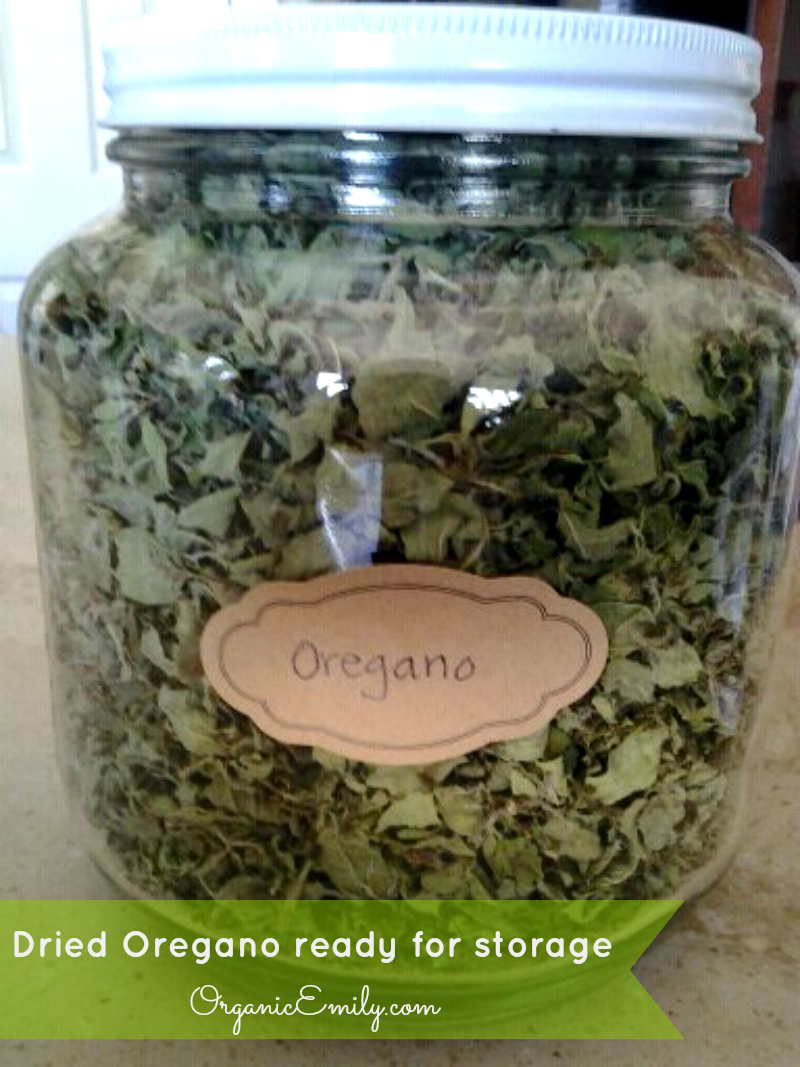
Dried Oregano

My oregano is stored in a half gallon glass jar, kept in a cool, dark room to maintain it’s potency.  We won’t use all this especially if I harvest again this year or even next year.  So I plan to divide the oregano out and put into smaller 4 oz. jars, add cute labels and give them as homemade Christmas gifts!   There are so many things we can do with herbs!  Here are a few recipes we enjoy at our house!

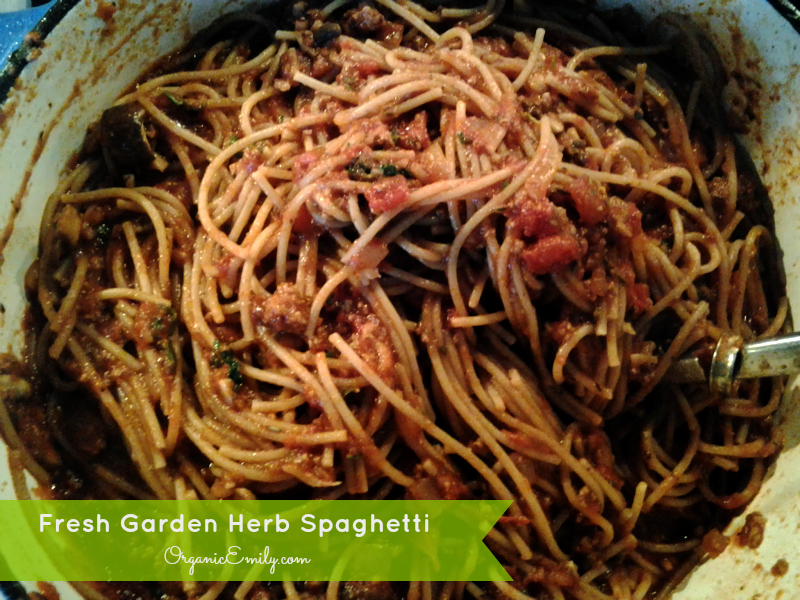
Fresh Herb Spaghetti

Fresh Herb Spaghetti

Olive oil for cooking

1 pound ground organic turkey

1 large yellow onion

3-4 cloves garlic, chopped

1 pound chopped baby mushrooms

Kosher salt and pepper

1 teaspoon Italian herb seasoning

2 bottles or cans (28 oz. each) crushed tomatoes

1 package cooked whole wheat pasta spaghetti noodles

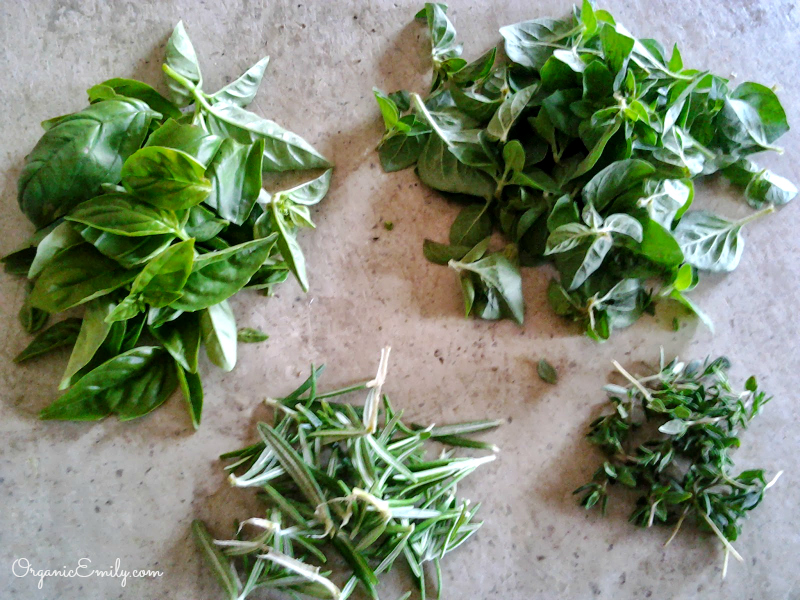
1/2 cup mixed fresh chopped herbs, like rosemary, oregano, thyme and basil

Fresh Cut Herbs

Heat oil in a large dutch oven and add ground turkey.  Add the onions and cook until lightly browned.  Add the garlic, mushrooms, kosher salt and pepper and Italian seasoning and continue to cook for a few minutes longer.  Add the crushed tomatoes and allow to simmer on medium low for 20 minutes.  In the meantime cook the noodles according to the directions on the package.  Strain the noodles and add to the pot of sauce.  Add the fresh herbs at the end and cook for just another minute or two.  Serve with fresh Parmesan or shredded mozzarella!


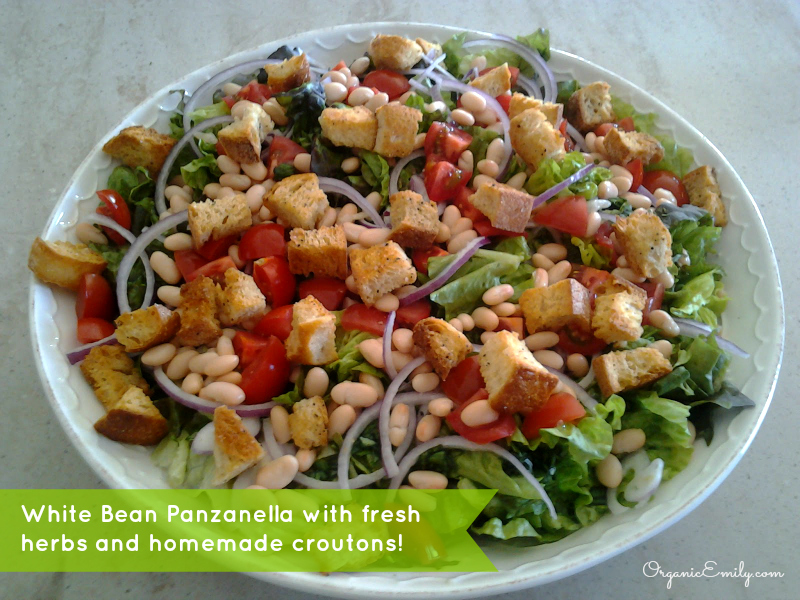
White Bean Panzanella

White Bean Panzanella

This savory salad is one of my favorites!  Made with homemade sourdough croutons, white beans and fresh herbs, it is a meal all by itself!  Perfect for a spring or summer time gathering!

1 loaf of sourdough bread, cut into bite size cubes

olive oil

kosher salt and pepper

Place the cubed bread on a rimmed baking sheet.  Drizzle olive oil and sprinkle salt and pepper over the bread.  Toss gently with hands.  Bake at 350` for about 20 minutes until golden.  Allow to cool.

In a large bowl place:

6-8 ounces of organic spring mix

1 1/2 pounds chopped tomatoes

1 can white beans, drained and rinsed

1 small red onion, halved and sliced very thin

3 tablespoons fresh chopped basil

2 tablespoons fresh chopped oregano

1/2 cup shaved Parmesan cheese

Top with cooked croutons and dress with an Italian or balsamic vinaigrette just before serving.