Lemon Shortbread Triangles

Lemon Shortbread Triangles

These lemon bars are packed full of flavor! Decadent and rich, it’s the perfect treat!

Recipe

For the Crust

1 cup butter softened

1/2 cup organic sugar

2 cups all-purpose flour or gluten free flour

1/4 teaspoon sea salt

For the Filling

6 large eggs

3  cups organic sugar

2 tablespoons lemon zest (about 6 lemons)

1 cup  fresh squeezed lemon juice

1/2 teaspoon sea salt

1 cup all-purpose flour or gluten free flour

Preheat oven to 350`. Line a 9 x 13 pan with parchment paper and set aside. For the crust, beat the butter and sugar in a large electric mixer fitted with a paddle attachment. Add the flour and salt. Press crust mixture in the bottom of the 9 x 13 pan and bake for 20 minutes until it becomes lightly golden brown.

For the filling, whisk together the eggs and sugar.  Add the lemon zest and juice. And finally the salt and flour. Pour over the crust and bake for another 30 to 35 minutes.  Cool and cut in squares and then into triangles if desired. Dust with powdered sugar.


Natural Yeast Whole Grain Sandwich Bread with Cinnamon Roll Option

rp_Natural-Yeast-Sandwich-Bread-300x225.jpg

For over a year now we have been making all of our own bread with natural yeast. When I say we I mean me and the kids. They love to help and do a pretty great job of it too. When I learned the importance of allowing bread to rise naturally with natural yeast I didn’t look back. The benefits of natural yeast are so beneficial you may also just want to use it exclusively too. Without getting to technical the natural yeast process  triggers phytic acid to release all the nutrients in the grain it is holding onto so it becomes more available for us to digest. It doesn’t do this when it goes through a faster rising process, especially if dry active yeast is used. The bread must rise at least 6 hours for the phytic acid to get the message from an enzyme called phytase to let go of the nutrients.  Once it does and once you eat it, it goes looking for free radicals in the body. So that’s pretty cool!  The bacteria that have developed in the bread release spores when the bread goes in to the oven and then hatch and repopulate after it is baked.  Our bread contains natural probiotics! It is also a low glycemic food so it won’t spike insulin for those with diabetes. Recent research has shown that when we allow our bread to rise for 12 – 24 hours it takes the gluten content down from up to 70,000 ppm to 12 ppm. In order for something to be considered gluten free it has to be under 20 ppm.  The study can be found in the article below.
https://wholegrainscouncil.org/blog/2012/01/research-sheds-light-gluten-issues?fbclid=IwAR0hBRfliHhSAN7P-k5dyKT7u6LbIyZE9pWj6kVGR8eufXGFkuuNcN-EPnE

There are a few tips that will help your natural yeast experience be a positive one. First, do not feed your starter with water that contains chlorine, this includes filtered water from the fridge. If all you have is fridge or tap water leave the amount of water you need on the counter for an hour and then use.  I can’t tell you how many people have come to me asking for another start because they killed their yeast due to chlorine poisoning. Second, always feed your starter with a little extra flour (yes I use white wheat flour for my start, it’s always happier) to make it thick enough for a spoon to stand up on it’s own in the jar.  Always feed your starter right after you use it and then put it back in the fridge.  Use flour that is free of glyphosate as much as possible. It’s just better for your health. The flour I use is the kind I sell on my website under the food storage tab. And finally don’t give up. Be patient with yourself and your starter. It takes time to build up the good yeast spores in your kitchen. If you need to jump start your starter take out a little (1/4 – 1/2 cup) and add 2 cups water and 2 cups flour in a bowl and leave on the counter over night. It should bubble up and have a pleasant smell to it.  Then you are free to use it, feed again and place back in the fridge.  I’m always open to questions if you have any!

Recipe

Makes 4 loaves or 2 loaves sandwich bread and 2 dozen cinnamon rolls.

1 cup starter

4 cups purified water

4 teaspoon sea salt

1/2 cup avocado oil or coconut oil

1 cup honey

6 cups Spelt, Einkorn, Khorasan or whole wheat flour freshly milled

7 cups whole white wheat flour (this is what I sell when I place my food orders)

In a large stainless steel or glass bowl mix together the starter, water, salt, oil and honey. Then add the whole grain flour of your choice and mix with a Danish dough hook or other large whisk. Add the last 7 cups of flour and mix the rest by hand until everything is incorporated. It doesn’t need to  be kneaded, the fermentation process does all the work for you.  Place plastic wrap over the bowl and let rise for at least 12 hours and up to 24 hours. I have found that the longer the rise up to 24 hours the better.
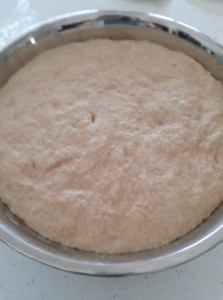
First rise Sourdough Sandwich bread

Here you can see the bread has risen and more than doubled in size after 20 hours. Oil the surface of your counter with avocado or coconut oil and pull the bread out of the bowl.  Cut the bread into 4 equal pieces. Shape each piece into a rectangle with your hands by patting and spreading. I don’t use a rolling pin ever. Roll up and place in a greased loaf pan, covered and allow to rise for 2-3 hours until doubled in size.

Second Rise Nautral Yeast Sandwich Bread

Once the bread has risen until doubled in size heat the oven to 350 degrees. Bake for 45 minutes and then pull our of the pans and place onto cooling racks. Bag up the bread when the loaves have completely cooled.

Cinnamon Rolls Option

For the cinnamon rolls you will want to cut the bread in half right after the first rise. Make two loaves of bread with the other half and roll out the second half into a large rectangle shape about 1/2 inch thick.

Cinnamon Rolls with filling

For the filling melt 1 stick of butter or 1/2 cup coconut oil and add 1 cup of brown sugar or 1 cup coconut sugar with 1 tablespoon cinnamon in a bowl. Spread on the dough and roll up into a long log shape.
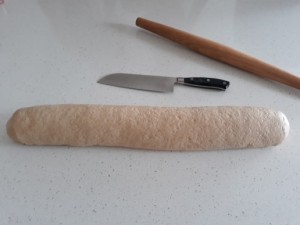
Cinnamon Rolls rolled up

Cut into 24 slices by starting with a center cut and going out adding more from there as illustrated in the pictures below.


Cinnamon Rolls Cut 1

Cinnamon Rolls Cut 2

Cinnamon Rolls Cut 3

Cinnamon rolls on pan

Place on a rimmed baking sheet and let rise, covered until double 3-4 hours.

Second Rise Natural Yeast Cinnamon Rolls

Bake in the oven at 350 degrees for 30-35 minutes until the tops are a light golden brown color.

Natural Yeast Cinnamon Rolls Baked

While the rolls are cooling prepare the cream cheese frosting by mixing together one 8 ounce block of cream cheese, 1 teaspoon vanilla extract and 3 cups powdered sugar.

Nautral Yeast Cinnamon Rolls with Cream Cheese Frosting

Spread on the rolls and enjoy!

Easter Lemon Cake with Lemon Cheese Cream and Strawberries.

Easter Lemon Cake with Whipped Lemon Cheese Cream and Strawberries

This lemon cake is rich and full of lemon flavor! Add the cream cheese to the whipped cream with a little fresh squeezed lemon juice and you have a perfect combination with strawberries. This is one of my absolute favorite desserts when strawberries are in season.

Recipe

For the Cake

1/2 pound butter softened

2 cups organic sugar

4 large eggs

1 teaspoon vanilla extract

1/3 cup lemon zest (about 6 large lemons)

3 cups flour or gluten free flour like Namaste

1/2 teaspoon baking powder

1/2 teaspoon baking soda

1 teaspoons sea salt

1/4 cup fresh squeezed lemon juice

3/4 cup sour cream

Preheat the oven to 350 degrees.  Grease 2 8 inch round cake pans and set aside.  Cream together the butter and sugar. Add the eggs and vanilla. Add the lemon zest and mix. Add the lemon juice and sour cream. Mix well. Then add the flour and the soda, baking powder and salt. Pour into prepared baking dishes and bake for 45 minutes or until the toothpick inserted comes out clean.  Let cool in the pan and prepare the lemon syrup.

Lemon Syrup

In a small sauce pan over medium heat, mix together 1/2 cup organic sugar and 1/2 cup fresh squeezed lemon juice.  Once the sugar is dissolved pour over the cake. You can poke holes into the cake to help the syrup soak into it more efficiently.  Turn the cakes out onto a cooling rack and slice in half like a sandwich.  Set aside. Prepare the whipped lemon cream.

Whipped Lemon Cheese Cream

In a large electric bowl fitted with a whisk attachment whip up 2 cups whipping cream and 1/2 cup powdered sugar on high speed.  While that is whipping place one 8 ounce block of cream cheese in a medium bowl with juice of 1 lemon. You will want about 3-4 tablespoons lemon juice. With hand beaters blend until smooth. Add another 1/2 cup powdered sugar to the cream cheese mixture then add it to the whipped cream and mix well. Slice up strawberries. And assemble cake starting with one layer of cake, then cream and strawberries in that order until complete. Enjoy!


Easter Shortbread Nest Cookies with Almond Cream Cheese Frosting

Shortbread Easter Nest Cookies

These are my kids’ favorite cookies. We only make them once a year around Easter time to share with neighbors or take to the annual family Easter Egg Hunt. They are very rich and decadent!

Recipe

1/2 pound of butter softened

2 tablespoons cream cheese softened

3/4 cup sugar

2 teaspoons vanilla extract

2 teaspoons almond extract

1/4 teaspoon sea salt

2 1/2 cups flour (you can use gluten free flour, like Namaste brand)

Preheat the oven to 375 degrees. Grease 2 cookie sheet pans and set aside.

In a large bowl with a paddle attachment or hand beaters cream together the butter, cream cheese and sugar. Add the salt, vanilla and almond extract.  Add the flour and mix until incorporated when the dough starts to come together in a ball shape. Roll dough out into a 1/4″ thick circle onto a floured surface and cut into desired shapes. Place on baking sheets and bake for 12 minutes.  Let cool and decorate.

Icing

Cream together the remaining 6 tablespoons of your block of cream cheese with 1/4 cup butter (1/2 stick), 2 teaspoons almond extract and 3 cups powdered sugar. Ice cookies and top with sweetened coconut and jelly beans. These cookies will keep for several days in an air tight container.


Foaming Castile Hand Soap

Foaming Hand Wash

I just switched to an all natural homemade foaming hand soap for all my bathrooms. These make great gifts and are super easy to make.

Recipe

1 foaming dispenser bottle. I like this one. because it foams up nicely, producing a rich lather.
1 cup distilled water
1 cup castile soap
1 tablespoon vitamin E oil
1 tablespoon vegetable glycerin
2 tablespoons almond, coconut or grapeseed oil.
30-40 drops essential oils of your choice

Place water in dispenser first, then add the rest of the ingredients. Label and shake before each use. Use within 3 months.

Here are some of my favorite scent blends. Use about 5-10 drops per oil depending on how strong you like it to smell.
Rosemary, Cinnamon, Orange, Clove and Eucalyptus
Lemon, Orange, Eucalyptus and Tea Tree
Eucalyptus, Lavender and Tea Tree
Pine, Cinnamon, Eucalyptus and Peppermint


Natural Disinfectant and Deodorizer

Vinegar and Hydrogen Peroxide

I love how inexpensive and most importantly effective this recipe is. It will disinfect and deodorize anything from vomit to urine and fecal matter. It is a must have in any house hold with kids and pets.  I’ve used it on mattresses, carpet and many other surfaces. Just mix together equal parts white distilled vinegar and hydrogen peroxide in a spray bottle.  Add your favorite blends of essential oils for antimicrobial cleaning power. I like using 10-20 drops of each.

Cleaner blend 1
Thyme, Pine and Eucalyptus

Cleaner blend 2
 Rosemary, Eucalyptus, Clove, Cinnamon and Orange

Cleaner blend 3
 Orange, Lemon and Tea Tree

Thyroid Support Perfume

Thyroid Perfume

Last year I was diagnosed with Hashimoto’s Thyroditis.  I had to make some life changing choices, from diet to exercise, as well as getting rid of all chemical products, not that I had many, but make up and fragrance were a few I hadn’t altered yet.  It is virtually impossible to find fragrance that doesn’t contain some kind of synthetic additive/chemical that can mess with hormones. Another friend of mine was wearing this blend at church one morning and I loved how bright and fresh it smelled on her!  It is so simple and very inexpensive, especially if you buy the large Butterfly Express oils… they last forever!  These essential oils specifically support thyroid function.

Recipe

1 ounce spray bottle
2 parts sweet basil (10 drops)
2 parts lemongrass (10 drops)
1 part frankicense (5 drops)
1 part clove (5 drops)
Distilled or purified water

Mix all ingredients together in a small spray bottle, shake and use as desired. I like to label the bottle so I know exactly what to put in the bottle when I need to refill it.

Cough and Congestion Balm

Cough and Congestion Salve

Super simple to make, this powerful balm is just as good as any over the counter mentholated topical ointment, except better and more natural. The recipe makes 4 (2-ounce) jars and can easily be doubled.  I like using Butterfly Express essential oils because they are high quality and very inexpensive. Be sure to keep in the fridge if storing for longer than 1 year.

Recipe

12 tablespoons coconut oil
5 tablespoons cocoa butter
4 tablespoons beeswax pellets
40 drops peppermint essential oil
40 drops eucalyptus essential oil
20 drops basil essential oil
20 drops tea tree essential oil
20 drops thyme essential oil
20 drops lemon essential oil
20 drops rosemary essential oil

In a small sauce pan combine the coconut oil, cocoa butter and beeswax together, melting on very low heat. Once combined, add the essential oils and mix together. Pour into jars or tins and allow to cool and set up completely. Cap, label and date. Use as needed.

Medicinal Herb – Oregon Grape

Oregon Grape

Medicinal Herb post #40 written July 31, 2018

Oregon Grape – Mahonia aquifolium and M. repins

The roots of this sun to part shade perennial contains the medicine. It grows wild throughout our Utah mountains. The root is best harvested in the early spring or fall. It contains a chemical in it called berberine that gives it a yellow color. Berberine is a fabulous antibiotic, much like the coveted, expensive and endangered Goldenseal. Oregon grape root can be used instead. It contains 13 different antibacterial chemicals, where penicillin, for example only contains 1. This is important because bacterial stains are less likely to become resistant to it like pharmaceutical antibiotics. Essentially the bacteria don’t know what to do other than die. Just like with any antibiotic herb or drug, probiotics or fermented foods should be consumed during the regimen and afterward. Only use during a current infection or temporarily internally as a cleanser. Long term use can cause vitamin B deficiency. Avoid during pregnancy and nursing.

Oregon grape is also an alterative, supporting the body’s ability to function normally. Many herbalist believe it does this due to its hepatic properties in helping to cleanse the liver by increasing bile production. This improves skin conditions like acne, psoriasis and eczema. It also contains antilithic benefits in helping to break down stones, gall or kidney. It is an antifungal and antiparasitic herb as well.

I make a liver cleansing formula as a tincture, tea or capsules using equal parts Oregon grape root, Dandelion root, Burdock root, Yellow dock and Milk thistle. Use 1 tsp 3x a day for 2 weeks.

Another formula to use in times of infection would be a combination of equal parts Oregon grape root, Echinacea root, Garlic, Calendula and Yarrow. To make a tincture, steep in 100 proof vodka for 4 weeks, strain and store in amber bottle out of sunlight. Other antibacterial herbs include, Barberry, Chamomile, Chaparral, Gumweed, Uva Ursi, Wormwood, Cayenne, St. John’s Wort, Elecampane, Peppermint, Plantain, Rue, Sage, Usnea, Gentian and Myrrh.

Medicinal Herb – Aloe and other succulents

Aloe Hens and Chicks Purslane

Medicinal Herb post #39 written July 31, 2018

Aloe Vera – Aloe barbadensis
Hens and Chicks, Purslane, Prickly Pear Cactus and other succulents.

All of these succulents have something in common. They can be used interchangeably as osmotic herbs, meaning they draw out inflammation from the effected area relieving pain. So if you don’t have Aloe in a pot and you burn yourself during the winter months, go out and grab some Hens and Chicks or other succulent plant, blend and apply topically. Aloe is an annual here in Utah unless potted and brought inside for the winter. They all love to be left alone, giving them well draining soil and maybe watering once a week when it’s hot or once a month during the winter months.

Aloe and others also contain antibacterial, antifungal and anti-inflammatory properties. Interestingly, it also soothes an irritated digestive system, like IBS and ulcers for example, and can easily be thrown into a smoothie. The juice is known as one of the safest laxatives, but should still be used with caution as it can have strong results. It tastes yummy when mixed with spearmint or peppermint tea or fresh squeezed lemon juice. Sweeten with honey or stevia if you like. It should not be taken internally by pregnant or nursing women and should be used with great caution for elderly and children in smaller doses.

Aloe promotes rapid tissue repair reversing damage from sunburn blisters and scarring. It’s great for other skin issues when used directly or in a salve for things like bites, stings, rashes, eczema, acne, and poison ivy. Aloe can also be used as a natural sunblock, blocking out around 30% of ultraviolet rays. It should not be used in cases of staff related infections like impetigo.

It can be made into a face and body cream by infusing calendula in almond oil over the stove top on very low heat for an hour. Use 1 and 1/2 cups of the strained calendula oil, 1/4 cup cocoa butter, 1/4 cup coconut oil and 1/2 cup beeswax. Melt together and cool for several hours or overnight. Place in blender and mix together 1/2 cup Aloe Vera gel and 1 and 1/2 cups purified water and favorite essential oil. Slowly drizzle the water mixture into the blender as it runs until the consistency becomes thick. Scoop into jars and keep in the fridge for long term storage.

Make your own gel by scraping out the insides of the leaves and blending. Store in jar and keep cold. Use in salves with other herbs like plantain, comfrey, yarrow, and calendula.

A quick word about purslane… it has almost as much omega 3 fatty acids as fish, is full of vitamins and minerals and should really be eaten often!