Medicinal Herb – St. John’s Wort

St. John's Wort plant

Medicinal Herb Post #15 written June 19, 2018

St. John’s Wort – Hypericum perforatum

This beautiful plant is easy to grow and has been valued for its many medicinal qualities for hundreds of years. As a perennial, it loves the sun and somewhat dry soil so it is a great place to grow here in Utah. It self sows easily by seed. I’m always sharing baby plants with friends. The medicine is found within the flower buds just before they open. I gather daily from the middle of June through August or September. The leaf is also medicinal, but not as strong.

I like making a solar infused oil with the fresh buds. The medicine is pulled into the olive oil making it a beautiful ruby red color. Then I use it in a skin salve later. It has great properties for soothing burns, bruises, sprains, and other injuries. It not only relieves pain but also increases tissue repair faster.

St. John’s Wort has been known for its effective ability to help with mild depression, anxiety, stress, tension, nerve damage and seasonal depression. However, it does take 2 to 3 weeks to take effect. Herbs contain many different constituents, one of those constituents of St. John’s Wort is that it increases melatonin, dopamine and serotonin, which aids the body’s ability to receive and store light so all the feel good hormones stay and circulate through the body longer helping to relieve depression etc. Note that it can cause sensitivity to the sun if used for long periods of time.

It contains antiviral, antibacterial and anti-inflammatory properties. I use it in a salve for external use and a tincture for internal use for cold sores, shingles and other herpes infections along with lemon balm, calendula and licorice root (tincture). The tincture could also be used for anxiety and depression as well.

It’s a must have herb in the garden!

Medicinal Herb – Lavender

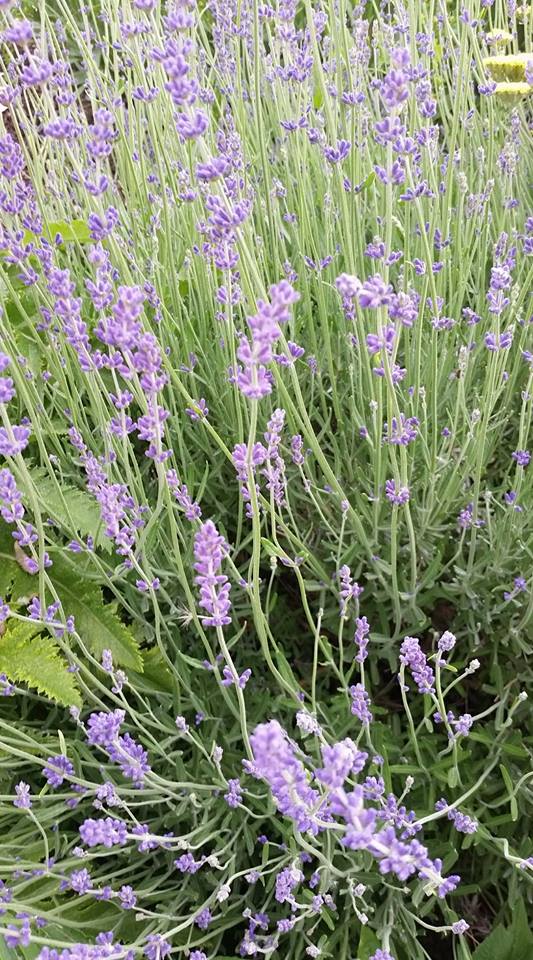
lavender plant

Medicinal Herb Post #10 written June 7, 2018

Lavender – Lavendula officinalis (there it is again), L. angustifolia

Deep breath in… ahhhh! Everyone loves the smell of this hardy perennial including pollinators. It’s pretty easy to grow if you have well draining soil and full sun, but it will tolerate some partial shade too. It’s a bit difficult to start from seed so I let nature do that for me. Each year I usually get a baby plant close by the mother and transplant where I want it. Be sure to give each plant 2′ on either side as they can get large. It is a great drought tolerant plant as it does better with an occasional deep watering. The best time to harvest lavender is when there is the most amount of medicinal properties in the flower buds just before they open. You can still harvest open flower buds, but whatever you make just won’t be as strong. The leaves also have benefits. There are times I’ll run my hand through my lavender in the winter if there isn’t any snow and smell the calming fragrance. It’s a powerful aromatherapy plant.

Lavender relaxes the digestive tract making it useful for intestinal pain. It is also antiseptic and can help eliminate unwanted bacteria from the colon. Use with fennel seed for gas and indigestion. Lavender is a mild anti depressant and relieving to stress. I really like using it with milky oat tops, rose, skullcap and chamomile for stress.

It is fabulous for headaches, relieves stress, tension and insomnia. It also has antibacterial, antifungal, and antiseptic properties making it a good herb for respiratory infections and skin infections. I always keep a bottle of lavender essential oil in my first aid kit and purse. It’s one of the only essential oils safe enough to use directly on the skin. I’ve used it when hiking after a fall to clean/disinfect the wound before bandaging. It also decreases scaring. When we have been out in the sun a little too long I’ll dilute some of the essential oil in water and spray on the effected area. The immediate cooling relief is a welcome one! It also relieves pain from other types of burns and bee stings/bug bites.

I really like the headache tincture I make with equal parts lavender, chamomile and feverfew. It’s even great for migraines. You can also add California poppies as they are also good for pain. You can use vodka, apple cider vinegar or half glycerine/half purified water to cover the herbs and shake each day for a month. Strain and keep in an amber bottle. Take 1/4 – 1/2 tsp every 20-30 minutes for up to 2 hours. Don’t use during menstruation because of the feverfew as it can increase bleeding.

I also make a sleepy time tincture using equal parts lavender, valerian root, hops, chamomile and lemon balm. Works like a charm for insomnia and turning off a busy mind without any drousy side effects. My husband loves it!

Lavender should not be used internally during pregnancy in large amounts because it can stimulate the uterus.

I’m going to try using my infused lavender oil to make a lotion. Here’s the recipe:
.5 oz. beeswax
4 oz lavender infused oil (steep lavender buds in olive oil, almond oil or grape seed oil for 2 weeks in the sun or on the stove top on really low heat for 40 -50 minutes)
4 oz rose infused water (soak rose petals in purified water over night)
10 drops vitamin e oil
5 – 10 drops lavender essential oil
Melt wax and oil together on low heat. Mix together the rose water, vitamin e and essential oil in a separate bowl. Pour the water mixture slowly into the oil off the heat and use an immersion blender to emulsify the ingredients until thick and creamy. Put in jar and use within 6 months.

We’ve also made infused massage oil with the lavender and put it in soap. So many fun things to do with it!

What do you use your lavender for?

Medicinal Herb – Comfrey

Comfrey

Medicinal Herb Post #6 written June 5th, 2018

Comfrey – Symphytum officinale (there’s that officinale word again) and Symphytum uplandicum (Russian… sterile… less invasive species). Also known as knitbone because of its incredible ability to heal bone and other tissue.

Comfrey is probably one of the most powerful vulnerary herbs on this planet! It’s ability to heal tissues in the body is incredible and fast too! Which means it shouldn’t be used for puncture wounds until the risk for infection is gone. It’s also a great demulcent (soothing), great for joint pain, anti-inflammatory, expectorant and anti-ulcer. The leaves and roots are medicinal. Harvest the leaves once the mature and the roots anytime.

So the big question is, is Comfrey safe to take internally? Yes, for the most part it is. It shouldn’t be given to pregnant women, babies, people with liver problems or people on a lot of pharmaceutical drugs. It contains pyrrolizidine alkaloids (PAs). Now PAs have a record of causing liver lesions when taken internally by 6 week old rats. The problem with this study was that they were given a concentrated form (an extract) of the plant… not the whole plant. It was given to the rats as 40% of their diet. Wow, that’s a lot! As humans we aren’t going to take that much on a daily basis or even as an extract. So use caution and if you are worried at all take liver supporting herbs with it like dandelion, burdock, Oregon grape or milk thistle. I don’t know any herbalist that has known anyone who has had a problem with taking Comfrey internally. PAs are also found more so in the root than the leaf, so stick with the leaf if you want. And when you dry the leaves they have even less as well. Comfrey has been used internally for thousands of years. Houndstongue is a relative of comfrey and grows wild here in Utah. It can be used externally but contains much higher levels of PAs and should not be taken internally. In fact horses that eat it usually get sick and die. There was an herbalist named Dr. Christopher years ago who was sent to a farmer’s home who’s horse had eaten houndstongue and was very sick, he gave the horse milk thistle, an incredible liver protective herb and the horse recovered. The best thing one can do is become educated about these plants.

Okay, let’s move in to what Comfrey can do. In the garden it is a wonderful fertilizer. You can chop and drop as a mulch. You can also soak the leaves in a bucket with water for 3 weeks. Dilute and use to water plants. It’s also makes a powerful foliage spray to combat powdery mildew and other pests. Be sure to strain it first before applying. Apply once every 2 weeks for a month.

Comfrey helps heal digestive tissues. Using comfrey, calendula, chamomile and licorice together as a tea, 1 tsp 3x a day will help with ulcers and colitis.

It is one of my main ingredients in the salve I make for all skin issues, especially burns. That recipe can be found in the calendula post 

It’s also great to add to other expectorant herbs for coughs like gumweed, mullein or elacampane.

What do you use comfrey for?

Medicinal Herb – Red Clover

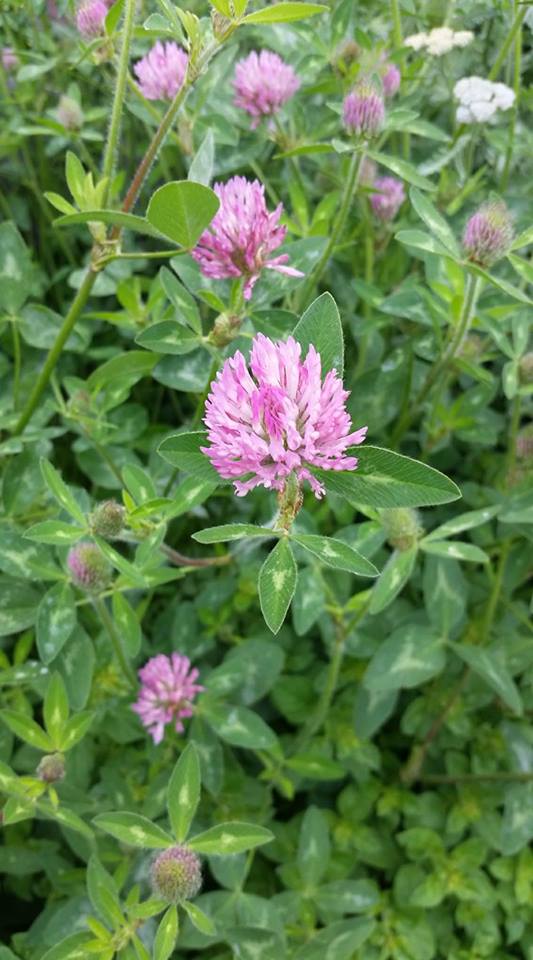
Red Clover 2

Medicinal Herb Post #4 written May 30, 2018

Medicinal Herb post #4

Red Clover (Trifoleum pratense)
This hardy perennial is easy to grow and is part of the legume family that sends roots deep into the earth. The pollinators love it for the abundant nectar it provides. Harvest the flowers as soon as they open.

It’s a wonderful alterative (blood purifier and nutrient dense). It gently supports and restores normal functions to the immune system and is deeply nourishing as it contains many vitamins and minerals. What’s great about nourishing herbs is that they give the body an opportunity to resolve other issues going on because we give it what it needs to do its job. It’s often included in skin problem formulas for eczema and psoriasis as well as respiratory infection formulas and lymphatic cleansers. Included in this group of alterative, nourishing herbs are, alfalfa, burdock, yellow dock, nettles, plantain, garlic, Oregon grape, cleavers, echinacea, comfrey and marshmallow.

Both the flower and leaf contain phytoestrogens and isoflavones that can have a beneficial effect for women with menopausal symptoms like hot flashes, mood swings and night sweats. There is also some recent evidence that shows it can help with maintaining bone density.

Red clover shouldn’t be taken by those who are on heart medication or have any blood thinning problems. Don’t take 2 weeks before and after surgery.

Here are a few formulas you can use with red clover:

Children’s Cold/Flu Glycerite (our family’s favorite)
Equal parts elder flower, mullein leaf, red clover flowers, peppermint or spearmint and yarrow. Cover herbs in a mason jar with 1 cup glycerine and 2 cups water. (You can make more if you need, just remember the 1:2 ratio) Cover with lid and shake once a day. Strain and keep in a jar in the fridge. Give 1 tablespoon in water or juice 3x a day.

Lymphatic Congestion Tea or Syrup
Equal parts calendula flower, red clover flower and cleavers. For the tea, infuse and steep the dry herbs in water that has just been boiled for 15 minutes. For the syrup cover the herbs with water and simmer on very low heat until the liquid is half the original volume. Strain and pour back into the pot. Add equal amounts of raw honey, maple syrup or glycerine to the herb liquid. Pour into jar and keep refrigerated. Take 1 tablespoon 3x a day.

Vitamin Tonic/Tea (also good for menopause support)
3 parts red clover flower, 2 parts milky oat tops (just ripening), 2 parts peppermint or spearmint, 1 part nettles, 1 part raspberry leaf. You can also add alfalfa, burdock, yellow dock or other alterative herbs listed above. Steep herbs for 15-20 minutes and drink 2-3 cups a day.

Perfect Shortbread Sugar Cookies

Perfect Sugar Cookies

These are addictively delicious!  It’s also the reason why I don’t make them often!  You can make any shape for any holiday, but I think they make perfect Valentines treats! The reverse creaming method for this recipe prevents air bubbles in the cookie when baking, giving it a nice flat surface to ice.  Makes 3 dozen

Recipe

2 1/2 cups all-purpose flour

3/4 cup organic sugar

1/4 teaspoon sea salt

16 tablespoons softened butter, cut into 1/2-inch pieces

2 tablespoons cream cheese softened

2 tablespoons vanilla extract

In an electric mixer fitted with a paddle attachment mix together the flour, sugar and salt.  Add the butter while the mixer is going, one tablespoon at a time.  Then add the cream cheese the same way.  Add the vanilla and mix until just combined and forms a cohesive ball.  Separate the dough into two pieces.  Wrap in plastic and chill for 30 minutes.  Preheat oven to 375 degrees.  Roll dough out onto a well floured surface around 1/8-inch in thickness.  I’ve also made them thicker and they work well by adding another minute to the timer.  Cut out desired shapes and handle as little as possible.  Place cut out cookies on a greased cookie sheet and chill for another 10 minutes before baking for 10 minutes.  Let cool on a wire rack and ice with glaze.

Glaze

4 cups powdered sugar

6 tablespoons whole milk (almond milk works too)

2 tablespoons cream cheese, softened

1-2 teaspoons almond extract

Mix all ingredients together and separate into bowls if you are using multiple colors.  Ice as desired and enjoy!


Turkey Meatballs

Spaghetti and Turkey MeatballsThese meatballs are deliciously full of flavor and could be made for soup or sandwiches too!

Recipe

Parchment paper or greased foil

3 large eggs

1/2 cup whole milk

1 tablespoon minced garlic

2 tablespoons Italian seasoning ( I like McCormick brand)

2 teaspoons sea salt

1 teaspoon fresh ground black pepper

1/2 teaspoon red pepper flakes

1 1/2 cups grated Parmesan

1 cup bread crumbs (make you own with a blender and good bread)

1 1/2 – 2 pounds ground turkey

Preheat oven to 400 degrees.  Line baking sheet with parchment or greased foil.  In a large bowl mix all ingredients together with a wooden spoon or hands if needed.  Gently form 2-inch size meatballs and arrange on sheet so they don’t touch each other.   Bake the meatballs for 30 minutes or until the center registers at 160 degrees on a meat thermometer.  Serve immediately with your favorite spaghetti, soup or sandwich recipe.  These can also be made ahead and kept in the fridge for up to 3 days in an airtight container or frozen for up to 3 months.


Best Ever Chocolate Chip Cookies

Best Ever Chocolate Chip CookiesA little crunchy on the outside and ooey gooey on the inside!  These are the best!

Recipe

2 cups all-purpose flour

1/2 tsp. soda

1 tsp. sea salt

Mix the above ingredients together and set aside

1 cup butter, softened (2 sticks)

1 cup organic sugar

3/4 cup brown sugar

Cream the butter and sugar

Add 2 large eggs

2 tsp. vanilla extract

Add the flour mixture and 2 cups chocolate chips

On a large baking pan that has been greased or lined with parchment paper, scoop out 2 tablespoons cookie dough and place on cookie sheet.  give enough room for cookies to expand.  Bake at 375 degrees for 14-15 minutes.  Cool on wire rack.


Hello world!

Welcome to WordPress. This is your first post. Edit or delete it, then start blogging!