Growing and Using Herbs: Cilantro

cilantro

There aren’t too many things that are better than fresh homemade salsa with cilantro form the garden!  It also has some amazing health benefits too!   This is a picture I took back in May from cilantro seeds I grew last fall.  It had only come up maybe an inch before the weather got cold and the days became shorter and stopped growing.  As the snow covered the ground during the winter it helped to insulate the little cilantro leaves just enough to protect it from the hard cold temperatures we had.


Cilantro is known for being an effective toxic metal cleanser! It is a powerful herb with natural cleansing properties. The chemical compounds in cilantro bind to toxic metals and loosen them from the tissue. Many people suffering from mercury exposure report a reduction in re-occurring feelings of disorientation after consuming large and regular amounts of cilantro over an extended period. Make sure the cilantro you use is organic, otherwise it may have already pulled those toxins into the plant!  The best way to know for sure is to grow it yourself or buy from a reliable organic source!  Cilantro also has strong antioxidant properties, has been known to aid in improving sleep and also has very strong anti-fungal and anti-bacterial properties.


I often get the question, “How can I make my cilantro last a little longer in the garden? It always seems to bolt quickly.”  It can bolt quickly, especially when the temperatures become warmer.  I plant my cilantro seeds (coriander) every two weeks so I am constantly harvesting throughout the growing season. It also reseeds itself very easily if you let it flower and allow the flowers to dry and produce seed.  The seeds you sow in the spring will produce more seed from mature plants.  As they drop to the ground you may find new little cilantro plants start to come up in the fall and even the following spring.  Cilantro grows well in rich, well draining soil and does not like to be removed once it has been planted either by direct seed or transplanting.  It prefers full sun, but will grow in some shade too.  Sow the seeds 1/2″ deep and thin every 4-6 inches.  When using cilantro for cooking, use the young leaves that are broad and shiny.  They tend to be less bitter and add incredible flavor to many dishes!  Here are a few of my favorite recipes using cilantro!


Ingredients for guacomole

Fresh Guacomole

Recipe:

This homemade guacamole is so good, you may find that after one taste, there won’t be any left to share with others!  This is one of our family favorites and it is so good for you!
4 medium or 3 large ripe avocados, smashed
1/2 red onion, finely chopped
2 serrano peppers, seeded and minced (add more seeds later to increase heat)
2 limes, juiced
1 bunch cilantro, chopped
salt and pepper to taste
Mix all ingredients together in a medium size bowl and serve with organic corn chips or on a whole grain tortilla!  Delicious!
Southwest Black Bean Salad
A delicious and refreshing salad!  A great addition to any meal!

Recipe:

8 cups shredded red leaf lettuce (1-2 heads)
2 cups cooked or canned black beans, rinsed and drained
2 cups bite-sized sweet red pepper strips
2 cups frozen or fresh corn kernals
1/4 cup cilantro (about 1 bunch)
1/4 cup orange juice
1/4 cup cider vinegar
1/4 cup organic canola oil
1 teaspoon ground cumin
1/2 teaspoon sea salt
1/8 teaspoon red pepper flakes
Combine in large bowl the lettuce, beans, peppers, corn kernels and cilantro.
For dressing combine the remaining ingredients listed in a tightly sealed jar or Tupperware bowl and shake until mixed well.  Drizzle over salad.  Eat immediately.
Southwest Quinoa Salad
Perfect for lunch or a side for dinner!  This super healthy and delicious recipe is so simple!  I got it out of one of my favorite recipe books called, “Quinoa, The Everyday Super Food”.

Recipe:

2 cups water
1 cup quinoa, uncooked
1/3 cup olive oil
1/3 cup freshly squeezed lime juice
4 tsp. apple cider vinegar
2 1/2 tsp. ground cumin1 jalapeno, seeded and minced
1 1/4 cup frozen corn kernels, thawed
1 chopped red bell pepper
1 (15oz.) can black beans, rinsed and drained
1/3 cup chopped fresh cilantro
2 avocado,s chopped
sea salt and pepper to taste
Cook quinoa with the water in a rice cooker or on the stove like you would rice.  While that is cooking. mix together the olive oil, lime juice and vinegar in a small bowl.  Once the quinoa has finished cooking and has slightly cooled, place the dressing over the quinoa in a large bowl and allow the warm quinoa to infuse the flavors.  Chop and add the rest of the ingredients to the quinoa and check to see if more salt and pepper is needed.  Can be kept in an airtight container for up to 3 days in the fridge.

Garden Salads

Fiesta Salad

There aren’t too many things in this world better than walking out into my own back yard using the food I grow to make delicious meals.  Whether I add a few things to a dish or make the meal mostly from what I grow I always feel a sense of satisfaction that I grew it with my own two hands!  Fun and satisfying salads in the summer are a staple in our home, especially when we have such abundance!  They are light and easy, just what we need this time of year with all the busyness of being outside and enjoying family and friends!
In the picture above is one of my favorite salads!  I call it “Fiesta Salad”!
From my garden: heirloom lettuce, spinach, radishes, cilantro

Recipe:

Leafy greens of your choice, chopped
Cilantro, chopped
Radishes, chopped
Tomatoes, chopped
1 can black beans, drained and rinsed
1 cup frozen corn
2 avocados chopped
Juice of 1 lime
Good ranch dressing
Garden Beet Salad
This is one my dad made for me.  It was so good I had to share!
From the garden: lettuce, Swiss chard, spinach, beets, sun sugar tomatoes

Recipe:

Chopped leafy greens of your choice
Spiraled beets
Chopped pears
Whole sun sugar tomatoes
Balsamic vinaigrette
Spinach, Tomato, Avocado Quinoa Salad
This quinoa, spinach, tomato and feta salad is very satisfying!  Perfect for a light meal!
From the garden: spinach, fresh chopped basil or parsley, red onions, tomatoes

Recipe:

2 cups cooked quinoa
2 chopped avocados
2-3 large tomaotes, chopped
4 cups shredded fresh spinach
1 small red onion chopped
1 cup crumbled feta cheese
1/2 cup fresh chopped basil or parsley
Salt and pepper to taste

Growing and Using Herbs: Dill

Growing and Using Herbs: Dill

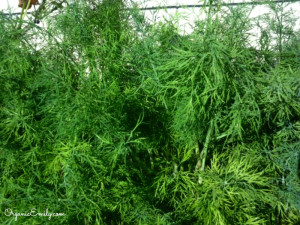
Right now in my garden, dill is at it’s peak of foliage just before going  to flower and seed in the next few weeks!   These tender leaves make a delicious and refreshing addition to many dishes including eggs, salads and fish.  Once it begins to flower, it adds a charming and whimsical addition to the garden, attracting beneficial insects and deters some of the bad bugs!

Companion Planting with Dill

In any vegetable garden, dill can benefit the members of the cabbage family, onion family, lettuce, corn, and cucumbers.  Avoid planting it with carrots and tomatoes. Many of the same insects that benefit vegetables will also benefit flowers through pollination.   Dill attracts wasps, hoverflies, tomato horn worms and honeybees.  Dill also repels aphids, mites, cabbage loopers and squash bugs. It is also one of the few annuals that can be planted with fennel which should be avoided by almost everything else.  Next year I plan on planting dill around my plum tree, currants and honeysuckle to keep the aphids away!

How to Plant Dill

Dill is probably one of the easiest things to grow!  It is another water-wise plant that needs full sun and well draining soil.   Add a little organic matter like compost to your soil to help with keeping the soil lose and free from compaction.  Dill germinates well in soil that is 60`-70` and can be planted from mid spring to early summer.  It can grow in 6 hours of sun, but will do well with more.  Dill self seeds, so you can expect it to return next year provided the soil conditions are the same.  Plant dill next to flowers with a variety of color.  Its light green stem and yellowish green flowers contrast nicely with flowers that produce dark petals, making the garden jump in color. If garden aesthetics are what you do best, sprinkle dill seeds in a variety of locations throughout your flower garden. The bouquet of flowers accentuated by sprigs of green leaves allow the vibrant colors of the flowers to stand out.  Dill not only looks beautiful but also adds a lovely fragrance to the garden.

Harvesting Dill

The best time to harvest dill is when the weather is cool or in the morning just like other herbs.  Cut the flower heads after they begin to go to seed, but be sure to let some complete the life cycle to reseed the ground or save for the following year to be placed in an intentional part of your yard.  A dill harvest is another advantage of growing this herb.  If you enjoy making pickles, grow plenty of dill. For each jar of dill pickles, at least two flower heads and several sprigs are necessary.  Dill can be planted in mid spring to early summer.   I recommend planting both times so that if you do like to pickle cucumbers, you’ll have some around for when the cucumbers are ready.

I love the flavor of dill!  Here are just a few of my favorite recipes!  Next time you make a green salad, throw some dill in, you will be delighted!
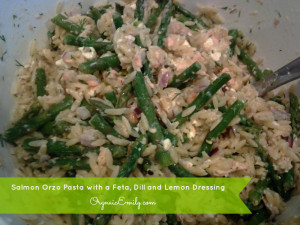
 

Salmon Pasta Salad with a Feta, Dill and Lemon Dressing

Salmon Orzo Pasta with a Feta, Dill and Lemon Dressing

6 cups water
1 pound asparagus, trimmed and cut into 3-inch pieces
1 cup uncooked orzo (rice shaped pasta)
1 (1 1/4 pound) skinless salmon fillet
olive oil
1/4 teaspoon salt
1/4 teaspoon freshly ground pepper
1/2 purple onion, chopped
1/2 cup feta cheese
1 tablespoon freshly chopped dill
3 tablespoons freshly squeezed lemon juice (about 1 lemon)
2-3 tablespoons olive oil
salt and pepper to taste
Bring 6 cups of water to a boil.  Add the asparagus and cook for 3 minutes.  Remove from the pan with a slotted spoon and place in large bowl.  Add the pasta to the water and cook according to directions on package.  In the meantime, drizzle salmon with a little bit of olive oil and sprinkle with salt and pepper.  Broil  for 5 minutes or until salmon is flaky.  Set aside once finished.  Add chopped onions, feta cheese, dill, lemon juice, olive oil, and salt and pepper to taste into the asparagus.  Add fish and drained pasta.  Mix thoroughly. Serve immediately.  Recipe from Cooking Light, Fresh Food Fast. pg. 105
Eggs, Lemon, Dill and Toast

Fresh Eggs and Greens from the Garden with Whole Grain Organic Toast and Lemon Dill Dressing

Garden Egg Sandwich
1-2 pieces of good whole grain bread (I like to make my own or use Dave’s Organic Bread from Costco)
Fresh greens
Fresh egg, cooked to your liking
Lemon dill vinaigrette (recipe below)
2 teaspoons fresh Parmesan (optional)
Lemon Dill Vinaigrette
1 lemon zested and juiced
1 tablespoon fresh chopped dill
1/3 cup olive oil
Salt and pepper to taste

Old Fashioned Potato Salad

When it comes to potato salads, I haven’t found very many worthy of putting into my mouth.  I’m just not a fan!  However, I did try this one from Barefoot Contessa and fell in love!  It not only taste fabulous but is pretty too!

3 pounds small red potatoes
kosher salt
1 cup good mayo
1/4 cup buttermilk
2 tablespoons Dijon mustard
2 tablespoons whole-grain mustard
1/2 cup chopped fresh dill
freshly ground black pepper
1/2 cup medium-diced celery
1/2 cup small-diced red onion
Place the potatoes and 2 tablespoons salt in a large pot of water.  Bring the water to a boil, then lower the heat and simmer for 10 to 15 minutes, until the potatoes are barely tender when pierced with a knife.  Drain potatoes in a colander, then place the colander with the potatoes over the empty pot off the heat and cover with a clean, dry kitchen towel.  Leave the potatoes to steam for 15 to 20 minutes, until tender but firm.
Meanwhile, in a small bowl, whisk together the mayo, buttermilk, Dijon and whole-grain mustards, dill, 1 teaspoon salt and 1 teaspoon pepper.  Set aside.   When the potatoes are cool enough to handle, cut them into quarters or halves, depending on their size.  Place the cut potatoes in a large bowl and pour the dressing over them.  Add the celery and red onion.  Refrigerate for a few hours or up to a day to allow the flavors to blend.