Medicinal Herb – Burdock

Burdock

Medicinal Herb Post #19 written June 25, 2018

Burdock – Arctium lappa

This biennial grows wild just about everywhere, near water, fertile soil, poor soil and even rocky soil. It’s quite tenacious and aggressive because of its prickly seed pods that will attach itself to any animal, bird or person to disperse and plant somewhere else. It produces broad leaves the first year and in the second year it sends up a flower stock with thistle like purple flowers.

Burdock is an amazing herb. The seeds, root and leaves are the medicine The root should be harvested the fall of the first year or spring of the second year before the plant goes to flower, seeds and dies. Burdock roots grow deep and contains many nutrients making it a great nutritive herb. It clears toxins within the digestive system, lessens sugar cravings, relieves gas, indigestion and constipation.  The root contains mucilage that is soothing to the gut during IBS flare ups. It is high in a prebiotic called inulin. This is a really important component in maintaining healthy gut flora. Burdock has been known to help a person restore from a long term illness.

The seed can be made into a tincture and taken internally for psoriasis or other scaly skin conditions. The leaf can be made into a poultice to help heal wounds and ulcers.

It is really good for skin conditions like eczema, psoriasis and other issues related with the skin, including acne from hormonal changes. It helps eliminate excess levels of estrogen in the liver and the symptoms that come with too much in the body like water retention, tender breast tissue, irritability, fatigue, depression and sluggish digestion when used consistently for 1-3  months. In addition, it is also really good for arthritis, a stressed liver and cancer. Interestingly, it’s not that it contains specific properties to address each of these ailments, rather it’s because burdock helps the liver do its job so it can take care of those odd looking cells that could potentially turn cancerous or extra inflammation in the joints or pull toxins from the skin. It is best used with dandelion root to help support and cleanse the liver. It can also help with lymph congestion, especially when used with cleavers and calendula. Not recommended to be used with insulin or oral anti-diabetic medications because of possible hypoglycemia.

I like to drink it as a tea with dandelion root. You can also drink burdock root beer by making a decoction using equal parts Burdock root, Cinnamon bark, Sarsaparilla root, Dandelion root and 1/4 part fresh ginger root. Place herbs in a pot and cover with purified water. Cook down to half volume and strain. Chill and add sparkling water. Sweeten with stevia. If using for medicinal purposes drink 2-3 cups daily for 2 weeks.

Don’t have time to do all that every day? Make a tincture. Use equal parts burdock root, dandelion root, Oregon grape root and milk thistle seeds. Grind up the roots and seeds and then put into a jar. Cover with 100 proof vodka, glycerine (mixture needs to be half water) or apple cider vinegar. Put the lid on and shake once a day keeping it out of the sunlight for 2-4 weeks. Strain and store in Amber bottle. Use 1/2 to 1 teaspoon 3 or 4 times a day for 4-6 weeks.

Medicinal Herb – Yarrow

Yarrow 3 Yarrow 4

Medicinal Herb Post #17 written June 21, 2018

Yarrow – Achilliea millefolium

Are you ready for this list of amazing benefits? Yarrow is one of those plants that almost does it all! First, it is a perennial that reseeds itself easily, so once established it will be there for good if you let it. It prefers full sun, but will tolerate partial shade. It is happy with lots of water or dry conditions. Some herbalists believe the wild white variety holds the best medicinal benefits, but one herbalist in particular, Dr. Patrick Jones (Veterinarian and Herbalist) hasn’t seen a difference in his practice using other hybrid varieties. Yarrow contains the most amount of medicine when it blooms especially after a 3 week drought.

Yarrow is a fabulous antiseptic (good for infections), anodyne (topical pain), antihemorrhagic and styptic (meaning it stops bleeding internally and externally), anticatarrhal (removes mucus from the upper respiratory tract), anti-inflammatory (which can help with pain reduction), astringent (tightens and tones inflamed tissues, this also helps with pain), diaphoretic (induces perspiration to help the body eliminate waste and break a fever when taken as a warm tea), emmenagogue (stimulates menstrual activity and is useful for easing cramps and heavy bleeding, for this reason it should not be used during pregnancy), hepatic (strengthens and tones the liver), hypotensive (decreases blood pressure), and is a nervine stimulant.

Yarrow can be used for varicose veins and hemorrhoids to help tighten and tone tissues. It helps to clear hormones from the liver, decreasing PMS symptoms. Yarrow is wonderful used for lessening the duration of a cold or flu when used with elder and peppermint. It is diaphoretic, helping one sweat out a fever. Bathe in yarrow tea and Epsom salts. Wrap up in blanket and drink more warm yarrow tea to make a fever more productive driving out a fever within 20 minutes. According to Matthew Wood, it can be used to draw out rashes associated with chicken pox and measles, helping one to heal faster.

There are so many things you can do with Yarrow. I use it in skin salves for healing wounds of all kinds. I recently used the yellow hybrid variety to stop bleeding on my son’s face who was accidentally hit by a rock above his nose. He probably needed 2 stitches, but instead I used yarrow and a butterfly bandage and you can barely see where he got hit. George Washington had his soldiers carry the dry powdered herb with them during the Revolutionary war to stop bleeding. The dry powder was carried by soldiers up through the first world war. The dry herb works well for nosebleeds too. I know of midwives that use it along with Shepard’s purse to stop hemorrhaging only after a woman delivers her baby. Dr. Jones uses it to save animals from bleeding out in his Vet practice.

My son went hiking with me over the summer and was stung by a bee. We immediately went looking for yarrow. I had him chew up some leaves and place the spit poultice on the sting, then swallow his spit. The antihistamine properties worked immediately. The sting went away and he never swelled up. Two weeks later he was at a friend’s house and was stung again. He didn’t put yarrow on it and his foot swelled up pretty big.  He had to have Benadryl to bring down the swelling and it didn’t go away completely for 5 days. Yarrow is truly one of the best first aid herbs there is. I keep the tincture with me in my first aid kit.


Medicinal Herb – Milk Thistle

Milk Thistle

Medicinal Herb Post #16 written June 19, 2018

Milk Thistle – Silybum marianum

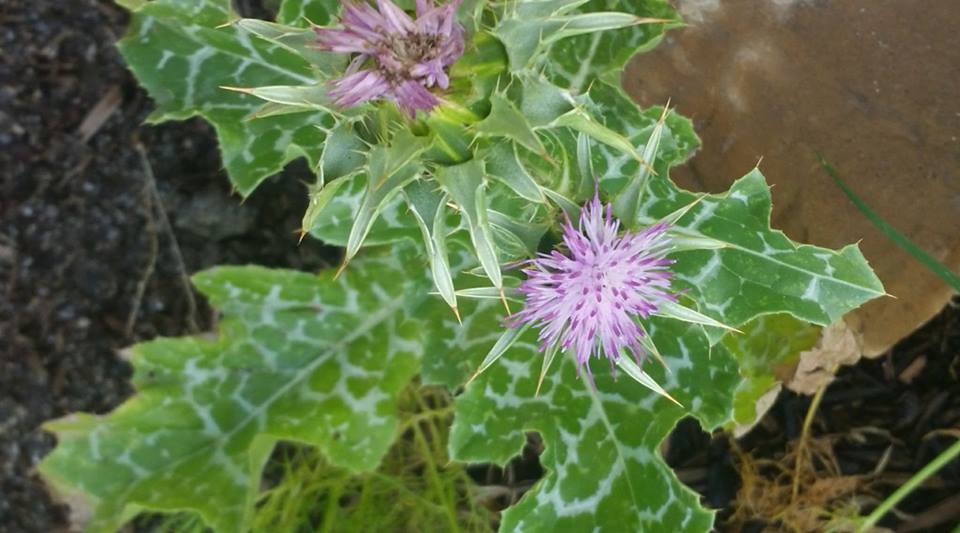
I know what you’re thinking… that’s a weed! Well, yes to some people, but most weeds really are plants we don’t fully understand yet. I’m not promoting a practice of growing noxious weeds so please don’t shoot the messenger  . Milk Thistle is an annual or biennial depending on the conditions it grows in. It can produce up to 200 seeds per flower. The seed is the medicine you want so if that is why you’re growing it, it isn’t too difficult to control. Last year I took all the seed I grew except for the little guy in the picture below that came up on its own. You can determine the difference between this thistle and others by its white veined spots on the leaves that look like they’ve been painted with milk.

Milk thistle is the best known liver restorative there is. It strengthens, tones and protects the liver incredibly well! It can help regrow liver tissue! It is used in most herbal liver formulas from jaundice, hepatitis, cirrhosis and even eczema/psoriasis. Milk thistle helps the body to produce more glutathione which helps the liver detox harmful substances.

Dr. Christopher was an herbalist who has since passed away who shared a story of a farmer who had a horse that got into hounds tongue, a noxious and poisonous weed. The doctor gave the horse milk weed to protect its liver as it passed through its system and the horse lived. That wasn’t always the case for horses who got into those plants. Its benefits are so well known it is given to patients who have undergone liver transplants, chemotherapy and those who have been poisoned by taking too much Tylenol (also a dangerous substance that doesn’t allow your body to produce glutathione). Milk thistle also contains anti-oxidants, is an anti-inflammatory, is used for fighting infections concerning the liver like hepatitis and cirrhosis. Studies have shown that long term use lowers insulin levels making it a great herb for diabetics as well as the growth of certain cancer cells. Another study was done on mice. They separated them in to two groups. The first group got milk thistle with their breakfast and the second group didn’t. For lunch they fed the mice death cap mushrooms, the most deadly plant on earth. The first group who had the milk thistle didn’t die, in fact they weren’t even phased. Where the first group died instantly! Now that’s a powerful plant!

So what do you think of this little plant now? Pretty amazing right? There are no contraindications so it’s perfectly safe to take anytime.

Medicinal Herb – St. John’s Wort

St. John's Wort plant

Medicinal Herb Post #15 written June 19, 2018

St. John’s Wort – Hypericum perforatum

This beautiful plant is easy to grow and has been valued for its many medicinal qualities for hundreds of years. As a perennial, it loves the sun and somewhat dry soil so it is a great place to grow here in Utah. It self sows easily by seed. I’m always sharing baby plants with friends. The medicine is found within the flower buds just before they open. I gather daily from the middle of June through August or September. The leaf is also medicinal, but not as strong.

I like making a solar infused oil with the fresh buds. The medicine is pulled into the olive oil making it a beautiful ruby red color. Then I use it in a skin salve later. It has great properties for soothing burns, bruises, sprains, and other injuries. It not only relieves pain but also increases tissue repair faster.

St. John’s Wort has been known for its effective ability to help with mild depression, anxiety, stress, tension, nerve damage and seasonal depression. However, it does take 2 to 3 weeks to take effect. Herbs contain many different constituents, one of those constituents of St. John’s Wort is that it increases melatonin, dopamine and serotonin, which aids the body’s ability to receive and store light so all the feel good hormones stay and circulate through the body longer helping to relieve depression etc. Note that it can cause sensitivity to the sun if used for long periods of time.

It contains antiviral, antibacterial and anti-inflammatory properties. I use it in a salve for external use and a tincture for internal use for cold sores, shingles and other herpes infections along with lemon balm, calendula and licorice root (tincture). The tincture could also be used for anxiety and depression as well.

It’s a must have herb in the garden!

Medicinal Herb – Marshmallow

Marshmallow plant

Medicinal Herb Post #14 written June 14, 2018

Marshmallow – Althaea officinalis

Here’s another herb that has been around and used for so long it has that officinalis name in it, meaning it was studied and used hundreds of years ago in the Monk’s officine (or office) as medicine. Other herbs that share the same medicinal qualities but not as strong are common mallow, hollyhock and Rose of Sharon. This perennial can tolerate full sun or partial shade. However it will naturally grow near damp areas. It reseeds itself happily so it can spread. I will let the new plants grow big enough to use and then yank them out of the ground and dry for later use. It’s leaves are very soft indicating one of its amazing properties… to soothe upset tissues. It has the same properties and uses as the over used Slippery Elm tree grown back east.

This herb is seriously really cool! The leaf, flower and especially the root contain loads of mucilage or to put it more crudely, plant snot. The roots large sugar molecules swell up when added to water, creating a sweet mucilaginous gel. Cold infusion is best. It is an excellent herb for just about everything, from respiratory issues like dry coughs to digestive problems like ulcers and inflamed bowels, dry or irritated skin and urinary infections. Dr. Patrick Jones, the herbalist I’ve learned a lot from has used it to stop the progression of gangrene. It acts like grandma when she comes over to care for your every need when you’re sick on your death bed. She just calms everyone down and let’s them know they don’t have to die today. Marshmallow is also known for its ability to make mother’s milk more rich and wholesome.

You could honestly use this herb in any formula you conjured up in your mind. I use it in my skin salve, and in all digestive, respiratory and urinary formulas. Here are a few I like either in tincture, tea or capsule form:

Digestive calm- equal parts Marshmallow, Plantain and Bentonite clay.

Respiratory cough – Mullein, Marshmallow, Licorice, Elacampane

Urinary infection – Cranberry, Chamomile, Marshmallow, Uva Ursi

There are so many possibilities!

Medicinal Herb – Rose

Rose plant

Medicinal Herb Post #13 written June 14, 2018

Rose – Rosaceae species

This group is very large. The plants all have similar medicinal qualities. It includes stone fruits like, nectarine, peach, plum, almond and cherry. And other shrubs and trees like cotoneaster, quince, mountain ash, apple, pear, serviceberry, agrimony, any of the brambles, cinquefoil (potentilla), mountain mahogany and spirea… and the list continues. In fact there are over 2,500 species in this large family. Their flowers all have something in common; they all have 5 petals. Although some don’t always read the book 

The main medicinal quality with any rose is that they are great astringents reducing inflammation. They contain tannins that help to pucker and dry up swollen tissues like sore throats, diarrhea, ulcers and kidney/bladder infections. It has also been known as a heart protector similar to hawthorn berries, especially concerning loss or a traumatic event.

Rose can help alleviate hot flashes, irritability and pain caused by fibroids and endometriosis. Rose hips are high in vitamin C to help the body rid toxins and cold and flu symptoms. They should be harvested after the first frost. Rose petals have a calming effect on the nervous system especially for anxiety, PTSD and trauma, including heartache especially used with hawthorn flower and berry. Rose is great for the skin as a toner to help bring pH balance back after washing, lessening redness, inflammation and  over production of oils which can result in clogged pores.

I use rose water every morning and night as a skin toner on my face. Make your own by infusing the petals in purified water overnight. Add a few drops of rose or helichrysum essential oil. Spray on skin daily.

It is wonderful in a salt scrub. Mix together 1/2 cup calendula flowers, 1 T rose petals, 2 T lavender buds, 1/2 cup chamomile flowers, 1 cup fractionated coconut oil or sweet almond oil, 1 cup sea salt, 1 cup Epsom salts. Place in Mason jar and use within 6 months.

You can use rose petals in a tea for the bath or used internally at the end of a stressful day. Use 2 parts spearmint leaf, 1 part chamomile flower, 1 part lemon balm leaf, 1/2 part rose petals. Sweeten with honey or stevia if drinking. Boil water, turn off heat, steep herbs for 20 minutes and enjoy.


Medicinal Herb – Blackberry and Raspberry

Blackberry Raspberry plant

Medicinal Herb Post #12 written on June 12, 2018

Blackberries – Rubus allegheniensis Raspberries – Rubus idaeus

Did you know there are medicinal properties to blackberry and raspberry plants? The berries are delicious, but the leaves and roots are also beneficial! In my yard I always have canes that come up in places I don’t need them to be, so I’ll wait for them to leaf out and pull them up, wash them off and dry both leaves and roots, storing them in glass jars for later use.

Let’s talk about Blackberries first. The leaf and the root are a wonderful astringent, meaning it contains tannins in it that pucker or dry up swollen inflamed tissues. The root is stronger than the leaf. It can be used as a tea, tincture or in capsules successfully for sore throats, mouth ulcers, diarrhea, dysentery, and hemorrhoids. You could make a delicious blackberry syrup with the berries and root bark for sore throats and cough. Cover the berries and roots with purified water. Cook down to half volume and strain. Add equal amounts raw honey to blackberry liquid, pour into bottles and keep refrigerated.

Raspberry leaf is one of my favorite herbs! It is a really great astringent too, but it also balances hormones, helps to regulate female cycles, tones the uterus… making it a go to herb for uterine cramps and especially preparing for labor, birth and recovery in pregnant women. It is also good for lactating mothers who need a boost keeping their milk. It’s also rich in vitamins and minerals. I love drinking an herbal combination of raspberry leaf, nettles, spearmint, chamomile and rose petals. Perfect for growing mom and baby or your teen daughter!

Do you use Blackberries and Raspberries medicinally? How do you use them?

Medicinal Herb – Arnica

Arnica Arnica herb oil 1 Arnica herb oil 2
Medicinal Post #11 written June 12, 2018

Arnica – Arnica montana, A. chamissonis

Arnica grows wild in our Utah mountains. There are many yellow flowers that look a lot like Arnica, like Balsam root (also medicinal) so be sure you know what you’re looking for. It can easily be identified by its heart shaped leaves. Harvest when the plant is in full bloom.

It has wonderful medicinal properties, but should never be taken internally. However, in homeopathy it is safe to take internally. Arnica has high levels of a chemical called helenalin which attributes to its powerful anti-inflammatory, analgesic and antimicrobial properties. The whole plant is the medicine and is used for infusing oils, making salves and lotions. It is wonderful for mainly anything skin problem related. It should never be applied to broken skin because it can poison the blood. It is great for sore muscles, sprains, insect bites, swollen joints and superficial burns.

Today I made a solar infused oil with Arnica, Lavender, Calendula and Marshmallow leaf. I’ll leave it on my south facing back porch for the sun to heat the oil, pulling the medicine into it for 2-4 weeks. This will be my oil base for making a skin soothing lotion. For every cup of infused oil I make, I’ll add 2oz beeswax and melt them together. Once cooled I’ll add a lavender and calendula tea of equal amounts and thicken with an immersion blender. Add vitamin E and desired essential oils like lavender. Pour into containers and use within 2 months or store in the fridge to keep longer. *You could also add yarrow, plantain or even cayenne for arthritic pain to the infused oil. Makes great gifts for birthdays or Christmas!

Medicinal Herb – Lavender

lavender plant

Medicinal Herb Post #10 written June 7, 2018

Lavender – Lavendula officinalis (there it is again), L. angustifolia

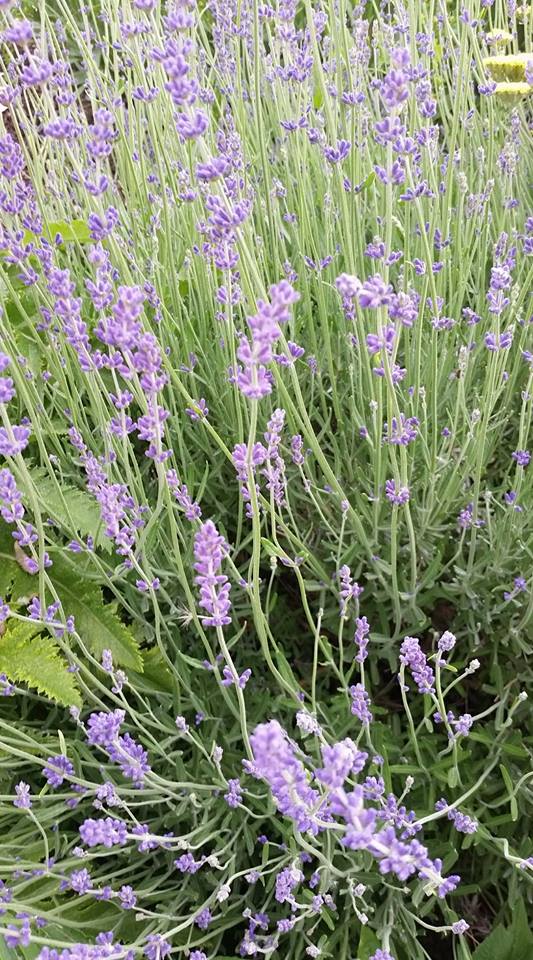
Deep breath in… ahhhh! Everyone loves the smell of this hardy perennial including pollinators. It’s pretty easy to grow if you have well draining soil and full sun, but it will tolerate some partial shade too. It’s a bit difficult to start from seed so I let nature do that for me. Each year I usually get a baby plant close by the mother and transplant where I want it. Be sure to give each plant 2′ on either side as they can get large. It is a great drought tolerant plant as it does better with an occasional deep watering. The best time to harvest lavender is when there is the most amount of medicinal properties in the flower buds just before they open. You can still harvest open flower buds, but whatever you make just won’t be as strong. The leaves also have benefits. There are times I’ll run my hand through my lavender in the winter if there isn’t any snow and smell the calming fragrance. It’s a powerful aromatherapy plant.

Lavender relaxes the digestive tract making it useful for intestinal pain. It is also antiseptic and can help eliminate unwanted bacteria from the colon. Use with fennel seed for gas and indigestion. Lavender is a mild anti depressant and relieving to stress. I really like using it with milky oat tops, rose, skullcap and chamomile for stress.

It is fabulous for headaches, relieves stress, tension and insomnia. It also has antibacterial, antifungal, and antiseptic properties making it a good herb for respiratory infections and skin infections. I always keep a bottle of lavender essential oil in my first aid kit and purse. It’s one of the only essential oils safe enough to use directly on the skin. I’ve used it when hiking after a fall to clean/disinfect the wound before bandaging. It also decreases scaring. When we have been out in the sun a little too long I’ll dilute some of the essential oil in water and spray on the effected area. The immediate cooling relief is a welcome one! It also relieves pain from other types of burns and bee stings/bug bites.

I really like the headache tincture I make with equal parts lavender, chamomile and feverfew. It’s even great for migraines. You can also add California poppies as they are also good for pain. You can use vodka, apple cider vinegar or half glycerine/half purified water to cover the herbs and shake each day for a month. Strain and keep in an amber bottle. Take 1/4 – 1/2 tsp every 20-30 minutes for up to 2 hours. Don’t use during menstruation because of the feverfew as it can increase bleeding.

I also make a sleepy time tincture using equal parts lavender, valerian root, hops, chamomile and lemon balm. Works like a charm for insomnia and turning off a busy mind without any drousy side effects. My husband loves it!

Lavender should not be used internally during pregnancy in large amounts because it can stimulate the uterus.

I’m going to try using my infused lavender oil to make a lotion. Here’s the recipe:
.5 oz. beeswax
4 oz lavender infused oil (steep lavender buds in olive oil, almond oil or grape seed oil for 2 weeks in the sun or on the stove top on really low heat for 40 -50 minutes)
4 oz rose infused water (soak rose petals in purified water over night)
10 drops vitamin e oil
5 – 10 drops lavender essential oil
Melt wax and oil together on low heat. Mix together the rose water, vitamin e and essential oil in a separate bowl. Pour the water mixture slowly into the oil off the heat and use an immersion blender to emulsify the ingredients until thick and creamy. Put in jar and use within 6 months.

We’ve also made infused massage oil with the lavender and put it in soap. So many fun things to do with it!

What do you use your lavender for?

Medicinal Herb – Cleavers

Cleavers

Medicinal Herb Post #9 written June 7, 2018

Cleavers – Galium aparine

The study of this annual is where the idea for velcro came from. It likes to cling to everything it grows near. It grows wild in the mountains and just about everywhere else. Harvest the plant before it goes to seed, but leave some so you’ll have more the following year. Sweet Woodruff is a cousin of cleavers and has similar properties.

The list of cleavers is versatile for all that it can do! It is one of few liver restoratives that actually help protect, tone and strengthen it, along with milk thistle. It’s an alterative which means it is deeply nourishing and helps the body do what it needs to do by giving it the nutrition it craves. It can be useful for breaking up stones in the gall bladder and urinary tract. And it is one of the best plants for clearing and cleansing the lymphatic system.

A great formula for cleansing the lymphatic system is to use equal parts burdock, red clover, calendula, cleavers and chickweed. Drink as a tea, use in capsules or make a tincture.

Combine any of the following herbs concerning liver issues from jaundice to eczema and other skin problems. Why skin problems you might ask? Well, when our liver is working really hard all the time and its load is burdened by too many environmental pollutants or poor food choices, the liver sends what it can’t deal with to the skin. Support the liver and a lot of other problems go away. Here are the herbs… dandelion, cleavers, milk thistle, Oregon grape, burdock, yellow dock, red clover and nettles. Take them in any form you’d like.