Shingles-Herpes-Cold Sore Salve

salve 5

This salve works! The key ingredient is Lemon Balm or Melissa officinalis. It kills any strains of the herpes virus from shingles and chicken pox to genital herpes and cold sores.  It will definitely shorten the duration of any outbreak.  The plants are simple to grow and use. Here’s how to make it yourself.

Recipe

Equal parts
Dried Lemon Balm leaves (anti-viral)
Dried Calendula flowers (accelerates cell reproduction/healing)
Dried Marshmallow leaves and flowers (soothing to inflamed painful tissue)
Fresh or dried St. John’s Wort flower buds (anti-viral and calms burning nerves for pain)

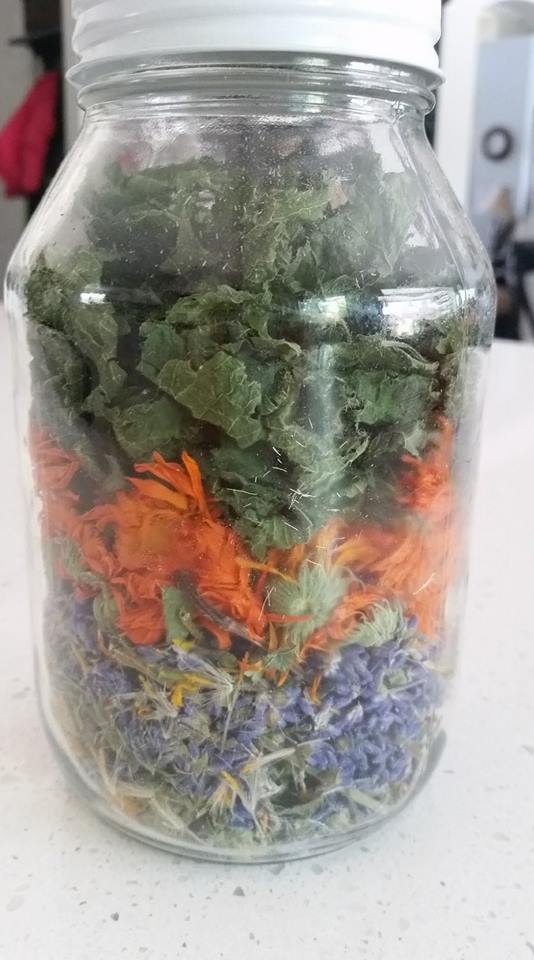
Place herbs in a quart jar, cover and let steep in the sun for 4 weeks or use the stove top method and simmer on very low heat for 1 hour. Be careful not to burn the herbs.

Salve 1

Strain the herbs through a mesh strainer and cheese cloth or other thin cloth. Squeeze the oil from the plants getting as much as you can.

salve 2

You can see the deep reddish-orange medicinal color from the herbs that have infused into the olive oil.  It’s the Calendula and St. John’s Wort that give it this color.  You should measure out about 4 cups of oil.

salve 3

For every cup of infused oil you will need 1/4 cup packed shredded beeswax. I use only one grater for beeswax and never bother to wash it because it won’t ever come clean. Good thing beeswax is naturally antimicrobial. Melt the beeswax and oil together on very low heat until just melted. Check to see if the salve is the right consistency by spooning a little and placing into the freezer for a few minutes to set up. If you feel like you want it to be a little more firm then add more beeswax.

salve 4

While the beeswax is melting get 16 2-ounce or 8 4-ounce jars ready. Once melted add a few dropperfuls of vitamin E oil and about 60-80 drops Melissa essential oil.  I like using the Melissa blend from Butterfly Express. It’s much cheaper than the real thing and does a great job.

salve 5

I like filling the jars with either a turkey baster or medicine syringe. Label and date. Keep in the fridge for long term storage.  Use as needed.

Medicinal Herb – Gumweed

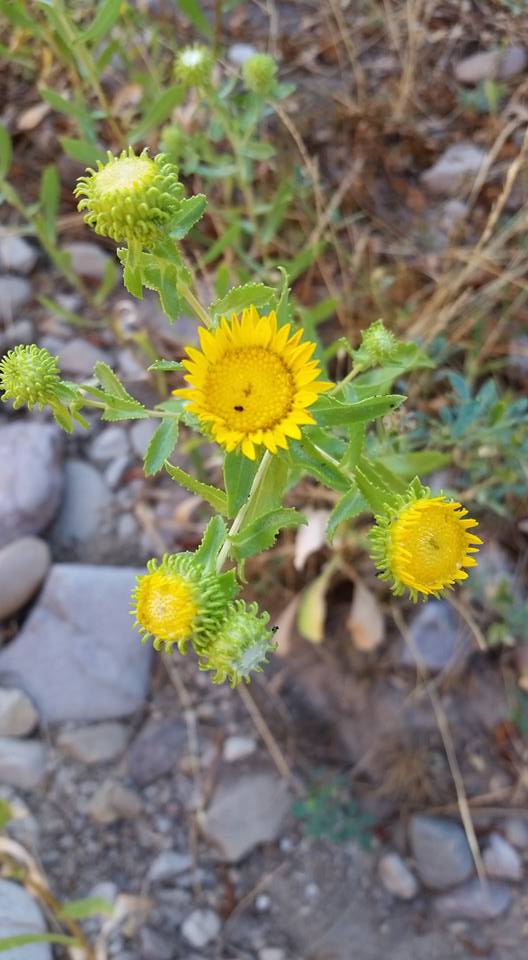
Gumweed 1 Gumweed 2

Medicinal Herb Post #32 written July 23, 2018

Gumweed – Grindelia spp.

This little happy weed is a perennial that grows in poor dry soil. Although some have said their experience with it has been shown to be an annual or biennial. I’ve also grown it in fertile soil in my own back yard too. You’ve probably seen it along road sides when driving through the canyons. It’s found just about anywhere in the southern parts off the US and Mexico. It has yellow flowers that produce a resinous substance, that is considered the medicine. The parts used are the buds that contain the most amount of resin, flowers and leaves. Ariel parts should be picked when you can see the gummy resin on the buds and flowers and then dried. The fresh resinous sap requires Everclear, 95% alcohol, when making into a tincture. 100 proof vodka will do, just use as needed without straining.

Gumweed is a great antispasmodic, anti-inflammatory, expectorant and antibiotic, making it a fabulous herb for any respiratory problem from asthma to bronchitis, emphysema and even whooping cough. Because it’s a great antibiotic and vulnerary (accelerates wound healing) it can be used topically on wounds (Native Americans used it specifically for poison ivy), burns, insect bites, rashes and even eczema. It can be used fresh as a poultice topically. Gumweed can be beneficial when used for bladder infections, but not meant to be used in large doses because it can be hard on the kidneys. Those who have kidney issues shouldn’t take it internally.

I make an asthma tincture for my boys using equal parts gumweed, lobelia, mullein and Brigham’s tea. It works really well for them.

I like to use it in a natural antibiotic ointment! I infuse calendula and gumweed into olive oil. Strain and add beeswax and manuka honey with oregano essential oil. Works wonders!


Medicinal Herb – Cayenne

Cayenne

Medicinal Herb Post #31 written July 23, 2018

Cayenne – Capsicum annuum and all other hot peppers included.

This annual is easy to grow in fertile soil and full sun. I like to start seeds indoors the first part of March, keeping them 1 inch below T8 lights on a shelf in my kitchen. Just like any solanaceous plant it does like a little protection from the really hot afternoon sun. The fruit is the medicine. It can be used fresh or dried.

Cayenne is a very versatile herb. The active ingredient, capsaicin specifically stimulates circulation throughout the body. This can do a lot of things like improve digestion (believe it or not, it’s great for ulcers because it increases mucus production in the stomach), it can stimulate the release of endorphins, increase blood flow to help relieve pain when used topically for arthritis, bursitis, muscle/joint aches and healing wounds faster. It also contains a chemical called substance P that is known to numb nerve pain.  It has an amazing amphoteric ability to do opposite things in the body. For example it can lower and raise blood pressure by increasing vascular elasticity, improving the function of the cardiovascular system. It’s a natural antibiotic, antihemorrhagic (stops bleeding internally), styptic (stops bleeding externally), anticatarrhal (which means it breaks up mucus in the respiratory system) and a good nervine stimulant.  The application of cayenne is really important to consider. For increasing elasticity within the vessels taking a capsule is fine.  But when you need it to soothe a sore throat or help the stomach to produce more mucus to heal an ulcer it must be taken in powder form or tincture form outside of a capsule otherwise it just passes through the intestines and doesn’t do what you need it to do.

When the Pioneers came across the plains to Utah, Brigham Young required each family to carry cayenne to help break up the catarrh or mucus when they got sick. It has also been used historically for shock and heart attacks. Cayenne is a must have tincture to keep in your first aid kit. Recent studies have shown that it can help reduce the risk of heart disease. Cayenne is generally safe, however it should be used with caution when handled directly. Be sure to wash hands well after touching. Small amounts of this herb goes a long way.

A great formula for kicking a cold faster is to use equal parts echinacea root powder, Oregon grape root powder, half part marshmallow root powder, half part cayenne powder. Put into capsules or mix with a little water, roll into small little balls easy enough to swallow and dry. At the first sign of a cold take 2 capsules every 2 hours until symptoms subside, then decrease to using 2 capsules 3x a day for 2 more days.

You can also make a salve with cayenne for arthritis and painful joints by heating up 2 tablespoons cayenne powder in a cup of olive oil on very low heat for about an hour. Add 1/4 cup beeswax until melted. Use wintergreen essential oil if desired and pour into jars to set up. Be careful not to touch your eyes after using. You can also add other herbs to the salve like arnica, bay leaves, chamomile and dandelion flowers.

I’d love to hear how you use cayenne! 🙂

Emily’s Skin Salve

Herbal Skin Salve

This stuff is my go to for everything! I’ve been making it for years and sharing with friends and family. There are so many stories people have shared with me about the salve that continue to surprise me. It is the best thing for sun burns, alleviating the pain, but also shortening the redness and burn time for healing. It is great for bug and allergic reactions from plants, cuts, scrapes, gashes… you name it.  One particular story really touched me. My Father in law lost a leg in Vietnam and wears a prosthetic leg. It causes sores to weep and bleed where it attaches to his leg. He tried all kinds of creams and prescriptions, but to no avail nothing worked. I gave him some of my salve to try and to all of our surprise the sores started to heal.  He keeps a jar and uses it regularly as it is the only things that helps the reoccurring problem from use. If you don’t want to make it yourself I do sell it. Just contact me through my contact page.

Recipe

Comfrey leaf and root (accelerates healing and rapid cell repair)
Calendula flower (also accelerates healing and is a natural antibiotic)
Plantain leaf (accelerates healing and draws out toxins)
Chickweed flower and leaf (soothing especially for itchy bites or stings)
St. John’s Wort fresh flower and leaves (pain relieving anti-inflamm`atory especially for burns)
Yarrow leaf and flower (natural antibiotic, antiseptic and stypic which stops bleeding)
Mullein leaf (anti-inflammatory)
Lobelia leaf and flower (antispasmodic which helps with pain and helps repair damaged nerves)
Wormwood leaf and flower (antiseptic)
Marshmallow leaf, flower and root (soothing to inflamed tissues)

You don’t have to use all of these herbs, but they do each play an important role. I prefer the solar infused method. I place each herb in a quart jar almost to the top, then cover with olive oil. Cover and let steep in the sun for 4 weeks (you can go longer if you want).  Strain all the herbs and measure the amount of infused oil you have.  Add 1/4 cup of beeswax for every cup of oil. Melt together and add essential oils of your choice. I like lavender and tea tree.  I also add vitamin E as a preservative.  Pour into jars and label. Keep in the fridge for ling term storage. Should stay good for 2 years or more if kept cold.

Soothing Herbal Bath Scrub

Soothing Herbal Bath ScrubSoothing Herbal Bath Scrub 1

I love this stuff! It is super hydrating, mineralizing, exfoliating and smoothing for the skin. You can easily make this large batch or cut it in half.

Recipe

Mix together in a large bowl the following ingredients.
1 cup dried calendula flowers
1 cup dried chamomile flowers
4 tablespoons dried lavender buds
2 tablespoons dried rose petals
2 cups fractionated coconut oil or sweet almond oil
2 cups Bokek Dead Sea Salt or other sea salt
4 cups Epsom Salt
40 drops lavender essential oil (optional)

Place in jars and top with a lid. Label and date. Keep in the fridge for long term storage.  Use in shower or bath after washing. Rinse and dry.

Rose and Lavender Facial and Hand Cream

Rose and Lavender Facial and Hand cream 1

This luxurious cream is heavenly! It is very hydrating, calming and great to use just before bedtime! The rose is a natural astringent and pH balancer and the lavender is cleansing and calming. This makes for great gifts and is simple to make. I like to get my ingredients from Bulk Apothecary or Whole Sale Supplies Plus, both online.

Recipe

16 oz sweet almond oil or another moisturizing oil of choice (you can infuse it with dried lavender flower buds by heating over the stove top on very low heat for an hour, then strain).
4 oz beeswax or 1/2 cup either shredded or use the beads.
16 oz rose water
20-30 drops lavender essential oil
20 drops vitamin E oil

Rose and Lavender Facial and Hand cream

Melt the beeswax and oil together. Bring to room temperature or just until it starts to set up (this part is really important). While waiting for the oil to cool, add the essential oil and vitamin E. Once cooled almost to room temp immediately pour the rose water into the oil mixture and blend with an immersion blender until thick and creamy. Pour into bottles or jars. Label and date. Keep in the fridge for long term storage.


Sore Muscle and Bruise Lotion

Sore Muscle lotion 1

This rich and soothing lotion is wonderful for massage or every day use. Be careful not to use on broken skin because it does contain the arnica plant and can poison the blood.  You can make any kind of lotion with the basics of this recipe. Use whatever kind of oil, liquid and beeswax.

Recipe

Arnica herb oil 1

Make a solar infused oil with equal parts fresh arnica flowers and leaves, dried lavender flower buds, dried marshmallow leaves, dried calendula flowers and fresh dandelion flowers.

Arnica herb oil 2

Cover with olive oil and a lid. Be sure to label. Place outside in the sun for 2 – 4 weeks. If you are in a rush, use the stove top method by heating the herbs and oil over very low heat for an hour, be careful not to burn them. Strain through a mesh cloth and strainer. For every cup of infused oil you will need 1/4 cup or 2 oz beeswax melted with the oil. Allow the oil and beeswax to come to room temperature or until it just starts to set up.

Sore Muscle lotion

At this point you can either use equal parts oil and purified water or an herbal infused tea (say for example, calendula tea). Immediately mix with an immersion blender until creamy.  Add essential oils of your liking. I like to use 40 drops of rosemary and lavender as they are also helpful for tense muscles.  Add 20-30 drops  vitamin E oil as a preservative.  Use a large syringe to squirt into bottles or jars. Label and date. Keep in the fridge for long term storage.

Black Drawing Salve

Black Drawing Salve

This salve is wonderful for drawing out an kind of infection or poison from insect bites especially. It is safe to use on animals as well.

Recipe

The first step is to make an oil infusion. This can be done either outside in the sun or over the stove top.
Solar or stove top infuse dried calendula flowers and dried plantain leaves. Place equal amounts of the herbs in a jar or small pot. Cover with 18 – 20 oz of olive oil, make sure the herbs are covered and place outside in the sun for 2 – 4 weeks. If you need it faster infuse the herbs is the same amount of oil over the stove top on very low heat for about an hour, be careful not to burn the herbs. Strain the herbs.  You should measure out 18 oz infused oil for this recipe.

For the salve you will need:
18 oz. infused calendula and plantain oil
2 oz coconut oil
4-5 oz or (1/2 cup) beeswax shredded or beads depending on how hard you want the salve to be.
4 tablespoons activated charcoal
4 tablespoons Bentonite clay
30 drops tea tree essential oil
30 drops lavender essential oil
20 drops vitamin E oil

Melt the coconut oil and beeswax with the infused oil. Test the salve to make sure it is set enough to your liking by placing some in a spoon and placing in the freezer for 2 minutes.  If it is set enough turn off the heat and add the remaining ingredients.  If not add a little more beeswax. Quickly pour into tins or jars before setting up. You can always heat it slightly to melt down if it sets up too fast. Label and date.  Keep in the fridge for long term storage.

Ear Ache Oil

rp_Earache-oil-223x300.jpg

This ear oil is fabulous and very simple, especially if you grow all the herbs listed yourself! It works really well when alternated with freshly squeezed onion juice.

Recipe

ear oil 3rp_ear-oil-2-168x300.jpg

Place equal amounts of fresh mullein flower, fresh or dried calendula flower, fresh St. John’s Wort flower and fresh chopped garlic in a small jar. Cover with olive oil by an inch or two. Cover and set outside to solar infuse for 2-4 weeks or place in a small pot over very low heat for one hour or until fragrant, be careful not to burn. Strain and pour into dropper bottle. Label and date. Keep in the fridge and warm under hot water before use.  Place 2-3 drops in the ear 3 times a day, alternating with freshly grated onion juice. This has worked very well for my family.

Medicinal Herb – Bee Balm

Bee balm

Medicinal Herb Post #30 written July 18, 2018

Bee Balm – Monarda fistulosa (purple), M. didyma (red)

Other names for this mint family perennial are wild oregano, horsemint and bergamot, not to be confused with the essential oil bergamot extracted from a citrus fruit in Australia. It’s simple to grow and can spread by seed or rhizomes. It is susceptible to powdery mildew so I’m careful to harvest the upper half of the plant just as the flowers bloom. It does well in heavy clay soils, but prefers some shade.

This herb is used medicinally and for culinary purposes. It has a “hot” flavor similar to oregano so it is simulating. It’s flowers and leaves are used as an antiseptic, carminative (breaks down harmful enzymes that cause gas in the digestive tract), and diaphoretic (helps sweat out fevers and toxins). Bee balm is great for warding off cold/flu.  It is a great antifungal used to kill candida in the body and other fungal problems topically.

A tea it is used for headaches, digestive issues, sore throats and fevers and candida. It is also great for breaking up mucus in the respiratory tract. An application can be used for cleaning wounds or skin eruptions. 1 tsp per cup is the dosage.

Do you use Bee Balm?